
Catalogue Search | MBRL


Are you sure you want to remove the book from the shelf?

{{itemTitle}}
187
result(s) for
"Discrimination in criminal justice administration -- United States -- Public opinion"
Sort by:

Justice in America : the separate realities of blacks and whites
\"As reactions to the O. J. Simpson verdict, the Rodney King beating, and the Amadou Diallo killing make clear, whites and African Americans in the United States inhabit two different perceptual worlds, with the former seeing the justice system as largely fair and color blind and the latter believing it to be replete with bias and discrimination. Drawing on data from a nation-wide survey of both races, the authors tackle two important questions in this book: what explains the widely differing perceptions, and why do such differences matter? They attribute much of the racial chasm to the relatively common personal confrontations that many blacks have with law enforcement ,♯ confrontations seldom experienced by whites. And more importantly, the authors demonstrate that this racial chasm is consequential: it leads African Americans to react much more cynically to incidents of police brutality and racial profiling, and also to be far more skeptical of punitive anti-crime policies ranging from the death penalty to three-strikes laws\"-- Provided by publisher.
Book

Justice in America
As reactions to the O. J. Simpson verdict, the Rodney King beating, and the Amadou Diallo killing make clear, whites and African Americans in the United States inhabit two different perceptual worlds, with the former seeing the justice system as largely fair and color blind and the latter believing it to be replete with bias and discrimination. The authors tackle two important questions in this book: what explains the widely differing perceptions, and why do such differences matter? They attribute much of the racial chasm to the relatively common personal confrontations that many blacks have with law enforcement – confrontations seldom experienced by whites. More importantly, the authors demonstrate that this racial chasm is consequential: it leads African Americans to react much more cynically to incidents of police brutality and racial profiling, and also to be far more skeptical of punitive anti-crime policies ranging from the death penalty to three-strikes laws.
eBook

Race and the Fragility of the Legal Distinction between Juveniles and Adults
Legal precedent establishes juvenile offenders as inherently less culpable than adult offenders and thus protects juveniles from the most severe of punishments. But how fragile might these protections be? In the present study, simply bringing to mind a Black (vs. White) juvenile offender led participants to view juveniles in general as significantly more similar to adults in their inherent culpability and to express more support for severe sentencing. Indeed, these differences in participants' perceptions of this foundational legal precedent distinguishing between juveniles and adults accounted for their greater support for severe punishment. These results highlight the fragility of protections for juveniles when race is in play. Furthermore, we suggest that this fragility may have broad implications for how juveniles are seen and treated in the criminal justice system.
Journal Article

The Politics of Crime Prevention
An important understanding of the role public opinion
plays in crime prevention policy \"Defund the police.\" This
slogan became a rallying cry among Black Lives Matter protesters
following the murder of George Floyd in Minneapolis in May 2020.
These three words evoke a fundamental question about America's
policy priorities: should the nation rely predominantly upon the
branches of the criminal justice system to arrest, prosecute, and
imprison offenders, or should the nation prioritize fixing
structural causes of crime by investing more heavily in the
infrastructure and institutions of disadvantaged communities? To
put it simply, do Americans actually prefer punishment over crime
prevention? The Politics of Crime Prevention examines
American public opinion about crime prevention in the twenty-first
century with a particular focus on how average citizens would
choose to prioritize resources between the criminal justice system
and community-based institutions. Kevin H. Wozniak analyzes
differences of opinion across lines of race, social class, and
political partisanship, and investigates whether people's
willingness to invest in communities depends upon the kind of
communities that would receive money. This book moves beyond
criminologists' typical focus on public opinion about punishment
that follows acts of crime to instead examine public attitudes
toward crime prevention. In this brilliant and compelling study,
Wozniak reveals that politicians profoundly underestimate the
American public's desire to prioritize community investment and
that it is long past time to help communities thrive instead of
turning to the criminal justice system to respond to every social
problem.
eBook

The Use of Artificial Intelligence in the Administration of Justice: Suggested Framework of Ethical Principles and Reasoning of Judges in the Use of Intelligent Systems
Artificial intelligence is already being used in the administration of Justice, with various applications assisting judges in resolving cases. In particular, in criminal Justice, these applications include predictive Justice and decision-making assistance through the assessment of facts, as well as the classification of criminals into risk groups. This article examines the current regulatory and ethical framework (AI Act, Council of Europe Convention on AI, CEPEJ Ethical Charter, UNESCO and OECD principles) and develops a regulatory approach to the use of AI systems by judges and prosecutors. The methodology is based on a doctrinal analysis of international, EU, and professional ethical literature, as well as on a synthesis of principles of judicial conduct (Bangalore Principles, Magna Carta of Judges). To strike a balance between the rules of governing system use and judicial ethics, the article proposes a consistent framework of ethical principles (legitimacy, transparency, accountability, integrity, human oversight, prohibition of discrimination) and introduces a practical “line of reasoning” with key questions that judges should consider before and during the use of intelligent tools (risks, bias, proportionality, understanding of the algorithm, and impact on judicial judgment). The article concludes that AI may improve the efficiency of the justice system only when included inside a strong ethical framework and specialized training, guaranteeing that final judicial decisions remain solely human and fully aligned with the rule of law.
Journal Article

Unfair by Design: The War on Drugs, Race, and the Legitimacy of the Criminal Justice System
Bobo and Thompson analyze that the American Dream ideal, the promise of freedom, opportunity and equality--of a truly fair and just society where citizens stand equal before the law--is in trouble. The source of deep unquiet and anxiety about the American promise of fairness concerns the gradual but profoundly punitive transformation of the crime response complex in the US.
Journal Article

Rape in Chicago
Spanning a period of four tumultuous decades from the mid-1930s through the mid-1970s, this study reassesses the ways in which Chicagoans negotiated the extraordinary challenges of rape, as either victims or accused perpetrators. Drawing on extensive trial testimony, government reports, and media coverage, Dawn Rae Flood examines how individual men and women, particularly African Americans, understood and challenged rape myths and claimed their right to be protected as American citizens--protected by the State against violence, and protected from the State's prejudicial investigations and interrogations. _x000B__x000B_During the crises of the Great Depression and World War II, already-taboo problems such as sexual violence were further downplayed in favor of dealing with national issues. For cases that did go forward to conviction, trial narratives focused on protecting the female victim, protection that even extended to African American women. Amid the social reform of the 1960s and 1970s, prosecutors added more corroborative evidence to victims' claims, thereby assuming less faith in their testimonies and allowing defense attorneys and judges to interrogate women's sexual histories. The 1970s intensified the corroborative elements of rape trials, even as a vocal feminist movement sought to improve the treatment of rape victims both inside and outside courtrooms. Flood shows how defense strategies, evolving in concert with changes in the broader cultural and legal environment, challenged assumptions about black criminality while continuing to deploy racist and sexist stereotypes against the victims. _x000B__x000B_Thoughtfully combining legal studies, medical history, and personal accounts, Flood pays special attention to how medical evidence was considered in rape cases and how victim-patients were treated by hospital personnel. She also analyzes medical testimony in modern rape trials, tracing the evolution of contemporary \"rape kit\" procedures as shaped by legal requirements, trial strategies, feminist reform efforts, and women's experiences.
eBook

Symbolic Racism and Whites' Attitudes Towards Punitive and Preventive Crime Policies
This study analyzes the determinants of Whites' support for punitive and preventive crime policies. It focuses on the predictive power of beliefs about race as described by symbolic racism theory. A dataset with 849 White respondents from three waves of the Los Angeles County Social Survey was used. In order to assess the weight of racial factors in crime policy attitudes, the effects of a range of race-neutral attitude determinants were controlled for, namely individual and structural crime attributions, perceived seriousness of crime, crime victimization, conservatism and news exposure. Results show a strong effect of symbolic racism on both types of crime policies, and in particular on punitive policies. High levels of symbolic racism are associated with support for tough, punitive crime policies and with opposition to preventive policies. Sub-dimensions of symbolic racism qualified these relationships, by showing that internal symbolic racism (assessing perceived individual deficiencies of Blacks) was most strongly predictive of punitiveness, whereas external symbolic racism (denial of institutional discrimination) predicted opposition to structural remedies. On the whole, despite the effects of race-neutral factors, the impact of symbolic racism on policy attitudes was substantial. Thus, White public opinion on both punitive and preventive crime policies is at least partially driven by racial prejudice.
Journal Article
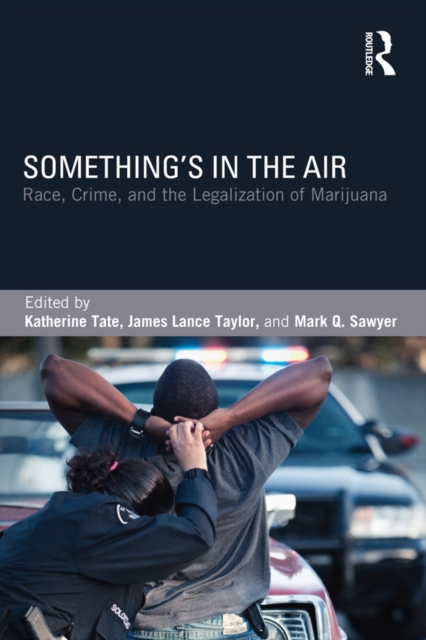
Something's in the Air
America's drug laws have always exerted an unequal and unfair toll on Blacks and Latinos, who are arrested more often than Whites for the possession of illegal drugs and given harsher sentences. In this volume, contributors ask how would marijuana legalization affect communities of color? Is legalization of marijuana necessary to safeguard minority families from a lifetime of hardship and inequality? Who in minority communities favors legalization and why, and do these minority opinions differ from the opinions held by White Americans? This volume also includes analyses of the policy debate by a range of scholars addressing economic, health, and empowerment issues. Comparative lessons from other countries are also analyzed.
eBook

And Justice for Some: Race, Crime, and Punishment in the US Criminal Justice System
Criminal justice policy in the US has long been exceedingly responsive to public opinion. Unfortunately, public attitudes towards justice in the US are severely bifurcated along racial lines, such that Whites see a system that is “colour-blind” and Blacks perceive one that is severely biased against them. In this paper, we explore the magnitude of this racial cleavage and, more importantly, demonstrate how it impacts differential reactions to events (such as accusations of police brutality) and policies (such as capital punishment) in the justice domain. To the degree that elites base policies on (mainly White) majority preferences, such policies are unlikely to be responsive to the racial discrimination that is a part of the current criminal justice environment. Résumé. La politique pénale aux États-Unis répond énormément à l'opinion publique. Malheureusement, les positions populaires envers la justice américaine sont radicalement divisées suivant l'appartenance raciale. Aux yeux des Blancs, le système est essentiellement neutre envers les groupes raciaux différents, mais les Noirs le perçoivent comme étant fortement entaché de discrimination contre eux. Dans cet article, nous considérons l'étendue de cet écart racial et, surtout, nous démontrons comment ces perceptions entraînent des réactions différentes envers les événements (comme les accusations de brutalité policière) et envers les politiques publiques (comme la peine capitale) dans le domaine de la justice. Dans la mesure où les élites fondent les politiques sur les préférences de la majorité (surtout blanche), il est peu probable que ces politiques puissent remédier à la discrimination raciale qui fait partie du système pénal actuel.
Journal Article