
Catalogue Search | MBRL


Are you sure you want to remove the book from the shelf?

{{itemTitle}}
9
result(s) for
"Dressage History."
Sort by:

An illustrated history of equestrian sports : dressage, jumping, eventing
This is the first volume to trace the history of equestrian sports, including individual and team results across the sport's three official Olympic disciplines: dressage, eventing, and jumping. This important reference documents the history of competitive horse-riding from 1912--when the sport first appeared at the modern Olympic Games in Stockholm--to the present. It brings together for equestrian enthusiasts a complete document of all the results of competitions to have taken place since 1912, including the Olympics, the European Championships, and the FEI World Equestrian Games. The volume is organized by decade, with both individual and team achievements listed, across the sport's three official disciplines: show-jumping, dressage, and eventing. Featuring groundbreaking riders such as Bill Steinkraus, Charlotte Dujardin, and Kevin Staut and exciting events in the history of the sport, this volume recounts the history of equestrian excellence through fascinating stories and record-breaking events. This entirely original book is the first of its kind, and is replete with previously unpublished information about the sport, riveting stories, archival photographs and text, key facts and figures, and memorable anecdotes. Portraits of riders--both male and female--and some of the sport's most remarkable horses complete the volume, which acts as a key and original point of reference and an essential addition to the collection of any equestrian lover.
Book
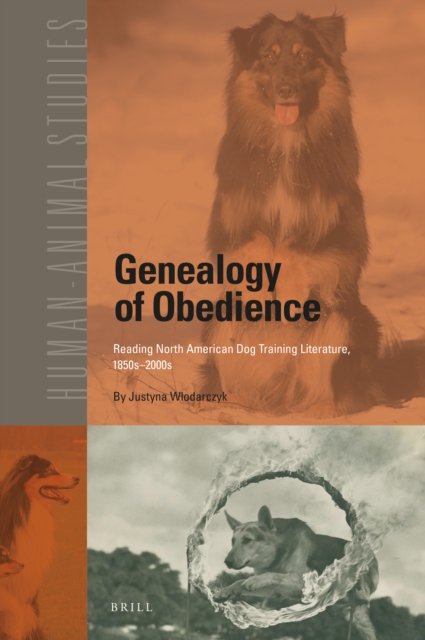
Genealogy of Obedience
In Genealogy of Obedience Justyna Włodarczyk provides both a historical account of the changing methods of dog training in America since the 1850s and theoretical reflections on how the understanding of training has been entangled in conceptualizations of race, class and gender.
eBook


The Transformation of the Dutch Farm Horse into a Riding Horse: Livestock Breeding, Science, and “Modernization,” 1960s–1980s
This article analyzes the postwar transformation of the Dutch Warmblood farm horse into a riding horse. It gives special attention to the farmers' practical breeding methods and to the role that scientists and government policymakers played in the transformation process. Until the 1970s, Warmblood breeding methods were a continuation of pre-Mendelian methods that focused on qualitative assessment of a horse's conformation, that is, its exterior characteristics. In 1980, the Dutch government undertook an effort to modernize Warmblood breeding by turning it into a collectively organized, scientific enterprise. These plans were largely subverted by the fierce opposition of breeders. Nevertheless, quantitative scientific methods, particularly quantitative genetics, started to make inroads into Warmblood breeding at the time. However, the breeders' decision to switch to quantitative methods was a reaction to other pressures, economic and otherwise, rather than a response to the government's call for science-based modernization. Moreover, qualitative assessment remained as important in the selection of breeding stock as before.
Journal Article

Tastes and traditions : a journey through menu history
\"Menus are invaluable snapshots of the food consumed at specific moments in time and place. Tastes and Traditions: A Journey through Menu History provides glimpses into the meals enjoyed by royalty and rogues, and by those celebrating special occasions, or sampling new culinary sensations. It describes food prepared for the great and the good, meals served during sieges, and tablescapes immortalized in art. It explores how menus entertain adults, link food with play for children, reflect changing notions of health, and highlight the enduring human need to make meals meaningful. Lavishly illustrated, this book offers an engaging exploration of why menus matter and the stories they tell, appealing to food lovers and general readers, as well as professionals in the food industry.\"--Book jacket flap.
BOOK

Indigènes into Signs
In Colonial Indochina, the introduction of motorized transportation led French authorities to focus their attention on the issue of pedestrian walking. The political and economic imperatives of the colonial state shaped the modern phenomenon of traffic, which isolated the indigenous body as a sign of otherness. The unruly indigenous pedestrian expressed a discursive and experiential crisis that questioned colonialism itself. This article invites us to examine the political potential of walking by considering Henri Lefebvre's notion of dressage and its limitations in a colonial setting through various examples, from French accounts of indigenous walking in daily activities to political disruptions of traffic by pedestrian demonstrators and the incorporation of indigenous bodies in road safety policies. Repeatedly, colonial subjects eluded, criticized, or undermined the rules of the road and the colony by the simple act of walking.
Journal Article

Dressage to Dungeons
No doubt, there were prisoners incarcerated at Jackson in the 1920S who were still there in the 1950S and who watched the procession of wardens, the opening of the new facility, the scandals, the riot, and all the other turnovers and upheavals described in this study without seeing any profound alteration in the routines of everyday life. Years slipped by and disappeared in a cadence of unremitting sameness. Yet the regime that congealed at Jackson in the wake of the 1952 riot was vastly different from Harry Hulbert’s prison in the 1920S. Its internal routines, though invariable from day to
Book Chapter

