
Catalogue Search | MBRL


Are you sure you want to remove the book from the shelf?

{{itemTitle}}
2,089
result(s) for
"Eisenstein"
Sort by:


This Thing of Darkness
Sergei Eisenstein's unfinished masterpiece, Ivan the Terrible, was no ordinary movie. Commissioned by Joseph Stalin in 1941 to justify state terror in the sixteenth century and in the twentieth, the film's politics, style, and epic scope aroused controversy even before it was released. In This Thing of Darkness, Joan Neuberger offers a sweeping account of the conception, making, and reception of Ivan the Terrible that weaves together Eisenstein's expansive thinking and experimental practice with a groundbreaking new view of artistic production under Stalin. Drawing on Eisenstein's unpublished production notebooks, diaries, and manuscripts, Neuberger's riveting narrative chronicles Eisenstein's personal, creative, and political challenges and reveals the ways cinematic invention, artistic theory, political critique, and historical and psychological analysis went hand in hand in this famously complex film.
Neuberger's bold arguments and daring insights into every aspect of Eisenstein's work during this period, together with her ability to lucidly connect his wide-ranging late theory with his work on Ivan, show the director exploiting the institutions of Soviet artistic production not only to expose the cruelties of Stalin and his circle but to challenge the fundamental principles of Soviet ideology itself. Ivan the Terrible, she argues, shows us one of the world's greatest filmmakers and one of the 20th century's greatest artists observing the world around him and experimenting with every element of film art to explore the psychology of political ambition, uncover the history of recurring cycles of violence and lay bare the tragedy of absolute power.
eBook

مذكرات مخرج سينمائي
سيرجي إيزنشتاين يضم بين دفتيه عددا من المقالات التي تهدف إلى مساعدة صانعي الأفلام على السيطرة على كل قدرات وإمكانيات السينما وقد قسم سيرجي إيزنشتاين كتابه إلى أربعة أجزاء رئيسية \"عن نفسي وعن أفلامي\" مشكلات إخراج الفيلم، صور فنانين، رسوم واسكتشات رسمها سيرجي لأفلامه، استعرض من خلالها بداياته الفنية وكيف أصبح مخرجا سينمائيا وعددا من مشكلات إخراج الفيلم مثل، الوحدة العضوية والانفعال النفسي في تكوين الفيلم، بالإضافة إلى عرض بعض التجليات الفنية لعدد من الفنانين مثل (شارلي شابلن، بروكنييف، إدوارد يتس وغيرهم)
BOOK

Eisenstein field BCH codes construction and decoding
First, we will go through the theory behind the Eisenstein field (EF) and its extension field. In contrast, we provide a detailed framework for building BCH codes over the EF in the second stage. BCH codes over the EF are decoded using the Berlekamp-Massey algorithm (BMA) in this article. We investigate the error-correcting capabilities of these codes and provide expressions for minimal distance. We provide researchers and engineers creating and implementing robust error-correcting codes for digital communication systems with detailed information on building, decoding and performance assessment.
Journal Article
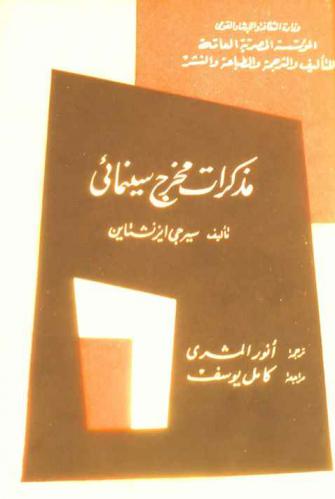
مذكرات مخرج سينمائي
يضم بين دفتيه عددا من المقالات التي تهدف إلى مساعدة صانعي الأفلام على السيطرة على كل قدرات وإمكانيات السينما، وقد قسم سيرجي إيزنشتاين كتابه إلى أربعة أجزاء رئيسية \"عن نفسي وعن أفلامي\" مشكلات إخراج الفيلم، صور فنانين، رسوم واسكتشات رسمها سيرجي لأفلامه، استعرض من خلالها بداياته الفنية وكيف أصبح مخرجا سينمائيا، وعددا من مشكلات إخراج الفيلم مثل، الوحدة العضوية والانفعال النفسي في تكوين الفيلم، بالإضافة إلى عرض بعض التجليات الفنية لعدد من الفنانين مثل (شارلي شابلن، بروكنييف، إدوارد يتس، وغيرهم).
Book

Movement, Action, Image, Montage
A major new study of Sergei Eisenstein delivers fresh, in-depth analyses of the iconic filmmaker's body of workWhat can we still learn from Sergei Eisenstein? Long valorized as the essential filmmaker of the Russian Revolution and celebrated for his indispensable contributions to cinematic technique, Eisenstein's relevance to contemporary culture is far from exhausted. InMovement, Action, Image, Montage, Luka Arsenjuk considers the auteur as a filmmaker and a theorist, drawing on philosophers such as Georg Wilhelm Friedrich Hegel and Gilles Deleuze-as well as Eisenstein's own untranslated texts-to reframe the way we think about the great director and his legacy.
Focusing on Eisenstein's unique treatment of the foundational concepts of cinema-movement, action, image, and montage-Arsenjuk invests each aspect of the auteur's art with new significance for the twenty-first century. Eisenstein's work and thought, he argues, belong as much to the future as the past, and both can offer novel contributions to long-standing cinematic questions and debates.
Movement, Action, Image, Montagebrings new elements of Eisenstein's output into academic consideration, by means ranging from sustained and comprehensive theorization of Eisenstein's practice as a graphic artist to purposeful engagement with his recently published, unfinished bookMethod, still unavailable in English translation. This tour de force offers new and significant insights on Eisenstein's oeuvre-the films, the art, and the theory-and is a landmark work on an essential filmmaker.
eBook
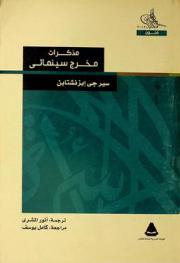
مذكرات مخرج سينمائي
يضم بين دفتيه عددا من المقالات التي تهدف إلى مساعدة صانعي الأفلام على السيطرة على كل قدرات وإمكانيات السينما، وقد قسم سيرجي إيزنشتاين كتابه إلى أربعة أجزاء رئيسية \"عن نفسي وعن أفلامي\" مشكلات إخراج الفيلم، صور فنانين، رسوم واسكتشات رسمها سيرجي لأفلامه، استعرض من خلالها بداياته الفنية وكيف أصبح مخرجا سينمائيا، وعددا من مشكلات إخراج الفيلم مثل، الوحدة العضوية والانفعال النفسي في تكوين الفيلم، بالإضافة إلى عرض بعض التجليات الفنية لعدد من الفنانين مثل (شارلي شابلن، بروكنييف، إدوارد يتس، وغيرهم).
Book

Congruences of Eisenstein series of level Γ₁(N) via Dieudonné theory of formal groups
Dans cet article, nous donnons une nouvelle explication des idéaux de congruences des séries d’Eisenstein de niveau Γ₁(N) et de caractère χ. Notre approche est basée sur l’interprétation algébro-géométrique de Katz des congruences p-adiques des séries d’Eisenstein normalisées E
2k
de niveau 1. Une étape cruciale de notre approche consiste à reformuler une correspondance de Riemann–Hilbert dans l’approche de Katz en termes de la théorie de Dieudonné des A-modules formels de hauteur 1 et de leurs schémas de sous-groupes finis. Nous généralisons en outre cette correspondance de Riemann–Hilbert en termes de groupes formels de hauteur supérieure à 1.
In this paper, we give a new explanation of congruences of Eisenstein series of level Γ₁(N) and character χ. Our approach is based on Katz’s algebro-geometric explanation of p-adic congruences of normalized Eisenstein series E2k
of level 1. One crucial step in our argument is to reformulate a Riemann–Hilbert correspondence in Katz’s explanation in terms of Dieudonné theory of height 1 formal A-modules and their finite subgroup schemes. We further generalize this Riemann–Hilbert correspondence in terms of formal groups of height greater than 1.
Journal Article

سيرغي إيزنشتين : مقالات، ذكريات، رسائل، شهادات
يضم هذا الكتاب دراسة شاملة لحياة وأعمال سيرغي ميخائيلوفيتش إيزنشتين، كتبها الدكتور رستيسلاف يورينيف الأستاذ في معهد السينما بموسكو والباحث في معهد تاريخ الفن السينمائي التابع لوزارة السينما في الاتحاد السوفيبتي، والذي كرس معظم دراساته لتراث إيزنشتين الفيلمي والنظري. وقد نشرت هذه الدراسة كمقدمة للأعمال المختارة لإيزنشتين التي صدرت عن دار (إيسكوستفو) (الفن) بموسكو في ستة مجلدات بين أعوام ١٩٦٤-١٩٧١. ولقد أفدت كثيرا في ترجمة هذه الدراسة من مساعدة الصديق جلال الماشطة، فله الشكر. أما بقية مواد الكتاب، ففيها المقالة والانطباع والذكريات والشهادات والرسائل، كتبها أصدقاء إيزنشتين وزملاؤه في العمل من مواطنيه، وأصدقاؤه من الفنانين والكتاب الأجانب، ومخرجون معاصرون من مختلف البلدان. وقد قصدنا من اختيار مواد الكتاب وتصنيفها على هذا النحو، أن نضع بين يدي القارئء، والمحب للسينما على الأخص، بانوراما عامة، ولكنها تحتوي على كل ما هو أساسي لمعرفة حياة وإبداع ومكانة السينمائي السوفييتي العظيم سيرغي إيزنشتين الذي رفع قبضة السينما الثورية وطرق بها باب الثقافة الديموقراطية العالمية، ودخلها، واحتل مكانة بارزة بين فرسانها، وسرعان ما غدا أحد كلاسيكييها الكبار .
Book

Sergei Eisenstein's \The Form of the Script\: A New Translation
This paper analyzes Sergei Eisenstein's essay \"The Form of the Script\" (1929), focusing particularly on its publication and translation history. It reconstructs the missing parts and the logic of the essay based on its original Russian print and an early German translation. In so doing, the paper clarifies Eisenstein's position in the debates surrounding the various forms and formats of screen writing. It additionally draws attention to the role of rhythm in Eisenstein's screenwriting theory and in his essayistic writing. Finally, this article offers a new translation of \"The Form of the Script,\" which brings the essay as close as possible to its original publication.
Journal Article