
Catalogue Search | MBRL


Are you sure you want to remove the book from the shelf?

{{itemTitle}}
2,340
result(s) for
"Electronic reference services (Libraries)"
Sort by:
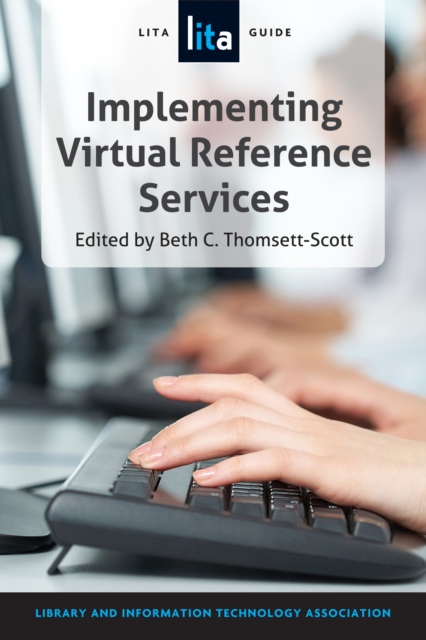
Implementing virtual reference services
Applying 20 years' experience as a reference librarian working through the development of virtual reference and the integration of new tools and technologies into the industry, Thomsett-Scott lays out how libraries are using vendor services such as LibraryH3lp, LibAnswers, and Text a Librarian, as well as free tools like Twitter and Google Voice for their reference needs.
eBook
Virtual reference training
Even the best reference librarian can falter when suddenly thrust into cyberspace without the proper tools and training. As online library reference services become commonpractice, there’s a critical need to develop core competencies unique to the virtual world—from conducting chats to multitasking. What does it take to be successful at the virtual reference desk? Washington State has committed to training its librarians to provide answers \"anytime, anywhere.\" Now this proven, learner-centered approach is available to libraries large and small, as they confront issues relating to offering virtual reference or improving existing services.
eBook
Library web sites
Information-hungry consumers have become accustomed to flashy commercial web sites, the lightning speed of major search engines, and a seemingly endless array of \"content\" at high profile sites like Amazon.com. Libraries committed to delivering online content and services in this frenzied environment need the authoritative guidance and practical know-how available in Library Web Sites.
eBook

Reimagining Reference in the 21st Century
Reference service, the idea that librarians provide direct assistance to users, has been a central function of libraries for over a century. Today’s libraries are even more complex and intimidating to new users than libraries of the past, and the technical and social contexts in which users experience their library’s resources add to this complexity. The availability of a friendly librarian who helps users find materials, search for information on a topic, interpret citations, identify quality information, and format bibliographies has become a standard component of what libraries do. However, changes in technologies, economics, and user populations are causing many libraries to question the need and function of traditional reference services. This book examines how library services meet user needs in the twenty-first century. Many libraries are asking key questions about reference services, such as: Should librarians be on call waiting for users or out in the community promoting the library? Should we assign staff to help users one-on-one or is it more effective to assign them to build and use tools to teach users how to find and evaluate information? Will we continue to purchase commercial reference sources or just use Wikipedia and other free resources on the web? With the proliferation of information available today, how can we help users evaluate search results and select the best resources that they can find? And how do we evaluate the effectiveness of reference services? Through contributions from the leading scholars and practitioners in the field, this volume addresses such issues and how they affect practices in public and academic libraries. In addition, it presents perspectives from the publishing community and the creators of discovery tools. Each section is enhanced by short case studies that highlight real-world practices and experiences.
eBook

Diagnosing and routing electronic service quality improvement of academic libraries with the FMEA approach in an intuitionistic fuzzy environment
Purpose
In this way, the aim of this study is to expand and evelop the application of this technique in FMEA to rank failure modes of ESQ of academic libraries in an intuitionistic fuzzy environment. Assessment of electronic service quality (ESQ) of libraries is significantly important according to their major roles. It should be noted that the ESQ has a significant impact on customer satisfaction, which improves organizational performance. Accordingly, low ESQ means waste of organizational resources and poor user satisfaction. So, there is a dire need to reflect reasons inducing failure modes in academic library ESQ. Thus, investigation of failure modes affecting academic library ESQ is highly important. One solution in this area is utilization of the intuitionistic fuzzy (IF) failure mode and effects analysis (FMEA) as one of the widely used methods for prediction and identification of failure modes.
Design/methodology/approach
The present study in terms of objective is applied and in terms of the type of method is descriptive-analytical. The research sample included four experts of Yazd academic Libraries (Iran). To collect data, three types of questionnaires were distributed among experts. The purpose of the first questionnaire was to identify and reach an agreement on e-library failure modes. Type II questionnaire was used to determine the importance of identified risk factors and Type III questionnaire was used to prioritize the factors.
Findings
Results indicate that the difficulty of using websites, lack of provided information feedback to users and lack of links on the website to users' are the main priorities for improving ESQ in the studied academic libraries.
Originality/value
In this approach, the Intuitionistic fuzzy Elimination Et Choix Traduisant la REalité and technique for order of preference by similarity to ideal solution method were used to rank failure modes in academic library ESQ within the FMEA framework.]
Journal Article
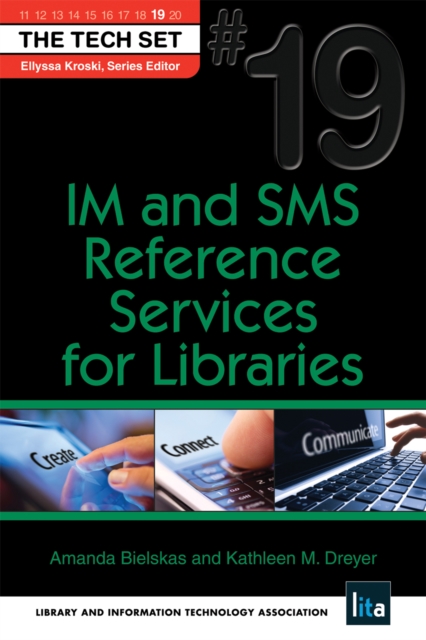
IM and SMS reference services for libraries
Users want real-time answers to their reference questions wherever and whenever they are. Increasingly, that means SMS and IM services. Providing those is easier than you might think!
eBook
Reinventing reference
Uniquely positioned to connect library users to the information they seek, and thus to the wider world, library staff who serve on the front lines of reference have both the power and responsibility to position the library as an institution that remains relevant and responsive. This collection takes a critical look at the overarching trends that affect current library policy and practice regarding the process of delivering information services, and how factors such as public policy, economics, and popular culture will continue to affect those trends in the future. Library leaders and visionaries from across the spectrum of institutions address such topics as The history of reference librarianship and how it relates to the current landscape Privacy, censorship, and reference ethics The effects of the \"born digital\" library user on the purpose and function of reference Strategic challenges for reference in the coming decade A reference forecast for 2025Placing these issues in historical and cultural context, this book offers practical solutions for new paradigms of reference service for all users.
eBook
Teaching reference today
Reference and Information Services, if it may still be referred to by this term, is an evolving outreach service in libraries. This is not only due to Google and the Internet, but also other technological advances afford users online access to a plethora of content, free and proprietary. This evolution has also caused a shift in the theories and practices (especially, core functions and values) of reference and information services as library schools seek greater alignment with practitioners and libraries on the forefront of these changes.
As academics and practitioners work together to educate library students on the kinds of changes happening in reference and information services, they are rethinking their curriculum and assignments to incorporate real-world challenges adaptive to user needs. Likewise, libraries may work through their regional library consortia to plan professional development workshops or training sessions to teach new skills and methods of approach required for such changing services.
Here's a tool for library school instructors, library students, professional development instructors, and current librarians poised to change, which specifically addresses the pedagogy of reference and information services in flux. It will help answer questions such as:
How may we better educate a new and current generation of reference and information service professionals, given the challenges they will likely encounter? What kinds of assignments could be devised to better promote active learning in a transformative field like reference and information services? What new approaches or theories could be applied to assist library professionals in meeting the informational needs of users?
eBook
Factors influencing the adoption of digital reference services among the university librarians in Pakistan
Purpose
This study aims to explore the factors affecting the adoption of digital reference services (DRS) among the university librarians in Pakistan.
Design/methodology/approach
Based on the adapted unified theory of acceptance and use of technology (UTAUT) model, the proposed study tested 12 hypothetical relationships through structural equation modelling (SEM) techniques. The study approach was quantitative based on a questionnaire distributed online to a sample of Pakistani university librarians and completed by 289 respondents. The questionnaire used in this study was developed from other validated instruments used in past empirical studies. Descriptive and inferential data analyses were performed through SPSS and AMOS for SEM.
Findings
The results revealed usefulness, ease of use and information and communication technology (ICT) skills as the significant predictors of the adoption of DRS. However, moderating influence of the demographic factors (age, gender and type of library) on the relationship of predictors with outcome variable was found insignificant. The findings of this study imply that individuals’ readiness for the adoption of DRS is present in the university libraries of Pakistan.
Originality/value
In the context of Pakistan, this study was the first attempt that investigated factors of the adoption of DRS at individual level. In addition, two new factors – namely, ICT skills and library type – were incorporated into the UTAUT model and were then evaluated in the Pakistani context. However, these two factors were found insignificant in influencing librarians towards the adoption of DRS. The intended study is equally useful for librarians in other countries in terms of understanding the factors that impact the effective adoption of DRS.
Journal Article
Evaluation of electronic service infrastructures and quality of e-services in Nigerian academic libraries
Purpose
– The purpose of this paper is to evaluate the quality of online services in academic libraries in Nigeria. It seeks to assess the functionality of electronic infrastructures, to expose areas where the service needs of users are not adequately provided and to recommend solutions.
Design/methodology/approach
– The sample population was 210 staff and students who used electronic resources in Nigerian university libraries during the 2012-2013 academic session. A questionnaire was the main instrument for data collection. Modified WebQual four performance indicators were designed and used to measure: library equipment, library website, online public access catalogue (OPAC) and e-user education in the university libraries. The five-point service performance scale that ranged from very poor performance to excellent was used in measuring the views of the respondents.
Findings
– None of the indicators was rated excellent; six were rated good; nine were average; two and five indicators scored poor and very poor, respectively. Poor funding, intermittent power supply and weak telecommunication infrastructures were among the major impediments to online services in Nigerian universities. Through adequate funding and prudent management of library funds, online services in Nigerian university libraries could meet global standards.
Practical implications
– Results from this paper could guide library management on several concrete remedial actions to sustain e-service performance that could meet the missions and visions of contemporary academic libraries.
Originality/value
– This paper was the first to apply WebQual model in the evaluation of electronic performance quality of academic libraries in Nigeria.
Journal Article