
Catalogue Search | MBRL


Are you sure you want to remove the book from the shelf?

{{itemTitle}}
131
result(s) for
"English language Study and teaching (Secondary) Foreign speakers."
Sort by:

Culturally and linguistically diverse classrooms
A critical reality of contemporary education in a globalised world is the growing cultural, racial and linguistic diversity in schools and the issues involved in educating increasing numbers of students who are still learning the dominant language. This poses extraordinary challenges for second and foreign language teachers in many countries, where such students must engage with the mainstream curriculum in a new language. What do these increasingly plurilingual and multicultural classrooms look like? And how do language teachers address the challenges of such diverse classrooms? This book brings together a group of well-recognised language education scholars who present their research in a range of international settings. They focus on the key areas of pedagogy, language policy and curriculum and exemplify new research directions in the field.
eBook

Teaching Science to English Language Learners
Books in the Teaching English Language Learners (ELLs) across the Curriculum Series are written specifically for pre- and in- service teachers who may not have been trained in ELL techniques, but still find themselves facing the realities and challenges of today's diverse classrooms and learners. Each book provides simple and straightforward advice on how to teach ELLs through a given subject area, and how to teach content to ELLs who are at different levels of English language proficiency than the rest of their class. Authored by both language and content area specialists, each volume arms readers with practical, teacher-friendly strategies, and subject-specific techniques.
Teaching Science to English Language Learners offers science teachers and teacher educators a straightforward approach for engaging ELLs learning science, offering examples of easy ways to adapt existing lesson plans to be more inclusive. The practical, teacher-friendly strategies and techniques included here are proven effective with ELLs, and many are also effective with all students. The book provides context-specific strategies for the full range of the secondary sciences curriculum, including physical science, life science, earth and space science, science as inquiry, and history and nature of science and more. A fully annotated list of web and print resources completes the book, making this a one volume reference to help science teachers meet the challenges of including all learners in effective instruction.
Special features:
practical examples of science exercises make applying theory to practice simple when teaching science to ELLs
an overview of the National Science Education Standards offers useful guidelines for effective instructional and assessment practices for ELLs in secondary grades
graphs, tables, and illustrations provide additional access points to the text in clear, meaningful ways.
Series Introduction
Part 1 Your English Language Learner, Tony Erben
1.1 Orientation
1.2 The Process of English Language Learning and What to Expect
1.3 Deciding on the Best ESOL Program
1.4 Teaching for English Language Development
1.5 Not All ELLs are the Same
1.6 Culturally Responsive Pedagogy
1.7 Not All Parents are the Same: Home-School Communication
1.8 English Language Learners with Special Needs
Part 2 What We Know From Research
2.1 Principles of Science Teaching and Learning
2.2 Science-Focused ESOL Research
2.3 Supporting Communication in Content Instruction for ELLs
2.4 Stages of Second Language Acquisition
2.5 Adapting Direct Instruction, Inquiry-Based Learning, and Assessment
2.6 Supporting ELLs’ Academic Language Development in Science
Part 3 Teaching Science
Overview
3.1 Teaching Science to ELLs at Secondary Grade Levels
3.2 PreK-12 English Language Proficiency Standards for Science
3.3 Culturally and Linguistically Congruent Instruction and Assessment
3. 4 Science and Culturally Relevant Teaching
3.5 Classroom-based Science Assessment at the Secondary Level
3.6 Life Science
3.7 Physical Science
3.8 Earth and Space Science
3.9 Science as Inquiry
3.10 History and Nature of Science
3.11 Personal and Social Perspectives in Science
3.12 Science and Technology
3.13 Unifying Concepts and Processes
Resources
Internet Resources for Teachers
Literature for Teachers
Materials for Teachers
Resources for Students
References
Index
\" Teaching Science to English Language Learners is a good combination of theoretical background and practical ideas that will serve science teachers well…As the United States becomes increasingly diverse, it is important that science teachers have the knowledge and skills to meet the needs of all students. Teaching Science to English Language Learners provides an important piece of this knowledge by effectively bringing together and contextualizing key principles that must be considered when teaching science to ELLs.\" —Teachers College Record
Joyce W. Nutta is an Associate Professor of English for Speakers of Other Languages (ESOL) Education and the ESOL Co-ordinator of the College of Education at the University of Central Florida.
Nazan U. Bautista is an Assistant Professor of Science Education in the Department of Teacher Education at Miami University.
Malcolm B. Butler is an Associate Professor of Science Education at the University of South Florida in St. Petersburg, Florida.
eBook
L2 Writing in Secondary Classrooms
Second language writers and the teaching of writing at the secondary level have received little attention compared with other skills such as reading. Addressing this gap, this volume uniquely looks at both adolescent L2 writing and the preparation of secondary teachers to work with this population of students. Part I, on adolescent L2 writers, includes case studies looking at their literacy identities, their trajectories in mainstream content area classes, and their transition from high school to college. Part II looks at academic issues. The focus in Part III is L2 writing teacher education. Taking a theoretically eclectic approach that can support a variety of pedagogies, this book contributes significantly to understanding adolescent second language writers and to educating teachers to address these students' specific needs.
eBook

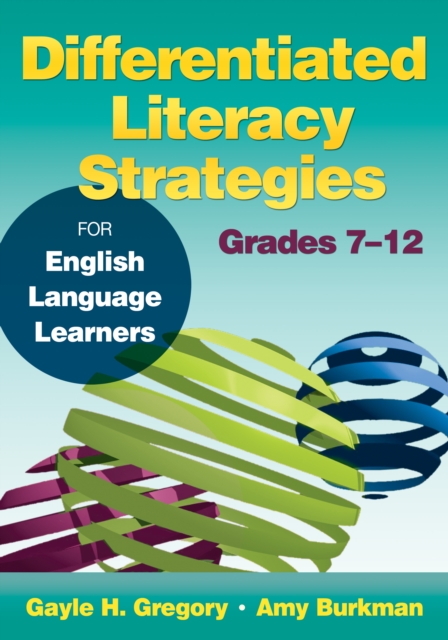
Differentiated Literacy Strategies for English Language Learners, Grades 7-12
100 ways to keep adolescent ELLs engagedThis versatile handbook is for middle school and high school educators who need to differentiate literacy instruction for adolescent ELL students at various stages of literacy competency. Adapted from the highly successful Differentiated Literacy Strategies for Student Growth & Achievement in Grades 7–12, the authors use brain-based strategies and texts that appeal to older learners who may have had interrupted formal education or come from newly arrived immigrant populations. More than 100 hands-on tools help teachers develop students' competencies in: Content areas, including vocabulary, concept attainment, and comprehension; Technology, such as information searching, evaluation, and synthesis; Creative applications and 21st century skillsWritten for classroom teachers, reading specialists, curriculum developers, and instructional leaders, this one-stop source provides an expert guide to working with all of today's adolescent and teen English language learners.
eBook

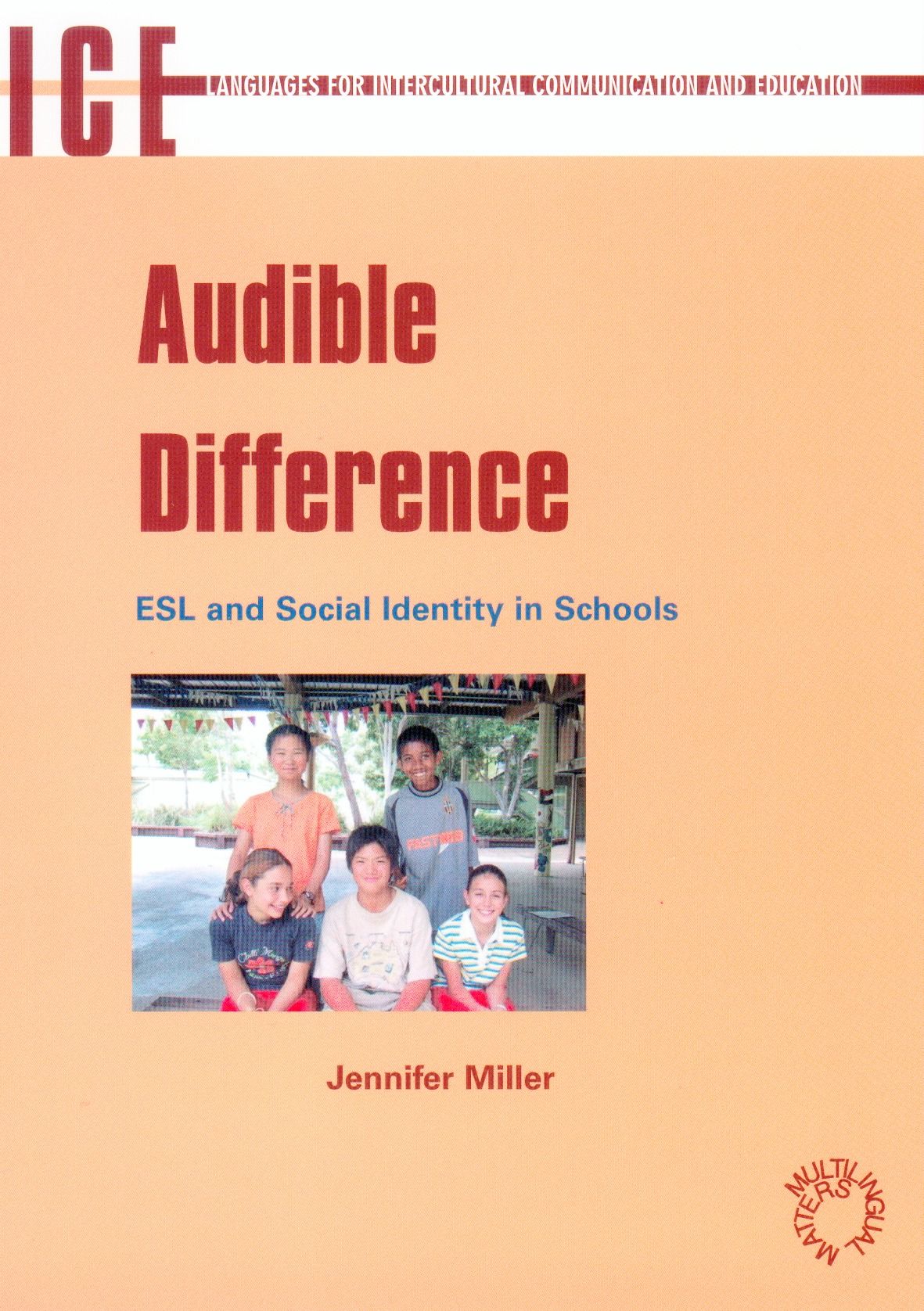
Audible Difference
This book is about the relationship between learning English as an additional language and the ways in which immigrant students are able to represent their identities at school. In high schools, how such students are heard by others may be just as important as how they speak.
eBook