
Catalogue Search | MBRL


Are you sure you want to remove the book from the shelf?

{{itemTitle}}
8,125
result(s) for
"Fair trial"
Sort by:

What does a juror do?
The Constitution of the United States lists many rights for citizens. A fair trial by jury is one of those rights. A jury is made up of people from the place where the crime happened. These jurors are picked from a pool of citizens. Jurors hear evidence and receive directions from the judge for the case. After hearing the case, jurors decide if a person is guilty or innocent. In some cases, jurors also decide the punishment. This book will explore what it means to be a juror through an inquiry-based approach aligned with C3 standards. --Amazon
Book

The Right to a Fair Trial Under Article 6 ECHR During the Covid-19 Pandemic
Purpose: The aim of the study is to analyse the possibility of modifying procedural law in the context of the legislative measures taken in connection with the COVID-19 pandemic on the example of the Polish administrative judiciary system. Design/Methodology/Approach: The study employs the dogmatic-legal method, analysing the provisions of the ECHR and examples of the regulation of administrative court proceedings in Poland. The interpretation of the provisions is carried out taking into account the jurisprudence of the courts, in particular the jurisprudence of the ECtHR. Findings: The study shows that no regulation taking away the right to have the case heard in public is compliant with the ECHR. Public hearing is in fact a crucial aspect of the right to a fair trial. However, in order to mitigate the effects of a pandemic, states may introduce such solutions which – within the limits of art. 6 sec. 1 ECHR – modify the law. Academic contribution to the field: The study suggests theoretical and general solutions to the problem that arose during the COVID-19 pandemic: whether and how certain aspects of the right to a fair trial can be limited without violating its essence. The issue is analysed from the perspective of the administrative judiciary and legal solutions adopted in Poland, but the conclusions may also apply to the regulations of other European countries and even to the civil or criminal judiciary. Practical Implications: The paper presents the requirements provided in art. 6 sec. 1 ECHR in the context of restrictions of public hearing implemented to counteract the spread of the COVID-19 pandemic. It may be a basis for further studies of the problem or for assessing the solutions adopted in the member states of the Council of Europe. Originality/Value: Publications concerning modifications to procedural law in the context of the COVID-19 pandemic are not numerous in scientific literature. Due to the lack of analyses, the paper will contribute to the development of literature.
Journal Article

Irish speakers, interpreters, and the courts, 1754 -1921
The extent and duration of interpreter provision for Irish speakers appearing in court in the long nineteenth century have long been a conundrum. In 1737 the Administration of Justice (Language) Act stipulated that all legal proceedings in Ireland should take place in English, thus placing Irish speakers at a huge disadvantage, obliging them to communicate through others, and treating them as foreigners in their own country. Gradually, over time, legislation was passed to allow the grand juries, forerunners of county councils, to employ salaried interpreters. Drawing on extensive research on grand jury records held at national and local level, supplemented by records of correspondence with the Chief Secretary's Office in Dublin Castle, this book provides definitive answers on where, when, and until when, Irish language court interpreters were employed. Contemporaneous newspaper court reports are used to illustrate how exactly the system worked in practice and to explore official, primarily negative, attitudes towards Irish speakers. The famous Maamtrasna murders trials, where, most unusually for such a serious case, a police constable acted as court interpreter, are discussed. The book explains the appointment process for interpreters, discusses ethical issues that arose in court, and includes microhistories of some 90 interpreters.
Book
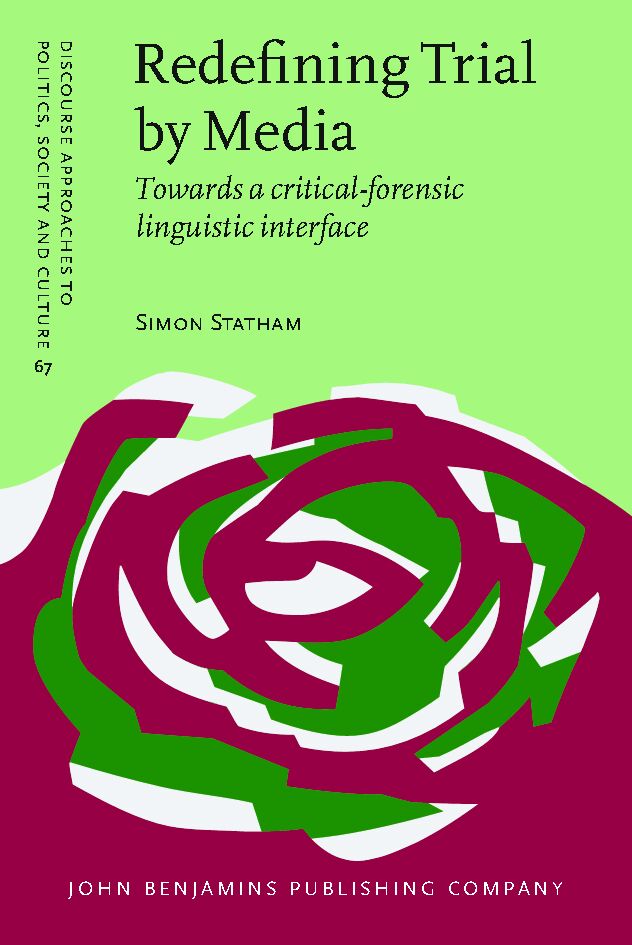
Redefining trial by media : towards a critical-forensic linguistic interface
Redefining Trial by Media: Towards a critical-forensic linguistic interface applies a range of linguistic models to recast trial by media not as a sensationalist and infrequent phenomenon, but as a systematic and routine process. Using critical discourse analysis and cognitive linguistic models, this book builds a Spectrum of Trial by Media which views juries in criminal trials as moulded by ideological media-made constructions of crime. The role of these media constructions is enhanced by the isolation levied on jurors by the linguistic composition of trial language, and reinforced by the language strategies of legal professionals in court. Critically deconstructing media portrayals of crime and forensically examining the language of criminal proceedings, this book offers a redefinition of trial by media which casts the role of the press as much more prevalent in the courtroom trial than is presently appreciated.
eBook
Procedural justice and the fair trail in contemporary Chinese criminal justice
This review examines the literature on procedural justice and the fair trial over the past two decades in the People's Republic of China. Part 1 gives a wide-angle view of the key political events and developments that have shaped the experience of procedural justice and the fair trial in contemporary China. It provides a storyline that explains the political environment in which these concepts have developed over time. Part 2 examines how scholars understand the legal structures of the criminal process in relation to China's political culture. Part 3 presents scholarly views on three enduring problems relating to the fair trial: a presumption of innocence, interrogational torture, and the role of lawyers in the criminal trial process. 0Procedural justice is a particularly pertinent issue today in China, because Xi Jinping's yifa zhiguo (governing the nation in accordance with the law) governance platform seeks to embed a greater appreciation for procedural justice in criminal justice decision-making, to correct a politico-legal tradition overwhelmingly focused on substantive justice. Overall, the literature reviewed in this article points to the serious limitations in overcoming the politico-legal barriers to justice reforms that remain intact in the system, despite nearly four decades of constant reform.
Book
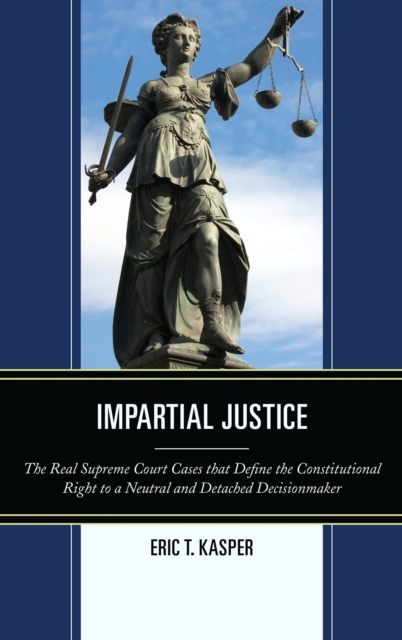
Impartial justice
This book examines the right to a neutral and detached decisionmaker as interpreted by the U.S. Supreme Court. This right resides in the Constitution’s Fifth Amendment and Fourteenth Amendment guarantees to procedural due process and in the Sixth Amendment’s promise of an impartial jury. Supreme Court cases on these topics are the vehicles to understand how these constitutional rights have come alive. First, the book surveys the right to an impartial jury in criminal cases by telling the stories of defendants whose convictions were overturned after they were the victims of prejudicial pretrial publicity, mob justice, and discriminatory jury selection. Next, the book articulates how our modern notion of judicial impartiality was forged by the Court striking down cases where judges were bribed, where they had other direct financial stakes in the outcome of the case, and where a judge decided the case of a major campaign supporter. Finally, the book traces the development of the right to a neutral decisionmaker in quasi-judicial, non-court settings, including cases involving parole revocation, medical license review, mental health commitments, prison discipline, and enemy combatants. Each chapter begins with the typically shocking facts of these cases being retold, and each chapter ends with a critical examination of the Supreme Court’s ultimate decisions in these cases.
eBook

Fair Trials
The right to a fair trial has become an issue of increasing public concern, following a series of high profile cases such as the Bulger case, Khan (Sultan) and R v DPP ex p Kebilene. In determining the scope of the right, we now increasingly look to the ECHR, but the court has given little guidance, focusing on reconciling procedural rules rather than addressing the broader issues. This book addresses the issue of the meaning of the right by examining the contemporary jurisprudence in the light of a body of historical literature which discusses criminal procedure in a European context. It argues that there is in fact a European criminal procedural tradition which has been neglected in contemporary discussions, and that an understanding of this tradition might illuminate the discussion of fair trial in the contemporary jurisprudence. This challenging new work elucidates the meaning of the fair trial and in doing so challenges the conventional approach to the analysis of criminal procedure as based on the distinction between adversarial and inquisitorial procedural systems. The book is divided into two parts. The first part is dominated by an examination of the fair trial principles in the works of several notable European jurists of the nineteenth century, arguing that their writings were instrumental in the development of the principles underlying the modern conception of criminal proceedings. The second part looks at the fair trials jurisprudence of the ECHR and it is suggested that although the Court has neglected the European tradition, the jurisprudence has nevertheless been influenced, albeit unconsciously, by the institutional principles developed in the nineteenth century
eBook


The Human Right to a Fair Trial in Competition Law Enforcement Procedures: A Rising Issue in Indonesian Experiences
The Indonesian Competition Supervisory Commission (ICSC) has the authority to investigate, prosecute, adjudicate, decide, and impose sanctions on business actors for violating Indonesian competition law. It also has the authority to establish procedural laws for the competition law enforcement procedures within its institution. This single role raises various issues in the current context, including the right to a fair trial and checks and balances. This article seeks to define the position of human rights, particularly the right to a fair trial, in competition law enforcement procedures. The result is that competition law enforcement procedures are subordinate to human rights, so they must be exercised in compliance with human rights standards, particularly the right to a fair trial. Based on the experience in Indonesia, this study finds that the ICSC’s single role is incompatible with human rights commitments in fair competition law enforcement procedures. As an alternative solution, this article encourages a modification and adjustment based on human rights commitments and checks and balances mechanism by limiting one of the ICSC’s authorities and broadening the interference of the Supreme Court in enforcing Indonesian competition law at the ICSC level.
Journal Article