
Catalogue Search | MBRL


Are you sure you want to remove the book from the shelf?

{{itemTitle}}
51
result(s) for
"Folklore Ukraine."
Sort by:

The mitten : a Ukrainian folktale
Several animals sleep snugly in Nicki's lost mitten until the bear sneezes.
Book

The Cossack Myth
In the years following the Napoleonic Wars, a mysterious manuscript began to circulate among the dissatisfied noble elite of the Russian Empire. Entitled The History of the Rus', it became one of the most influential historical texts of the modern era. Attributed to an eighteenth-century Orthodox archbishop, it described the heroic struggles of the Ukrainian Cossacks. Alexander Pushkin read the book as a manifestation of Russian national spirit, but Taras Shevchenko interpreted it as a quest for Ukrainian national liberation, and it would inspire thousands of Ukrainians to fight for the freedom of their homeland. Serhii Plokhy tells the fascinating story of the text's discovery and dissemination, unravelling the mystery of its authorship and tracing its subsequent impact on Russian and Ukrainian historical and literary imagination. In so doing he brilliantly illuminates the relationship between history, myth, empire and nationhood from Napoleonic times to the fall of the Soviet Union.
eBook

The mitten
\"When Nicki drops his white mitten in the snow, he goes on without realizing that it is missing. One by one, woodland animals find it and crawl in: first, a curious mole, then a rabbit, a badger, and others, each one larger than the last. Finally, a big brown bear is followed in by a tiny brown mouse\"-- From publisher's website.
Book


The Cossack myth : history and nationhood in the age of empires
\"In the years following the Napoleonic Wars, a mysterious manuscript began to circulate among the dissatisfied noble elite of the Russian Empire. Entitled 'The History of the Rus,' it became one of the most influential historical texts of the modern era. Attributed to an eighteenth-century Orthodox archbishop, it described the heroic struggles of the Ukrainian Cossacks. Alexander Pushkin read the book as a manifestation of Russian national spirit, but Taras Shevchenko interpreted it as a quest for Ukrainian national liberation and it would inspire thousands of Ukrainians to fight for the freedom of their homeland. Serhii Plokhy tells the fascinating story of the text's discovery and dissemination unravelling the mystery of its authorship and tracing its subsequent impact on Russian and Ukrainian historical and literary imagination. In so doing he brilliantly illuminates the relationship between history, myth, empire and nationhood from Napoleonic times to the fall of the Soviet Union\"-- Provided by publisher.
Book
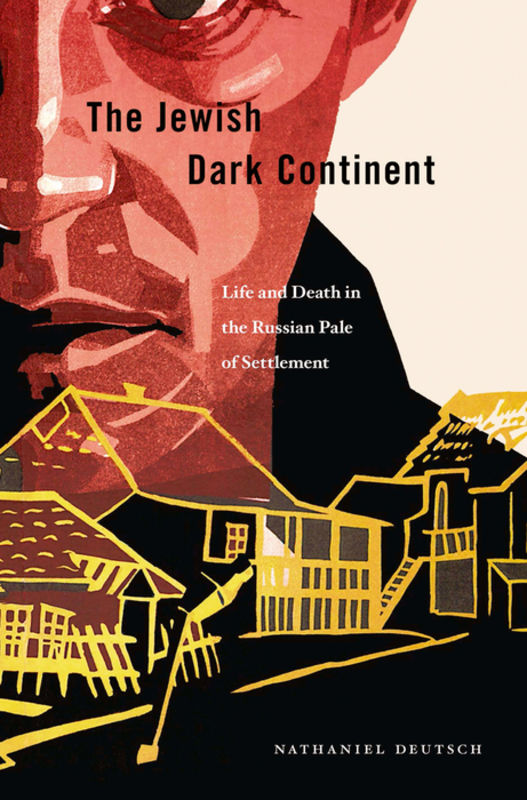
The Jewish dark continent : life and death in the Russian pale of settlement
At the turn of the twentieth century, over forty percent of the world's Jews lived within the Russian Empire, almost all in the Pale of Settlement. From the Baltic to the Black Sea, the Jews of the Pale created a distinctive way of life little known beyond its borders. This led the historian Simon Dubnow to label the territory a Jewish \"Dark Continent.\" Just before World War I, a socialist revolutionary and aspiring ethnographer named An-sky pledged to explore the Pale. He dreamed of leading an ethnographic expedition that would produce an archive—what he called an Oral Torah of the common people rather than the rabbinic elite—which would preserve Jewish traditions and transform them into the seeds of a modern Jewish culture. Between 1912 and 1914, An-sky and his team collected jokes, recorded songs, took thousands of photographs, and created a massive ethnographic questionnaire. Consisting of 2,087 questions in Yiddish—exploring the gamut of Jewish folk beliefs and traditions, from everyday activities to spiritual exercises to marital intimacies—the Jewish Ethnographic Program constitutes an invaluable portrait of Eastern European Jewish life on the brink of destruction. Nathaniel Deutsch offers the first complete translation of the questionnaire, as well as the riveting story of An-sky's almost messianic efforts to create a Jewish ethnography in an era of revolutionary change. An-sky's project was halted by World War I, and within a few years the Pale of Settlement would no longer exist. These survey questions revive and reveal shtetl life in all its wonder and complexity.
eBook

Oleksa Dovbush: An Alternative Mythical Biography of the Ukrainian Hero Based on Jewish Sources
This paper analyzes the alternative biography of Oleksa Dovbush, a Ukrainian Robin Hood, according to Jewish folklore and its reflection in Jewish literature. During the transformational process Dovbush's image undergoes marked changes. He may be likened to an animal, as is typical for the image of the other, or he may be deprived of magical power and of anti-Semitic attitudes and may repent before a pious Jew. This is a typical example of the cross-cultural migration of plots and images.
Je me propose ici d'analyser la biographie alternative d'Oleksa Dovbush qui, selon le folklore juif et ses reflets dans la littérature juive, était un Robin des Bois ukrainien. Pendant le processus de transformation, l'image de Dovbush a connu de forts changements. Il peut être assimilé à une bête, ce qui est typique de l'image de ‹ l'autre ›, il peut être dépourvu de pouvoirs magiques et de tendences antisémites et il peut faire acte de pénitence devant un Juif pieux. Nous sommes donc en présence d'une situation typique de la migration de sujets et d'images à travers les cultures.
Untersucht wird die alternative Biographie von Oleksa Dovbush, der jüdischer Volksüberlieferung und ihrer Widerspiegelung in der jüdischen Literatur zufolge ein ukrainischer Robin Hood war. Im Transformationsprozeß machte Dovbushs Bild ausgeprägte Veränderungen durch. Er kann tierähnliche Züge verliehen bekommen, wie es für das Bild des ‚anderen‘ typisch ist, er kann seiner magischen Kräfte verlustig gehen und keine antisemitischen Tendenzen mehr zeigen, und er kann vor einem frommen Juden Buße tun. Zu beobachten ist eine typische Situation der kulturübergreifenden Wanderung von Sujets und Bildern.
Journal Article

How It Was Sung in Odessa: At the Intersection of Russian and Yiddish Folk Culture
Odessa has played a significant role in Russian and Yiddish folklore and popular culture. Although the city has changed with the times, the Odessa variant of the Russian language and the Russian and Yiddish songs created in and about Odessa are the lasting product of a unique brand of multiculturalism. The Russian of Odessa shows die influence of Yiddish and Ukrainian in grammar, lexicon, and phraseology, and Odessa folk humor reflects Jewish sensibilities. Odessa Yiddish is permeated with Russianisms. The repertoire of Russian and Yiddish songs about Odessa reveals the mixed character of die respective languages. The songs portray a unique city: one tfiat is more impressive than Vienna or Paris; one that embodies progress and the carefree life but is also dangerous. These songs deal with various aspects of the Jewish experience but also with the life of the underworld, employing the stylistic conventions of the so-called blatnaia pesnia.
Journal Article

Forging Rights in a New Democracy
The last two decades have been marked by momentous changes in forms of governance throughout the post-Soviet region. Ukraine's political system, like those of other formerly socialist states of Eastern Europe, has often been characterized as being \"in transition,\" moving from a Soviet system to one more closely aligned with Western models. Anna Fournier challenges this view, investigating what is increasingly recognized as a critical aspect of contemporary global rights discourse: the active involvement of young people living in societies undergoing radical change. Fournier delineates a generation simultaneously embracing various ideological stances in an attempt to make sense of social conditions marked by the disjuncture between democratic ideals and the everyday realities of growing economic inequality. Based on extensive fieldwork in public and private schools in the Ukrainian capital city of Kyiv,Forging Rights in a New Democracyexplores high-school-aged students' understanding of rights and justice, and the ways they interpret and appropriate discourses of citizenship and civic values in the educational setting and beyond. Fournier's rich ethnographic account assesses the impact on the making of citizens of both formal and informal pedagogical practices, in schools and on the streets. Chronicling her subjects' encounters with state representatives and \"violent entrepreneurs\" as well as their involvement in peaceful protests alongside political activists, Fournier demonstrates the extent to which young people both reproduce and challenge the liberal discourse of rights in ways that illuminate the everyday paradoxes of market democracy. By tracking students' active participation in larger contests about the nature of liberty and entitlement in the context of redefined rights, her book provides insight into emergent configurations of citizenship in the New Europe.
eBook

Building Fortress Europe
What happens when a region accustomed to violent shifts in borders is subjected to a new, peaceful partitioning? Has the European Union spent the last decade creating a new Iron Curtain at its fringes?Building Fortress Europe: The Polish-Ukrainian Frontierexamines these questions from the perspective of the EU's new eastern external boundary. Since the Schengen Agreement in 1985, European states have worked together to create a territory free of internal borders and with heavily policed external boundaries. In 2004 those boundaries shifted east as the EU expanded to include eight postsocialist countries-including Poland but excluding neighboring Ukraine. Through an analysis of their shared frontier,Building Fortress Europeprovides an ethnographic examination of the human, social, and political consequences of developing a specialized, targeted, and legally advanced border regime in the enlarged EU. Based on fieldwork conducted with border guards, officials, and migrants shuttling between Poland and Ukraine as well as extensive archival research,Building Fortress Europeshows how people in the two countries are adjusting to living on opposite sides of a new divide. Anthropologist Karolina S. Follis argues that the policing of economic migrants and asylum seekers is caught between the contradictory imperatives of the European Union's border security, economic needs of member states, and their declared commitment to human rights. The ethnography explores the lives of migrants, and their patterns of mobility, as framed by these contradictions. It suggests that only a political effort to address these tensions will lead to the creation of fairer and more humane border policies.
eBook