
Catalogue Search | MBRL


Are you sure you want to remove the book from the shelf?

{{itemTitle}}
728
result(s) for
"Food industry and trade Safety measures."
Sort by:

Occupational health and safety in the food and beverage industry
\"The text highlights the importance of achieving a safe and healthy working environment in the food and beverage processing industry. It provides information on food and beverage manufacturing disease, injury management, safer steps for employees to get back to work, discusses food security, safety, biosecurity, defense food safety, and quality including food adulteration. Discusses fundamentals of occupational health and safety in the food and beverage industry. Highlight standards and legislations as related to occupational health and safety for food and beverage processing sectors. Covers hazards, elements, accident prevention, various hazards present in food and beverage sectors, and their disease and injury management. Explores ethical issues in agri-food processing sectors and their effects on sustainability. Introduces importance, organization, and management for food and beverage processing sectors to prevent losses. The text is primarily written for professionals in the fields of occupational health and safety, food engineering, chemical engineering, and process engineering\"-- Provided by publisher.
Book
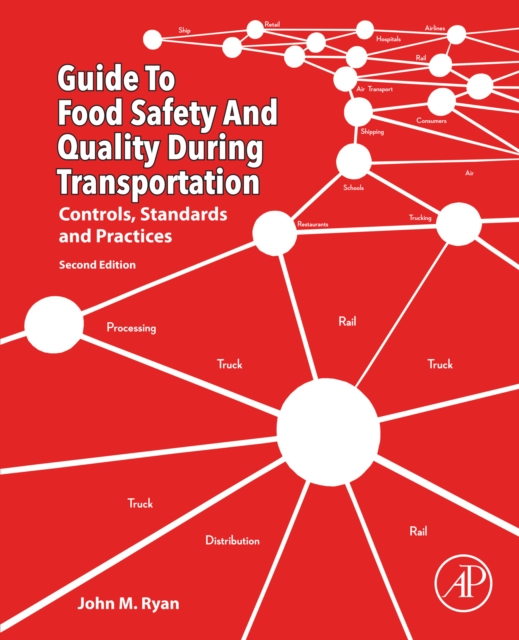
Guide to food safety and quality during transportation : controls, standards and practices
Guide to Food Safety and Quality during Transportation, Controls, Standards and Practice, Second Edition provides a solid foundation outlining logistics and delivery control solutions to protect the food transportation industry.Since its first publication, the U.S.
eBook
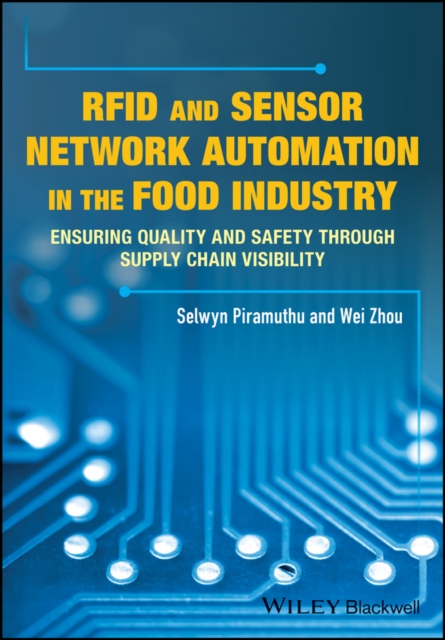
RFID and sensor network automation in the food industry : ensuring quality and safety through supply chain visibility
Radio Frequency Identification (RFID) is a key technology in the food industry that facilitates real-time visibility of items as they move through the supply chain and on to the end-consumer. Among all the currently available automatic identification technologies, RFID has clear dominance in terms of its ability to support real-time two-way communication, data storage and update, authentication, ambient condition sense and report, batch read without direct line-of-sight, operation in harsh environments and sensor-based applications.
RFID and Sensor Network Automation in the Food Industry provides sufficient detail on the use of RFID and sensor networks from `farm to fork? (F2F) to allow the reader to appreciate the myriad possible applications of RFID and associated sensor network systems throughout the entire food supply chain. This includes precision agriculture, the provision of seamless visibility in track and trace applications, reduction of wastage, identification of counterfeits and contamination sources, remaining shelf-life applications for perishables, and quality and safety measures, among others.
Providing state-of-the-art information from peer-reviewed research publications as well as general industry trends, this book will be of interest to all stakeholders in the agri-food supply chain, and academics and advanced students with an interest in these fields.
eBook

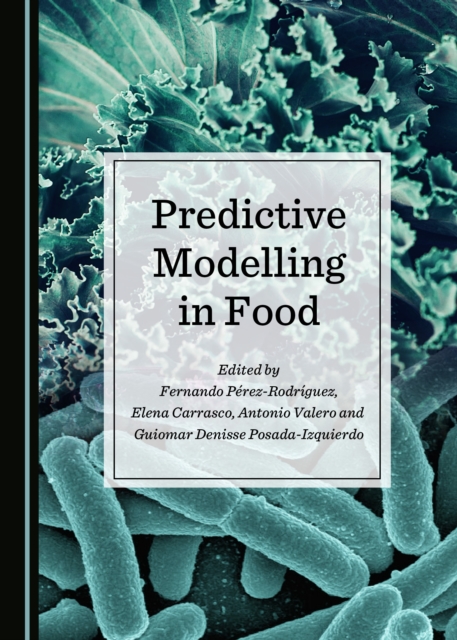
Predictive Modelling in Food
This volume brings together papers detailing the latest advances in the field of predictive microbiology in foods presented at the 10th International Conference on Predictive Modelling in Food, held in Córdoba, Spain, in 2016. Predictive microbiology is a scientific area providing mathematical models to predict microbial behaviour in the food environment, providing valuable tools for food risk managers, food scientists and the food industry as a whole. The book introduces the reader to the most used and recognized modelling techniques for food, providing a thorough overview of this discipline and establishing the basis for future investigations. It is presented as a compendium of several high-quality research studies developed across the world, representing a unique contribution to the field as it shows recent discoveries and new trends of modelling in food and risk assessment. The most innovative methods, such as the use of genomic information for risk assessment and the application of quantitative risk assessment technology for foodborne pathogenic microorganisms, are also included here.
eBook

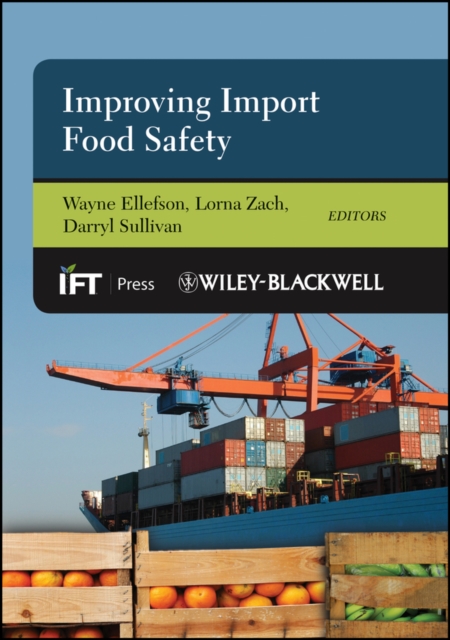
Improving import food safety
Food safety has been a global concern for many years.While global sourcing of foods and ingredients provides great opportunity for variety and diversity of cultural products, there are significant risks.Programs that regulate food safety and quality in countries around the world vary in their scope and effectiveness, with many being underfunded.
eBook

new regulation and governance of food
Major questions surround who, how, and by what means should the interests of government, the private sector, or consumers hold authority and powers over decisions concerning the production and consumption of foods. This book examines the development of food policy and regulation following the BSE (mad cow disease) crisis of the late 1990s, and traces the changing relationships between three key sets of actors: private interests, such as the corporate retailers; public regulators, such as the EU directorates and UK agencies; and consumer groups at EU and national levels. The authors explore how these interests deal with the conundrum of continuing to stimulate a corporately organised and increasingly globalised food system at the same time as creating a public and consumer-based legitimate framework for it. The analysis develops a new model and synthesis of food policy and regulation which reassesses these public/private sector responsibilities with new evidence and theoretical insights.
Preface. Methodological Note. Section 1: Exploring the Anatomy of the Food Crisis 1. The Anatomy of the Food Crisis: Regulating the Risk of Geographies of Agri-Food in the 21st Century 2. Handling Biosecurity Risk: The Foot and Mouth Outbreak 2001 3. Genetic Disorders: Resistance, Regulation and GM Food and Feed Section 2: The Evolving Hybrid Model 4. State Failures and Failures of the State 5. A New Regulatory Terrain: The Emerging Public/Private Model in Europe 6. Building Relationships in a New Phase of Contested Accountability in the UK: Incorporating the New Public-Private Model of Food Regulation Section 3: Operating the Hybrid Model: Case Studies of Regulatory Supply Chains 7. The Cutting Edge of Retail Grocery Competition: The Case of the Fresh Fruit and Vegetable Supply Chain 8. The Operation of the Hybrid Model: The Case of Red Meat Section 4: Key Contemporary Dynamics of Regulation 9. The New Institutional Fabric: The Public Management of Food Risks 10. Food risk and Precaution: The Precautionary Principle in Practice 11. From Europeanisation to Globalisation of the Public-Private Model of Food Regulation 12. Conclusions
Terry Marsden, Robert Lee, Andrew Flynn and Samarthia Thankappan are all affiliated with the ESRC Centre for Business Relationships, Accountability, Sustainability and Society at Cardiff University.
eBook