
Catalogue Search | MBRL


Are you sure you want to remove the book from the shelf?

{{itemTitle}}
16
result(s) for
"Forbidden Planet"
Sort by:

Selling Science Fiction Cinema
How science fiction films in the 1950s were marketed and
helped create the broader genre itself. For Hollywood, the
golden age of science fiction was also an age of anxiety. Amid
rising competition, fluid audience habits, and increasing
government regulation, studios of the 1950s struggled to make and
sell the kinds of films that once were surefire winners. These
conditions, the leading media scholar J. P. Telotte argues,
catalyzed the incredible rise of science fiction.
Though science fiction films had existed since the earliest days
of cinema, the SF genre as a whole continued to resist easy
definition through the 1950s. In grappling with this developing
genre, the industry began to consider new marketing approaches that
viewed films as fluid texts and audiences as ever-changing. Drawing
on trade reports, film reviews, pressbooks, trailers, and other
archival materials, Selling Science Fiction Cinema
reconstructs studio efforts to market a promising new genre and, in
the process, shows how salesmanship influenced what that genre
would become. Telotte uses such films as The Thing from Another
World , Forbidden Planet , and The Blob , as
well as the influx of Japanese monster movies, to explore the
shifting ways in which the industry reframed the SF genre to market
to no-longer static audience expectations. Science fiction
transformed the way Hollywood does business, just as Hollywood
transformed the meaning of science fiction.
eBook

Miranda Unchained
This paper examines the portrayal of female characters analogous to Miranda from William Shakespeare’s The Tempest in four audiovisual adaptations: the short black-and-white film The Tempest (Stow, 1908), the film Forbidden Planet (Wilcox, 1956), the episode “Requiem for Methuselah” from the TV series Star Trek (Bixby & Golden, 1969), and the Ikea TV commercial “Beds” (Cabral, 2014). Using gender theory alongside a semi-neo-historicist approach, my analysis contrasts the representation of these characters with the status of women’s rights in the corresponding historical periods. This study evaluates whether these portrayals reflect or challenge contemporaneous gender norms and societal roles and traces the broader evolution of gender equality and feminine freedom in the Western world from the 20th century to today. The findings suggest a generally positive trajectory, although often more progressive than that of the four productions’ historical realities.
Journal Article

Oppenheimer's Heir: Morbius and Atomic Technology in Forbidden Planet
This article argues that the character of Morbius in Fred Wilcox's 1956 film Forbidden Planet is representative of J. Robert Oppenheimer, the American theoretical physicist who is often referred to as the father of the atomic bomb.
Journal Article
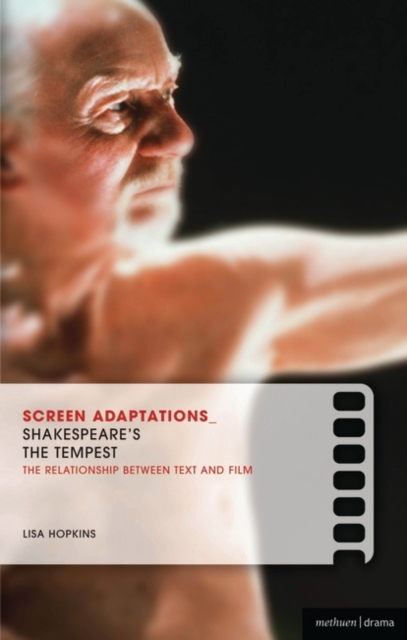
Shakespeare's The tempest: the relationship between text and film
Literature and film studies students will find plenty of materialto support their courses and essay writing on how the film versionsprovide different readings of the original text.Focussing on numerous film versions, from Percy Stow's 1908 adaptation to Peter Greenaway's Prospero's Books,the book discusses: the literary text in its historical context, keythemes and dominant readings of the text, how the text is adapted forscreen and how adaptations have changed our reading of the originaltext. There are numerous excerpts from the literary text, screenplaysand shooting scripts, with suggestions for comparison. The book alsofeatures quotations from authors, screenwriters, directors, critics andothers linked with the chosen film and text.
eBook

Harvest Time
Chapter 32 begins with Bradbury’s reaction to news of Federico Fellini’s death on Halloween, 1993, and explores Bradbury’s sense of Halloween as a time of “fervor and excitement,” but not a time of happiness. Bradbury’s reflections on the later Fellini films gives way to the more positive process of bringing The Halloween Tree back to its original concept as an animated film with Hanna-Barbera and the Turner Broadcasting System. The chapter concludes with Bradbury’s work on two unrealized science fiction film projects, a proposed remake of the 1950s classic Forbidden Planet and short-lived plans for a sequel to The Day the Earth Stood Still. The chapter concludes with an examination of “Beyond Giverny,” Bradbury’s speculative American Way essay on life in the cosmos.
Book Chapter

Monocentrism, or Soundtracks in Space
This chapter investigates how the introduction of stereo complicated Hollywood’s vococentric practices. It also reveals how sound technicians developed mixing techniques that preserved the salience of dialogue in multi-channel soundscapes. The author refers to such techniques as monocentrism and illustrates monocentric norms by analyzing the climactic scene from The Martian (2015). The chapter then examines how technicians often play with these norms in order to change the meaning of a given sequence. To demonstrate this phenomenon, the author analyzes the Louis and Bebe Barrons’s score to Forbidden Planet (1956) and argues that MGM’s rerecording engineers mixed the musical effects so that they panned to different locations within each theater, which thereby invited audiences to interpret these sounds as the voices of the film’s invisible monsters.
Book Chapter

Exquisite Fragility: Human Being in the Aftermath of War
This chapter contains sections titled:
References and Further Reading
Book Chapter
Edmond Dewan and Cybernetic Hi-Fi
On the program for A Concert of New Music, the physicist Edmond Dewan was listed as “Technical Assistant.” After the performance, as the applause died down, Lucier took to the floor and introduced him as the co-composer. Dewan was uneasy about being classed as a composer, half-jokingly because the US Air Force might wonder how he was spending his time, but more because of his respect for composers. He had developed this respect as an avid amateur and accomplished organist, with special interest in twentieth-century French organ music of Jehan Alain, Olivier Messiaen, Jean Langlais, Marcel Dupré, and Pierre Cochereau.¹
Book Chapter

Offbeat New Line show finds a whole new world 'Forbidden Planet' mixes Shakespeare, rock and sci-fi
[...] the show sounds perfect for theatergoers who enjoyed \"The Complete Works of William Shakespeare (abridged),\" a hit both at the Repertory Theatre of St. Louis and at St. Louis Shakespeare, or \"Corleone,\" the Shakespeare-style version of \"The Godfather\" that the Non-Prophets performed with memorable flair a couple of years ago. Forbidden Planet, a 1956 science-fiction movie inspired by The Tempest, changes the island to a distant planet, but keeps much of the basic story.
Newspaper Article

HERO COMPLEX; 'Forbidden Planet' saucer lands at auction
On Thursday, the iconic flying saucer from the 1956 MGM classic \"Forbidden Planet\" will be auctioned in Calabasas Hills and is expected to fetch between $80,000 and $120,000, which would be a nice payday for its owner, a North Carolina man who had the prop stored in his garage and didn't realize its market value.
Newspaper Article