
Catalogue Search | MBRL


Are you sure you want to remove the book from the shelf?

{{itemTitle}}
45,278
result(s) for
"França"
Sort by:
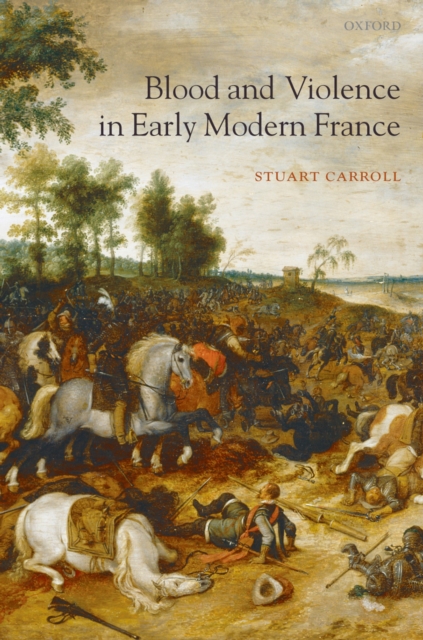
Blood and Violence in Early Modern France
The rise of civilised conduct and behaviour has long been considered as one of the major factors in the transformation from medieval to modern society. Thinkers and historians alike argue that violence progressively declined as men learned to control their emotions. The feud is a phenomenon associated with backward societies, and in the West duelling codified behaviour and channelled aggression into ritualised combats that satisfied honour without the shedding of blood. French manners and codes of civility laid the foundations of civilised Western values. But as this original work of archival research shows, we continue to romanticise violence in the era of the swashbuckling swordsman. In France, thousands of men died in duels in which the rules of the game were regularly flouted. Many duels were in fact mini-battles and must be seen not as a replacement of the blood feud, but as a continuation of vengeance in a much bloodier form. This book outlines the nature of feuding in France and its intensification in the wake of the Protestant Reformation, civil war, and dynastic weakness, and considers the solutions proposed by thinkers from Michel de Montaigne to Thomas Hobbes. The creation of the largest standing army in Europe since the Romans was one such solution, but the militarisation of society, a model adopted throughout Europe, reveals the darker side of the civilising process.
eBook
El Paris de Le Corbusier
\"El París de Le Corbusier\" analiza las relaciones duales entre la ciudad y el arquitecto: la dialéctica entre la ciudad real - el París donde vivía- y la ciudad ideal - el París abstracto que proyectaba-. Intenta confrontar ambos mundos para entenderlos mejor. París es ocasión para comprender a Le Corbusier; Le Corbusier es ocasión para estudiar París. Ninguno de los dos factores quiere primar sobre el otro.
Le Corbusier encarna la dinámica del siglo XX en París. Es ahí donde vive la mayor parte de su vida, donde piensa, donde escribe, donde proyecta. La ciudad de Le Corbusier es el lugar de la realidad y el lugar de la utopía. Sus propuestas: la Villa Radieuse, la Ville Contemporaine, son a la vez un gesto profético y una imagen poética.
La confluencia de sus ideales con la realidad de París plantea un diálogo enriquecedor, cuyo desarrollo se expone en este libro a través de un discurso secuencial: Édouard, Jeanneret y Le Corbusier, atendiendo al descubrimiento de París por Édouard, a la dialéctica que París, provocador de energías, establece con Jeanneret, y al París de las propuestas de Le Corbusier, haciendo de ellas una travesía poética y un encuentro vital. Pues Le Corbusier no sólo quiso proyectar la Ville Radieuse sino también vivir en ella.
eBook
Corporate Jurisdiction, Academic Heresy, and Fraternal Correction at the University of Paris, 1200-1400
In Corporate Jurisdiction, Academic Heresy, and Fraternal Correction at the University of Paris, 1200-1400, Gregory S. Moule explains how the theological faculty acquired independent jurisdiction over cases of academic heresy among its membership.
eBook

Neofascismos e Pós-fascismos Contemporâneos: Fratelli d’Italia e Rassemblement National
Este artigo examina as ideologias de dois partidos europeus de extrema-direita: Fratelli d’Italia e Rassemblement National. Embora o rótulo “extrema direita” situe esses partidos dentro de uma “família” político-ideológica específica, ele oferece uma visão limitada das ideias que moldam suas ações. Para definir melhor suas ideologias, são explorados os conceitos de fascismo, neofascismo e pós-fascismo. A análise das teses programáticas e plataformas eleitorais dessas organizações revela uma visão de mundo ultranacionalista e xenófoba. No centro de sua ideologia estão os mitos de crise e declínio, juntamente com temas de reconstrução e renascimento civilizacional. Essa base ideológica compartilhada justifica sua classificação como pós-fascista.
Journal Article

Presentação ao dossiê moralidades, igrejas e escolas: Políticas públicas educacionais em tempos republicanos(Brasil e França, sec. XIX a XXI)
The text presents some parameters for comparing the history of secularism in public education in Brazil and France, from the last quarter of the 19th century to the present. In light of historical and sociological data from both countries, concepts such assecularisation, desecularisation and secularism are discussed, whose meanings are conceived and disputed in different ways according to academic circles (Anglo-Saxon and French, roughly speaking). Next, it presents a series of articles, which have as a common theme the clashes surrounding how formal education should be conceived and practised in republican societies with regard to the treatment given to the role of moral regulatory institutions. Concern with the formation of morality is a fundamental element of educational thinking and practice in republican historical periods in various countries, such as Brazil and France.
O texto apresenta alguns parâmetrosde comparação sobrea história da laicidade na educação pública entreBrasil e França, desde o último quarto doséculo XIX até o presente. À luz dos dados históricos e sociológicos de ambos os países, discutem-se conceitoscomo secularização, dessecularização e laicidade, cujos sentidos são concebidos e têm seu sentido disputado sob diferentes formas conforme oscircuitos acadêmicos (anglo-saxãoe francês, grosso modo). Em seguida, apresenta a série de artigos, os quais possuem como tema em comum os embates em torno de como deve ser concebida e praticada a educação formal em sociedades republicanas no que diz respeito ao tratamento conferido ao papel das instituições reguladoras da moral. Apreocupação com a formação da moralidade é elemento fundamental do pensamento e da prática educativa nos períodos históricos republicanos em diversos países, como o Brasil e a França.
El texto presenta algunos parámetros de comparación entre la historia de la laicidad en la educación pública en Brasil y Francia, desde el último cuarto del siglo XIX hasta la actualidad. A la luz de los datos históricos y sociológicos de ambos países, se discuten conceptos como secularización, desecularización y laicidad, cuyos significados se conciben y se disputan de diferentes formas según los circuitos académicos (anglosajón y francés, a grandes rasgos). A continuación, se presenta una serie de artículos que tienen como tema común los debates en torno a cómo debe concebirse y practicarse la educación formal en las sociedades republicanas en lo que respecta al tratamiento que se da al papel de las instituciones reguladoras de la moral. La preocupación por la formación de la moralidad es un elemento fundamental del pensamiento y la práctica educativa en los períodos históricos republicanos en varios países, como Brasil y Francia.
Journal Article

Rome and Byzantium in the Visigothic Kingdom
This volume interrogates the assumption that Visigothic practices and institutions were mere imitations of the Byzantine empire. Contributors rethink these practices not as uncritical and derivative adoptions of Byzantine customs, but as dynamic processes in dialogue with not only the Byzantine empire but also with the contemporary Iberian context, as well as the Roman past. The goal of the volume is to approach Visigothic customs not as an uncritical adoption and imitatio of contemporary Roman models (an 'acculturation' model), but as unique interpretations of a common pool of symbols, practices, and institutions that formed the legacy of Rome. The contributors argue that it is necessary to reconsider the idea of imitatio imperii as a process that involved specific actors taking strategic decisions in historically contingent circumstances.
eBook

As disciplinas escolares como campos em (trans)formação
Este artigo analisa as duas primeiras décadas de existência da disciplina Ciências Econômicas e Sociais (SES) no ensino médio francês (1965-1985). Com base em uma análise de arquivos do Ministério da Educação Nacional da França, complementada por entrevistas com agentes sociais que tiveram notável atuação nesse percurso, busca-se evidenciar a formação de um “campo social”, cujos participantes estavam envolvidos em um “trabalho conflituoso” de definição da legitimidade do ensino de Ciências Econômicas e Sociais. Três fases são destacadas durante o período estudado: a primeira consistiu em fazer com que as disciplinas vizinhas aceitassem a existência desse novo ensino, a segunda envolveu a homogeneização de um corpo docente em um contexto de escassez de especialistas na área e a terceira viu a autonomia do projeto inicial ser questionada pelos defensores da padronização desse ensino.
Journal Article

Marie-Antoinette's Legacy
Challenging the established historiography that frames the French picturesque garden movement as an international style, this book contends that the French picturesque gardens from 1775 until 1867 functioned as liminal zones at the epicenter of court patronage systems.
eBook