
Catalogue Search | MBRL


Are you sure you want to remove the book from the shelf?

{{itemTitle}}
71,916
result(s) for
"GLORIA"
Sort by:

Who is Gloria Steinem?
Presents the life of the prominent feminist, highlighting her career and influence as a writer, political activist, and co-founder of \"Ms.\" magazine.
Book

The Affective Injustice of Linguistic Shame
This article proposes that linguistic shame is a form of affective injustice and describes some of the benefits of classifying it as such. Linguistic shame involves feelings of embarrassment, a sense of inferiority, and attitudes of self-reproach that arise in relation to the way one speaks. The article gives an account of three main types of linguistic shame to which Latinx people are subject: the shame of the English as a second-language speaker; the shame of the Spanglish speaker; and the shame of the English-only speaker. In all cases, linguistic shame emerges in the context of linguicism, a system in which some ways of speaking are privileged and the way one speaks is an indicator of the speaker's social status. Classifying linguistic shame as an affective injustice highlights the political nature of the emotion and provides some guidance for how to resist this injustice.
Journal Article

The world of Gloria Vanderbilt
Gloria Vanderbilt is many things: an heiress, a painter, a muse, a designer, a model, a writer, an entrepreneur, an actor, a socialite, a survivor, an icon. She brought the Vanderbilt name out of the Gilded Age and into the Digital Age, reinventing herself over and over along the way. Hers is a story of charisma, glamour, and heartbreaking loss, told here by Wendy Goodman, who had intimate access to Vanderbilt for this book. The illustrations include portraits of Vanderbilt and her extraordinary homes, filled with original and influential decorating ideas, by such photographic legends as Richard Avedon, Louise Dahl-Wolfe, Inge Morath, Horst P. Horst, Francesco Scavullo, and Annie Leibovitz. Vanderbilt's son, Anderson Cooper, contributes a foreword.--From publisher description.
Book

Black Woman in Green
From an unlikely beginning as an agency transcriptionist in her hometown of Washington, DC, Gloria Brown became the first African American woman to attain the rank of forest supervisor at the US Forest Service. As a young widow with three children, she transferred to Missoula, Montana, and embarked on a remarkable journey, ultimately leading the Siuslaw National Forest in Oregon and later the Los Padres in California. The story of Brown’s career unfolds against the backdrop of a changing government agency and a changing society.
As scholars awaken to the racist history of public land management and the ways that people of color have been excluded from contemporary notions of nature and wilderness, Brown’s story provides valuable insight into the roles that African Americans have carved out in the outdoors generally and in the field of environmental policy and public lands management specifically. Drawing on her powerful communication and listening skills, her sense of humor, and her willingness to believe in the basic goodness of humanity, Brown conducted civil rights trainings and shattered glass ceilings, all while raising her children alone.
Written in an engaging and accessible style with historian Donna Sinclair, Brown’s story provides a fascinating case study for public administration and contributes to a deeper understanding of the environmental and civil rights movements of the twentieth century, particularly the role that racial discrimination has played in national forests, parks, and other wilderness spaces. It also highlights issues of representation in the federal government, women’s history, the history of the American West, and literature associated with African American experiences in predominately white societies.
eBook
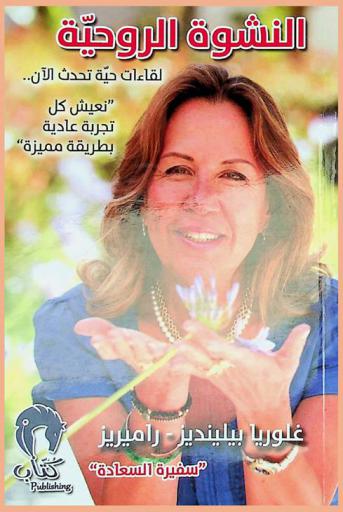
النشوة الروحية : ... لقاءات حية تحدث الآن
يتحدث الكتاب عن ماهي النشوة الروحية ؟؟ إنها بكل بساطة الخلاصة التي يصنع منها الوجود، نبضات ثابتة عميقة مع ما هو ؛ تواصل عميق مع العالم، شعور بأنك على قيد الحياة مع إدراك تصاعدي وانفجار معرفي، إدراك فجائي يتحد مع الآه... والواو...الشعور بعرفة أنه لا شيئ يجب أن تعرفه.. نحن فقط.. في صمت، في أعلى موجة حركية في جسدنا الذي يرتجف وفي دموعنا التي تجتاح كل خلية من وجودنا في نشوة كاملة، وامتنان وفرح.. هذه القناعة تجعلك تشعر بعدم الرغبة في المشاركة، لأنك جزء من الكل !!
BOOK

Introduction
Borders are complex configurations intertwined with political regimes, ecosystems, flows of bodies, objects, technologies, and affects. Feminist STS, with its attention to infrastructure and its intimacies, more-than-human relationalities, and investigative aesthetics, is ripe for a re-engagement with contemporary securitized borders and their lifeworlds. Using a mix of Spanish and English, we perform and theorize the importance of pocho linguistic third spaces for feminist community and offer practical tools for reading beyond English to frame the Spanish-language contributions in this Special Section. We ask how we can “know borders” otherwise and offer three emergent paths of reflexive engagement: Materialidades: Intimate Infrastructures, Ecologías: More-than-Human Migrations and Ecologies of Care, and Estéticas: The Research-Creation Nexus. After a curated review of the literature on borders and migration in the United States and Mexico, we suggest the analytic power of these lenses to nurture feminist attention to both the vibrancy and violences of contemporary borders and foster a grounded and generative politics of care and solidarity. Resumen Las fronteras son configuraciones complejas entrelazadas con regímenes políticos, ecosistemas y flujos de cuerpos, tecnologías y afectos. Los estudios feministas de la ciencia, con su atención puesta en la infraestructura y sus intimidades, las relaciones más-que-humanas y las estéticas investigativas, están maduros para un nuevo compromiso con las fronteras contemporáneas securitizadas y sus mundos de vida y muerte. Transitando entre el español y el inglés, y habitando lo que llamamos aquí un espacio de práctica pocho, exploramos y teorizamos sobre las posibilidades de los terceros espacios lingüísticos para la comunidad feminista y ofrecemos herramientas prácticas para leer más allá de los marcos interpretativos anglosajones hegemónicos. En esta sección especial abordamos la cuestión de cómo “conocer las fronteras” de otro modo, y ofrecemos tres vías emergentes de compromiso reflexivo: Materialidades: Infraestructuras íntimas, ecologías: Migraciones más que humanas y ecologías del cuidado, y estéticas: El nexo entre investigación y creación. Tras llevar a cabo una revisión cuidadosa de las literaturas sobre fronteras y migración en los Estados Unidos y México, sugerimos el poder analítico de estos lentes para nutrir la atención feminista tanto a las violencias como a la vitalidad y las potencias que se despliegan en las fronteras contemporáneas, abogando por una política situada de la solidaridad y el cuidado.
Journal Article

Outrageous acts and everyday rebellions
Steinem's book has sold over half a million copies since its original publication in 1983. Her truly personal writing is here, from the now-famous exposé, \"I Was a Playboy Bunny,\" to the tribute to her mother \"Ruth's Song (Because She Could Not Sing It).\" Her essays on female genital mutilation and the difference between erotica and pornography that are still referenced and relevant today, and the satire \"If Men Could Menstruate\" still resonates.
Book

Humour in the post-war press: Short stories of Gloria Fuertes in the falangist magazine Maravillas
The Spanish civil war entailed an impasse in the development of press as a communication platform. In fact, its instrumentalization for propaganda purposes explains its role in the consolidation of the new State. So, in the newspaper network created around the Movimiento Nacional (National Movement), the children's press occupied a predominant place due to its contribution to the education of future generations. So much so, that the strategical-ideological aims imposed by the regime coexisted in these platforms together with the collaboration of artists of prominent aesthetical level. Such is the case of Gloria Fuertes (1917-1998), who gave life in the magazine Maravillas, to very popular characters such as Coleta and Pelines to disseminate their short stories once more, back in the eighties, in three monographic books: Coleta, la poeta (1982), Coleta, payasa ¿qué pasa? (1983) and Pelines (1986). However, such protagonists, beyond constituting aesthetical projections of the writer as heteronyms, would end up becoming authentic icons of children's imagery. Keywords Gloria Fuertes, Maravillas, press, Falange, children's literature, Coleta, Pelines
Journal Article


Disgregare la territorializzazione dei generi: femminismi di colore anni 1980 e intersezionalita
The essay connects current transnational and intersectional feminist movements to the revolutionary corpographic thinking-feeling of the women of color's works and movements in the late 20th century that disrupted the boundaries between genders, genres and belonging. Thinking borders entails thinking about the implications of the geopolitical technologies of borders and barriers, but above all thinking from the condition of the crosser without rights, from the psycho-geocorpographic space of uncertainty, deterritorialisation, translocality, displacement. It likewise analyzes the non-occluding, but transformative, character of the spatial concept of limes/border with respect to that of frontier/wall/boundary. A character to be extended also to experiential, cognitive and geo-political pathways such as feminist practices aimed at destabilising the no-trespassing signals of nationalist borders imposed by hegemonic male sovereignty policies. Practices such as multilingualism, intersectionality, intercultural translation lead the way, together with anthologies that have by now become classic, and kinds of gnoseologies through which radical transformations, pluridiversity, forms of critical thinking have been achieved. As a result, both the decolonisation of knowledge from a feminist perspective of the limes, and the cross-fertilisation through intercultural translation were encouraged, thus problematising the universal vs. particular dichotomy. Il saggio collega i movimenti femministi transnazionali e intersezionali con le opere e i rivoluzionari mov'menti delle donne di colore di fine Novecento, che sconvolsero le barriere fra generi, genders e appartenenze. Riflettere sui confini implica ripensare le tecnologie geopolitiche di confini e frontiere e, soprattutto, situarsi dalla condizione di chi attraversa senza diritti, dallo spazio psico-geo-corpo grafico di incertezza, deterritorializzazione, translocalita, dislocazione. Vi si analizza, inoltre, il carattere non occlusivo bensi trasformativo del concetto spaziale di limes/confine rispetto a quello di frontiera/muro/barriera. Un carattere, questo, da estendere anche a percorsi esperienziali, cognitivi e geopolitici quali le pratiche femministe volte a destabilizzare i segnali di divieto di passaggio dei confini nazionalisti imposti da politiche sovraniste maschili ed egemoniche. Aprono la strada pratiche quali il multilinguismo, l'intersezionalita, e la traduzione interculturale, insieme alle antologie collettanee divenute ormai classiche, e quei tipi di gnoseologie grazie a cui si sono effettuate trasformazioni radicali, pluridiversita e varie forme di pensiero critico. Di conseguenza, si sono incoraggiate sia la decolonizzazione della conoscenza in una prospettiva femminista del limes, sia la fertilizzazione incrociata per mezzo della traduzione interculturale, e si e cosi problematizzata la dicotomia universale versus particolare. Keywords: limes e border, mobilita e confine, donne di colore, (de)colonialita, identita e dispatrio, femminismi transfrontalier' e intersezionali, geo-corpo-grafie della mobilita, sconfinamenti, transterritorializzazione; thinking plural, Gloria Anzaldua, limes and border, mobility, women of colour, (de)coloniality, identity and dispatriation, cross-border and intersectional feminisms, geo-corpo-graphies of mobility, trespassing and encroachments, transterritorialisation, thinking plural.
Journal Article