
Catalogue Search | MBRL


Are you sure you want to remove the book from the shelf?

{{itemTitle}}
229
result(s) for
"Gesprochene Sprache"
Sort by:

Towards automatic collaboration analytics for group speech data using learning analytics
Collaboration is an important 21st Century skill. Co-located (or face-to-face) collaboration (CC) analytics gained momentum with the advent of sensor technology. Most of these works have used the audio modality to detect the quality of CC. The CC quality can be detected from simple indicators of collaboration such as total speaking time or complex indicators like synchrony in the rise and fall of the average pitch. Most studies in the past focused on 'how group members talk' (i.e., spectral, temporal features of audio like pitch) and not 'what they talk'. The 'what' of the conversations is more overt contrary to the 'how' of the conversations. Very few studies studied 'what' group members talk about, and these studies were lab based showing a representative overview of specific words as topic clusters instead of analysing the richness of the content of the conversations by understanding the linkage between these words. To overcome this, we made a starting step in this technical paper based on field trials to prototype a tool to move towards automatic collaboration analytics. We designed a technical setup to collect, process and visualize audio data automatically. The data collection took place while a board game was played among the university staff with pre-assigned roles to create awareness of the connection between learning analytics and learning design. We not only did a word-level analysis of the conversations, but also analysed the richness of these conversations by visualizing the strength of the linkage between these words and phrases interactively. In this visualization, we used a network graph to visualize turn taking exchange between different roles along with the word-level and phrase-level analysis. We also used centrality measures to understand the network graph further based on how much words have hold over the network of words and how influential are certain words. Finally, we found that this approach had certain limitations in terms of automation in speaker diarization (i.e., who spoke when) and text data pre-processing. Therefore, we concluded that even though the technical setup was partially automated, it is a way forward to understand the richness of the conversations between different roles and makes a significant step towards automatic collaboration analytics. (DIPF/Orig.).
Journal Article

Effects of Written Versus Spoken Production Modalities on Syntactic Complexity Measures in Beginning-Level Child EFL Learners
Learner corpus studies using syntactic complexity as a construct for characterizing learner proficiency have found that higher proficiency permits learners to produce more complex syntactic structures. However, the majority of previous studies have focused on writing, almost exclusively with adult second language (L2) learners. Given the fundamentally different mechanisms underlying speaking and writing activities, this study investigated (a) how different processes involved in writing and speaking performance affect child L2 learners' sentence production, and (b) whether syntactic complexity is a better predictor of proficiency in a particular production type. To this end, the authors analyzed syntactic complexity for written and spoken corpora supplied by native Korean-speaking child learners of English using 7 syntactic complexity indices. Results showed that learners used longer sentences, more subordination, more verb phrases per T-unit, and less coordination in writing than in speaking. In addition, a prediction model fitted to the written corpus explained more of the variance in proficiency scores than a model based on the spoken corpus. These findings indicate that the different processes underlying writing and speaking influence the way that beginning-level child L2 learners produce sentences in writing and speaking tasks. (Verlag, adapt.).
Journal Article

On spoken French : an Ashby reader
This scholarly edition invites us to reconsider our assumptions about the French language, by showcasing the oeuvre of one of the pioneers of diachronic Spoken French corpus linguistics, William J. Ashby, and the ground-breaking findings to come out of his influential Tours corpora (1976 & 1995).
eBook

Considerations in assessing pragmatic appropriateness in spoken language
This paper is a revised version of a plenary prompted by the upsurge of interest in the role of pragmatics in teaching, learning, and assessment, and has as its purpose to take a fresh look at recent developments in the assessment of target-language (TL) pragmatics in spoken language. The first issue considered is the question of whether to attempt to assess pragmatics as it unfolds naturally in interactions, and if so, how to do it. Next, micro-level and macro-level factors in the assessment of TL pragmatics are considered. Third, a close look is given to the specific elements of TL pragmatics to assess. Fourth, there is attention to the matter of which instruments are most appropriate for collecting the desired data in the given context. Fifth, issues relating to data analysis are discussed. Finally, matters pertaining to the assessment of classroom instruction are looked at. Recommendations are given as to potentially viable directions for dealing with these issues both in terms of research studies and for assessment of classroom instruction. (Verlag).
Journal Article
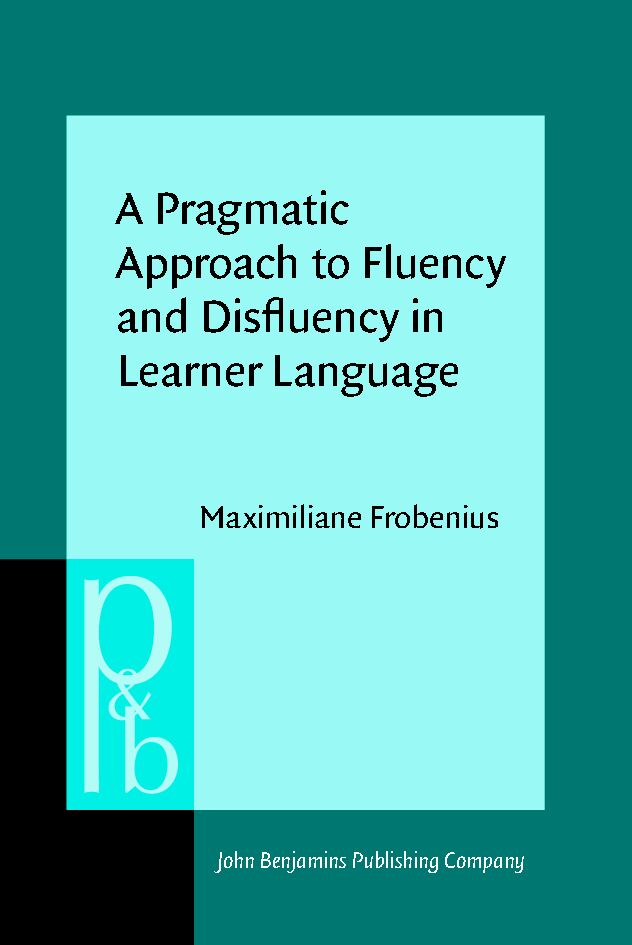
A pragmatic approach to fluency and disfluency in learner language : cofluencies as sites of accountability, sequentiality, and multimodality
This monograph presents analyses of filled and unfilled pauses, cut-offs, repair, discourse markers and other phenomena often referred to as disfluencies in the context of advanced language learners' PowerPoint presentations.
eBook

Morphosyntactic Persistence in Spoken English
Language users are creatures of habit with a tendency to re-use morphosyntactic material that they have produced or heard before. In other words, linguistic patterns and tokens, once used, persist in discourse. The present book is the first large-scale corpus analysis to explore the determinants of this persistence, drawing on regression analyses of a variety of functional, discourse-functional, cognitive, psycholinguistic, and external factors. The case studies investigated include the alternation between synthetic and analytic comparatives, between the s-genitive and the of-genitive, between gerundial and infinitival complementation, particle placement, and future marker choice in a number of corpora sampling different spoken registers and geographical varieties of English.
Providing a probabilistic framework for examining the ways in which persistence - among several other internal and external factors - influences speakers' linguistic choices, the book departs from most writings in the field in that it seeks to bridge several research traditions. While it is concerned, in a classically variationist spirit, with internal and external determinants of grammatical variation in English, it also draws heavily on ideas and evidence developed by psycholinguists and discourse analysts. In seeking to construct a comprehensive model of how speakers make linguistic choices, the study ultimately contributes to a theory of how spoken language works.
The book is of interest to graduate students and researchers in variationist sociolinguistics, probabilistic linguistics, psycholinguistics, and computational linguistics.
eBook

The Written Language Bias in Linguistics
Linguists routinely emphasise the primacy of speech over writing. Yet, most linguists have analysed spoken language, as well as language in general, applying theories and methods that are best suited for written language. Accordingly, there is an extensive 'written language bias' in traditional and present day linguistics and other language sciences. In this book, this point is argued with rich and convincing evidence from virtually all fields of linguistics.
eBook
Vague language in business and academic contexts
Business English and academic English may perhaps be thought of as areas of language use requiring precision of expression and a quest for specific and unambiguous meaning. However, corpus evidence shows that both types of language, in their spoken contexts, exhibit noticeable use of the kinds of vague expressions found in everyday conversation. In this lecture, the author focuses on one type of vagueness: vague category marking (VGM). This feature involves mention of an example or examples of something followed by reference to a broad, ad hoc category of which the chosen examples are seen as typical. References to categories commonly involve expressions such as or whatever, and so on, or something (like that). In both business and academic English, vague category marking is an important projection of shared knowledge and shared identities. In business, vagueness is also a useful tool in delicate negotiations. In academic English, vague categories refer to bodies of assumed shared knowledge and are crucial in the pedagogic process of grafting new knowledge onto old. Subtle differences are drawn out by different types of vague category markers. The author concludes with some implications for teaching in these specialised areas. (Verlag, adapt.).
Journal Article

Native Listening
Understanding speech in our native tongue seems natural and effortless; listening to speech in a nonnative language is a different experience. In this book, Anne Cutler argues that listening to speech is a process of native listening because so much of it is exquisitely tailored to the requirements of the native language. Her cross-linguistic study (drawing on experimental work in languages that range from English and Dutch to Chinese and Japanese) documents what is universal and what is language specific in the way we listen to spoken language. Cutler describes the formidable range of mental tasks we carry out, all at once, with astonishing speed and accuracy, when we listen. These include evaluating probabilities arising from the structure of the native vocabulary, tracking information to locate the boundaries between words, paying attention to the way the words are pronounced, and assessing not only the sounds of speech but prosodic information that spans sequences of sounds. She describes infant speech perception, the consequences of language-specific specialization for listening to other languages, the flexibility and adaptability of listening (to our native languages), and how language-specificity and universality fit together in our language processing system. Drawing on her four decades of work as a psycholinguist, Cutler documents the recent growth in our knowledge about how spoken-word recognition works and the role of language structure in this process. Her book is a significant contribution to a vibrant and rapidly developing field.
eBook
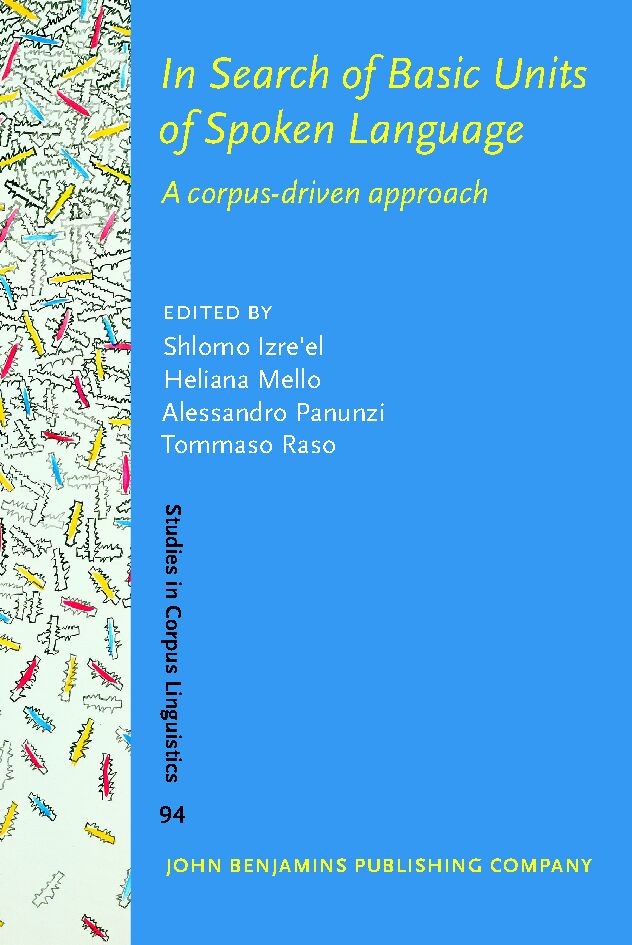
In search of basic units of spoken language : a corpus-driven approach
What is the best way to analyze spontaneous spoken language? In their search for the basic units of spoken language the authors of this volume opt for a corpus-driven approach. They share a strong conviction that prosodic structure is essential for the study of spoken discourse and each bring their own theoretical and practical experience to the table. In the first part of the book they segment spoken material from a range of different languages (Russian, Hebrew, Central Pomo (an indigenous language from California), French, Japanese, Italian, and Brazilian Portuguese). In the second part of the book each author analyzes the same two spoken English samples, but looking at them from different perspectives, using different methods of analysis as reflected in their respective analyses in Part I. This approach allows for common tendencies of segmentation to emerge, both prosodic and segmental.
eBook