
Catalogue Search | MBRL


Are you sure you want to remove the book from the shelf?

{{itemTitle}}
330
result(s) for
"Grand duke"
Sort by:

Women's patronage and gendered cultural networks in early modern Europe : Vittoria della Rovere, Grand Duchess of Tuscany
\"This book examines the socio-cultural networks between the courts of early modern Italy and Europe, focusing on the Florentine Medici court, and the cultural patronage and international gendered networks developed by the Grand Duchess of Tuscany, Vittoria della Rovere. Adelina Modesti uses Grand Duchess Vittoria as an exemplar of pan-European matronage and proposes a new matrilineal model of patronage in the early modern period, one in which women become not only the mediators but also the architects of public taste and the transmitters of cultural capital. The book will be the first comprehensive monographic study of this important cultural figure. This study will be of interest to scholars working in art history, gender studies, Renaissance studies, and seventeenth century Italy\"-- Provided by publisher.
Book

Grand Duke Nikolai Nikolaevich
Grand Duke Nikolai Nikolaevich Romanov (1856-1929) was a key
figure in late Imperial Russia, and one of its foremost soldiers.
At the outbreak of World War I, his cousin, Tsar Nicholas II,
appointed him Supreme Commander of the Russian Army. From 1914 to
1915, and then again briefly in 1917, he was commander of the
largest army in the world in the greatest war the world had ever
seen. His appointment reflected the fact that he was perhaps the
man the last Emperor of Russia trusted the most. At six foot six,
the Grand Duke towered over those around him. His fierce temper was
a matter of legend. However, as Robinson's vivid account shows, he
had a more complex personality than either his supporters or
detractors believed. In a career spanning fifty years, the Grand
Duke played a vital role in transforming Russia's political system.
In 1905, the Tsar assigned him the duty of coordinating defense and
security planning for the entire Russian empire. When the Tsar
asked him to assume the mantle of military dictator, the Grand
Duke, instead of accepting, persuaded the Tsar to sign a manifesto
promising political reforms. Less opportunely, he also had a role
in introducing the Tsar and Tsarina to the infamous Rasputin. A few
years after the revolution in 1917, the Grand Duke became de facto
leader of the Russian émigré community. Despite his importance, the
only other biography of the Grand Duke was written by one of his
former generals in 1930, a year after his death, and it is only
available in Russian. The result of research in the archives of
seven countries, this groundbreaking biography-the first to appear
in English-covers the Grand Duke's entire life, examining both his
private life and his professional career. Paul Robinson's engaging
account will be of great value to those interested in World War I
and military history, Russian history, and biographies of notable
figures.
eBook
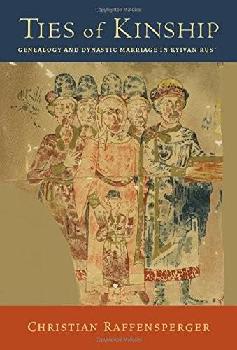
Ties of kinship : genealogy and dynastic marriage in Kyivan Rusʹ
\"Describes and analyzes the dynastic marriages of the descendants of Volodimer, the first ruler of Kyivan Rus', across medieval Europe from the tenth through the twelfth centuries and presents more than twenty-two genealogical charts with accompanying bibliographic information\"-- Provided by publisher.
Book

A companion to Cosimo I de' Medici
Mining the rich documentary sources housed in Tuscan archives and taking advantage of the breadth and depth of scholarship produced in recent years, the seventeen essays in this Companion to Cosimo I de' Medici provide a fresh and systematic overview of the life and career of the first Grand Duke of Tuscany, with special emphasis on Cosimo I's education and intellectual interests, cultural policies, political vision, institutional reforms, diplomatic relations, religious beliefs, military entrepreneurship, and dynastic concerns. Contributors: Maurizio Arfaioli, Alessio Assonitis, Nicholas Scott Baker, Sheila Barker, Stefano Calonaci, Brendan Dooley, Daniele Edigati, Sheila ffolliott, Catherine Fletcher, Andrea Gáldy, Fernando Loffredo, Piergabriele Mancuso, Jessica Maratsos, Carmen Menchini, Oscar Schiavone, Marcello Simonetta, and Henk Th. van Veen.
eBook

Death to the tsar
\"Moscow. September 17th, 1904. In front of the palace of the Governor General of Moscow, the assembled masses protest against widespread poverty. Governor Sergei Alexandrovich is stood on the balcony when he drops his hankerchief, inadvertently giving the signal for the soldiers to open fire. The Governor fears for his life and the lives of his family as the repercussions of his deadly mistake resound throughout the whole of Russia and the assassins close in. Told in two parts, this is the true story of the assassination of Grand Duke Sergei Alexandrovich and a nation on the brink of revolution\"--Back cover.
Book

Michael Romanov
Grand Duke Michael Alexandrovich of Russia (1878-1918) was born the youngest son of Tsar Alexander III, ruler of the mightiest empire on earth. Upon the premature death of his elder brother Grand Duke George in 1899, Michael was thrust into the spotlight as the Heir-Tsesarevich of his older brother, Tsar Nicholas II, then the father of three girls. Even after the birth of an heir in 1904, Michael was pushed closer to the throne with each of the young boy's life-threatening bouts of hemophilia. By 1916, with World War I in full swing, Nicholas and and Empress Alexandra had become deeply unpopular not only in political circles but also with other members of the House of Romanov, who felt that the parlous times required drastic change. Michael found himself at the center of these events and was briefly even named Emperor as they unfolded. In Michael Romanov: Brother of the Last Tsar, translator Helen Azar and Romanov historian Nicholas B. A. Nicholson present for the first time in English Grand Duke Michael's annotated diaries and letters of 1916-1918. These newly available documents offer rare insight into the fall of the Russian Empire, the rise and fall of the Provisional Government that succeeded it, and the terrifying days of the Bolshevik Revolution, after which Michael found himself a prisoner doomed to meet his end in the remote city of Perm, at the edge of Siberia, just over a month before the former Tsar and his family were murdered in Ekaterinburg.
eBook


City views in the Habsburg and Medici courts : depictions of rhetoric and rule in the sixteenth century
Ryan E. Gregg relates how the Holy Roman Emperor Charles V and Duke Cosimo I of Tuscany both employed city view artists such as Anton van den Wyngaerde and Giovanni Stradano to aid in constructing authority.
eBook

White Crow
Based on material from the newly opened Russian archives, this is the first biography of Nicholas Mikhailovich Romanov (1859-1919), the only intellectual in the Russian Imperial Family. This unique study provides insight into the last six decades of tsarist Russia through the experiences of the odd ball member of the clan. An historian and a biologist, the Grand Duke made major contributions in both these fields. A political liberal, he fought tirelessly for reform from within the system. His reformist views made him a pariah within his own family, and contemporary recognition of his accomplishments came more from abroad than at home. Entering the military, as all Romanovs did, the Grand Duke eventually became hostile toward it and was in fact the only family member ever to formally leave military service. He received honorary doctorates from the Universities of Berlin and Moscow and even won election to the French Academy—one of only two Russians to do so. As the political situation in Russia worsened, he urged the tsar to implement reforms, and he even participated in discussions of a palace coup. Exiled to Vologda after the Communist seizure of power, he was later imprisoned by the police and shot in January 1919.
eBook

The Artistic Terminology in the Russian Translations of Giorgio Vasari's Vite. The case of the word 'disegno'/ La terminologia artistica nelle traduzioni russe delle Vite di Giorgio Vasari. Il caso della parola 'disegno'
In the present article the author analyzes the many different meanings of the word 'disegno' in Giorgio Vasari's Le vite de piu eccellenti pittori, scultori, e architettori (1568), in particular the instances found in the Introduction to the Three Arts of Sculpture, Painting and Architecture, and investigates the different ways in which they are translated into Russian. The author concludes that the considerable complexity and semantic breadth of the Italian word 'disegno', an extremely relevant concept in Vasari's text, does not correspond to a single term equally rich in meanings in Russian. However, the richness of Russian and the skills of the translator 'compensate' for this dissimilarity and aptly render the word 'disegno' within the many different contexts in which it is used. Keywords Art History; Artistic Lexicon; Cultural Heritage Lexis.
Journal Article