
Catalogue Search | MBRL


Are you sure you want to remove the book from the shelf?

{{itemTitle}}
305
result(s) for
"Haacke"
Sort by:

From the Artist’s Contract to the blockchain ledger: new forms of artists’ funding using equity and resale royalties
Although the Artist’s Contract, first developed in 1971, was not broadly adopted in its early decades, renewed interest in it fifty years later has led to inventive related structures that are enabled by blockchain technology, in particular the phenomenon of NFT (non-fungible token) sales in art. We argue that the Contract’s conceptual roots have laid groundwork for a potentially powerful funding mechanism via the Contract’s resale royalties terms. Blockchain technology radically alters risks of incomplete contracting and lowers transaction costs, making the Quixotic terms of the Artist’s Contract newly actionable. We study the artist Hans Haacke’s longtime experimentation with the Artist’s Contract, along with contemporary data from the blockchain registry SuperRare, which pays royalties to artists. Blockchain companies such as SuperRare generally sell digital works outside the taste-making and gatekeeping systems of the upper echelons of the traditional art market. This arc from conceptual practice within the arts to commercial practice at the edge of the traditional art market points to the Contract’s legacy as a model for potentially disruptive technology and a new fundraising model for artists.
Journal Article

Kinetic Systems: Jack Burnham and Hans Haacke
The following paper argues that Jack Burnham’s antipathy for kineticism in “Systems Esthetics” and Beyond Modern Sculpture has contributed to an assumption that kineticism is an obsolete practice “rooted in another age.” Contrary to Burnham, I argue that a focus on the kinetic movement in Hans Haacke’s sculptures is productive for establishing key understandings of systems theory in art. My interpretation of Haacke’s art emphasizes that movement in time is a key aspect of the artist’s approach to sytems theory, and is useful for making viewers conscious of the systems of perception at play when confronted with ontologically unstable works of art.
Journal Article

Kunst als Verortung von Politik – politisch verortete Kunst
Das Kunstwerk Der Bevölkerung und mehr noch die Debatte darum hat gezeigt, wie komplex das Verhältnis der politischen Parteien zur (bundes-)deutschen Geschichte und deren Implikationen für die deutsche Politik ist. Kaum 10 Jahre nach der Wiedervereinigung und nur zwei Jahre nach dem Machtwechsel von Helmut Kohl zu Gerhard Schröder führte der Streit um ein Kunstwerk die Bruchlinien einer Berliner Republik vor Augen, die sich aus dem unbewältigten Erbe der deutschen Geschichte ergeben. Im Mittelpunkt stand ein dezidiert politischer Künstler, dessen Kunst ihre Wirkung aus der Provokation bezieht. Diese Provokation hat sich dramaturgisch aufgestaut und am 05. April 2000 in einer hitzigen Debatte im Bundestag entladen. Nach der offiziellen Einweihung des Projektes im nördlichen Lichthof des Reichstagsgebäudes durch Bundestagspräsident Wolfgang Thierse am 12. September 2000 ist es still geworden um das Werk und seinen Schöpfer. Beide sind aus den Feuilletons verschwunden, die Jubiläen verstreichen unbemerkt, so als hätte es nie eine Debatte um das Werk oder eine Zeit vor Der Bevölkerung gegeben. Welchen Mehrwert hat dieses Kunstwerk also heute noch? Welchen Rückschluss lassen die damaligen Erregungsspitzen auf die politische Kultur eines Landes zu, dass sich seit 1990 in Form der Berliner Republik neu erfindet?
The participatory art project Der Bevölkerung (To the Population) by Hans Haacke proofs the complexity of German political parties’ stance on the German history and its implications on politics in Germany in general. Only 10 years after Germany’s reunification and around 2 years after Gerhard Schröder’s election – to be the chancellor of a coalition formed by the Social Democrats and the Greens and therefor the successor of Helmut Kohl – the newly declared Berlin Republic seemed to be on the brink: the discussion about this project showed up the rupture lines of the unmastered legacy resulting out of Germany’s history. Its epicenter was a political artist, receiving audience’s impression from his potential of maximized provocation, triggering a fierce discussion, both the foreplay to the final majority vote on 5th April 2000 and the project’s realization in the northern open air courtyard of the Reichstag building. After its inauguration by Wolfgang Thierse, then President of the Bundestag, on 12th September 2000 the public awareness on the artist and his art shrank down. Both are no longer present in the feature pages of the journals and magazines, the anniversaries are going by mostly unnoticed, just like there had never been such a fierce debate about this art project or even a time beforehand. Therefore, what is the additional benefit of this art project nowadays? Which conclusions can we infer from this debate specifically on the political culture of Germany, a country making up his newly founded identity since reunification in 1990?
Journal Article
Harte Hanks, Inc
Harte Hanks is one of the leading global customer experience companies operating in three business segments based on the types of products and services it provides: Marketing Services, Customer Care, and Fulfillment and Logistics. The company provides integrated direct-marketing services in the US and internationally, including market research and analytics. It handles customer contracts through phone, e-mail, social media, text messaging, chat, and digital self-service support. Customers include major retailers and companies from the financial services and healthcare. Its biggest market is the US, accounting for around 90% of total revenue.
Report
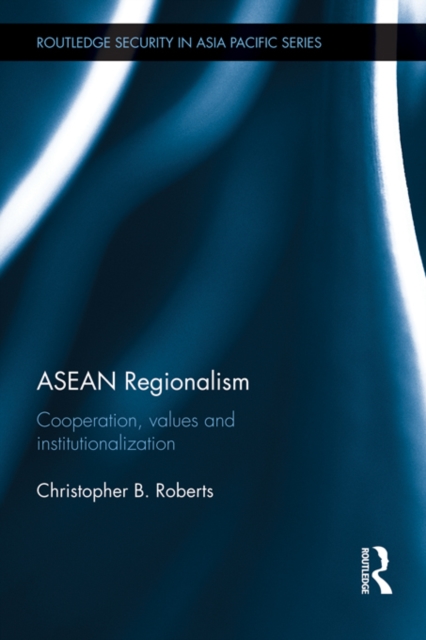
ASEAN Regionalism
This book examines the key motivations for and challenges to greater regional integration in Southeast Asia. It demonstrates how security and economic concerns -domestic, regional and international - have either contributed to, or detracted from, an increased level of unity and cooperation in ASEAN. It also explores how the patterns of interaction and socialization generated by these issues, together with the nature of domestic political systems, have affected the emergence of common values, norms and interests. It covers the full range of issues confronting ASEAN at present, and the full range of ASEAN countries, and discusses both developments in ASEAN to date and also likely future developments.
eBook


MLI looking for host families
\"The experience is mind blowing,\" said MLI Homestay Co-ordinator Nicole Haacke. \"You get to learn about another culture and (the students) get to learn about yours.\" \"Let (the international students) be part of your family,\" said Haacke. \"If you go out bowling or play soccer in the evening, you take the kids with you and let them experience that. 'Cause it is really different from Japan, it is completely different from what they experience here in Canada.\" \"Most of our families return every year,\" said Haacke. \"This is why we don't ever need a full amount.\"
Newspaper Article
Anti-bullying advocate invited to give TEDx talk
\"I'm really, really excited. Doing a TED talk has always been my dream and then TEDx contacted my family and asked if I'd come do a talk for them,\" she said. \"I'm super excited for it. It's one of those crazy popular events.\" \"When I originally did it, I did it anonymously and I set out to put up Post-Its and let people be excited about it,\" she said. \"It was supposed to be for one day and no one would ever know if was me. I never saw it coming to where it is now. With the next Positive Post-It Day coming up on (Oct. 5), I'm starting to get more and more people contacting me about doing Post-It Day in their schools. It's absolutely crazy what it's become.\" \"Even though I've gotten some awards and recognition, it's never been about that. It's been about taking positivity and kindness and putting a stop to bullying. It just happens I'm off to New York for it,\" she said.
Newspaper Article
Pink Shirt Day events to end bullying
\"(Anti-bullying) is just about doing something; speaking out, wearing pink shirts or putting up Post-Its,\" [Caitlin Haacke] said. \"There's always a way to combat bullying school hallways you don't have be silent. You can take a stand against bullying.\" \"Knowing there is somewhere to turn or places you can go to (helps). There are lots of resources out there with the main message being there's always a way to combat bullying,\" Haacke said. \"Students and teachers really don't stand for bullying and make a priority to combat it when they can.\" In addition to the BGCA event, schools throughout Rocky View Schools (RVS) are participating with their own events. R.J. Hawkey Elementary School is offering parents an information session of cyber bullying on Feb. 24 at 6:30 p.m. and will have a Pink Shirt Day assembly on Feb. 25 for students.
Newspaper Article
Local anti-bullying advocate visits the Meredith Vieira Show
The segment focused on [Caitlin Haacke]'s story of bullying and her response to it. Vieira did mention the school administration response to Haacke's sticky notes calling it a \"terrible reaction.\" School administration took down the notes because they were falling on the floor and creating a mess. Haacke was quick to point out the school has since joined in the positive movement. He said, \"Caitlin reacted with the poise of a woman wise beyond her years,\" and added, \"through the power of positive words, Caitlin has turned an act of malice into a valuable lesson for all, and we could not be more proud of her.\" \"It will be on the first Monday of every October because that's when I did it this year,\" Haacke said. \"I'm so excited because this year, with three days' notice, I was getting messages from Australia and London. I know it's going to be this times 10 (next year).\"
Newspaper Article