
Catalogue Search | MBRL


Are you sure you want to remove the book from the shelf?

{{itemTitle}}
281
result(s) for
"Hasidic Jews"
Sort by:
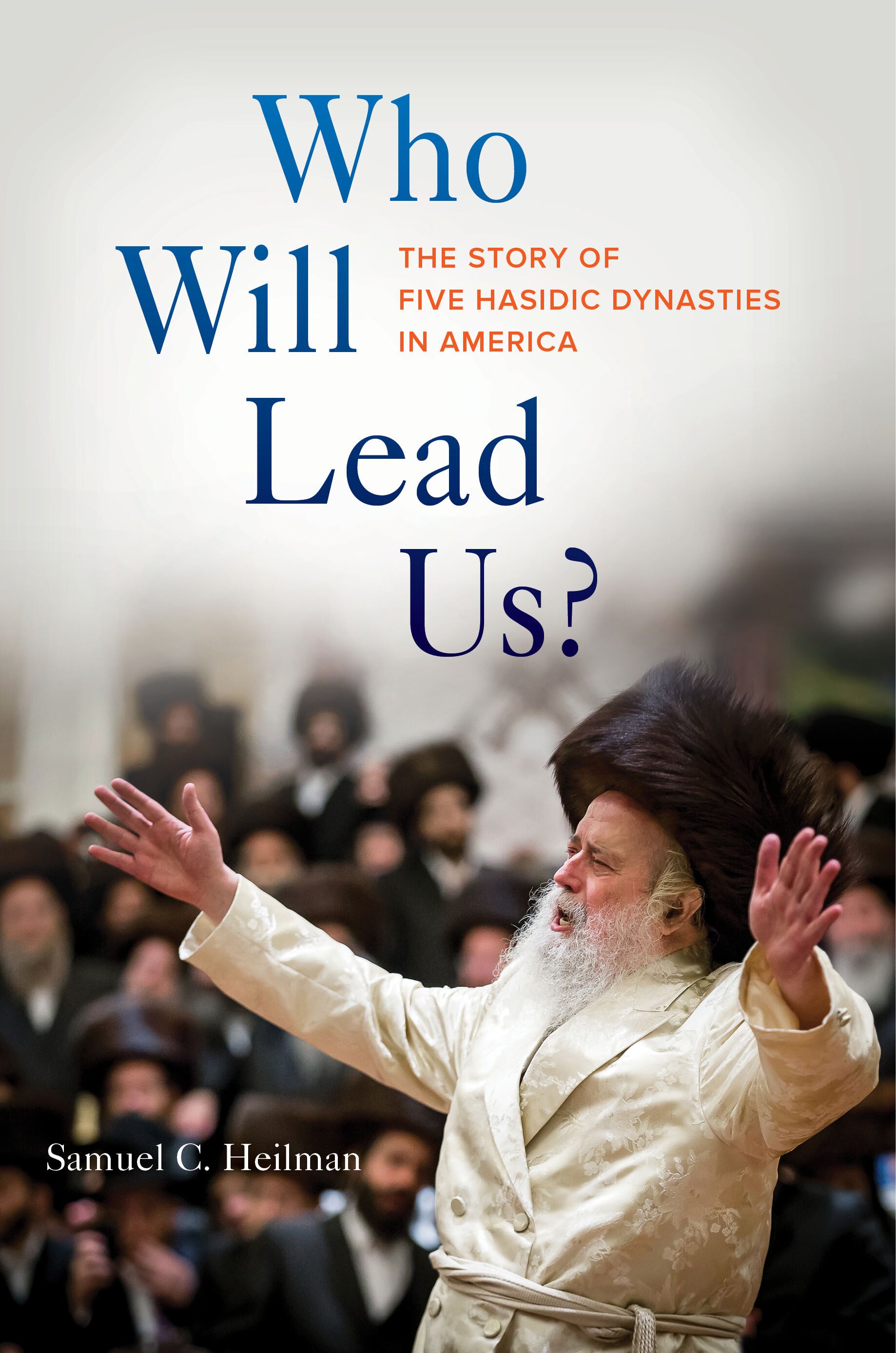
Who Will Lead Us?
Hasidism, a movement many believed had passed its golden age, has had an extraordinary revival since it was nearly decimated in the Holocaust and repressed in the Soviet Union. Hasidic communities, now settled primarily in North America and Israel, have reversed the losses they suffered and are growing exponentially. With powerful attachments to the past, mysticism, community, tradition, and charismatic leadership, Hasidism seems the opposite of contemporary Western culture, yet it has thrived in the democratic countries and culture of the West. How? Who Will Lead Us? finds the answers to this question in the fascinating story of five contemporary Hasidic dynasties and their handling of the delicate issue of leadership and succession. Revolving around the central figure of the rebbe, the book explores two dynasties with too few successors, two with too many successors, and one that believes their last rebbe continues to lead them even after his death. Samuel C. Heilman, recognized as a foremost expert on modern Jewish Orthodoxy, here provides outsiders with the essential guide to continuity in the Hasidic world.
eBook

Adventures in Yiddishland
Adventures in Yiddishland examines the transformation of Yiddish in the six decades since the Holocaust, tracing its shift from the language of daily life for millions of Jews to what the author terms a postvernacular language of diverse and expanding symbolic value. With a thorough command of modern Yiddish culture as well as its centuries-old history, Jeffrey Shandler investigates the remarkable diversity of contemporary encounters with the language. His study traverses the broad spectrum of people who engage with Yiddish—from Hasidim to avant-garde performers, Jews as well as non-Jews, fluent speakers as well as those who know little or no Yiddish—in communities across the Americas, in Europe, Israel, and other outposts of \"Yiddishland.\"
eBook


Health Care Behaviours and Beliefs in Hasidic Jewish Populations: A Systematic Review of the Literature
Cultural issues impact on health care, including individuals' health care behaviours and beliefs. Hasidic Jews, with their strict religious observance, emphasis on kabbalah, cultural insularity and spiritual leader, their Rebbe, comprise a distinct cultural group. The reviewed studies reveal that Hasidic Jews may seek spiritual healing and incorporate religion in their explanatory models of illness; illness attracts stigma; psychiatric patients' symptomatology may have religious content; social and cultural factors may challenge health care delivery. The extant research has implications for clinical practice. However, many studies exhibited methodological shortcomings with authors providing incomplete analyses of the extent to which findings are authentically Hasidic. High-quality research is required to better inform the provision of culturally competent care to Hasidic patients.
Journal Article

Plausible Primitives: Kafka and Jewish Primitivism
This article analyzes Kafka's works as an exemplar of Jewish primitivism. The eastern European Jew had, from the turn of the century, become increasingly aestheticized and anthropologized, a confluence that bespeaks the concurrent and intertwined development of anthropology and of a modernist fascination with those who were identified as the authentic bearers of culture. Eastern European Jews became subjects for the exploration of 'authentic' culture much like South Seas Islanders, with the crucial difference lying in their linguistic, ethnic, religious, and geographic propinquity to the German-speaking Jews of central Europe; this propinquity created what I term a plausible primitivism, the central defining characteristic of Jewish primitivism. This transferal of the ethnographic object from far away to near at hand offered a new mode of primitivism that privileged the ethnographic encounter over formalist primitivism. As such, it brought primitivist discourses into the center of debates over identity and modernity among German Jews.
Journal Article

Adventures in Yiddishland
Adventures in Yiddishlandexamines the transformation of Yiddish in the six decades since the Holocaust, tracing its shift from the language of daily life for millions of Jews to what the author terms a postvernacular language of diverse and expanding symbolic value. With a thorough command of modern Yiddish culture as well as its centuries-old history, Jeffrey Shandler investigates the remarkable diversity of contemporary encounters with the language. His study traverses the broad spectrum of people who engage with Yiddish-from Hasidim to avant-garde performers, Jews as well as non-Jews, fluent speakers as well as those who know little or no Yiddish-in communities across the Americas, in Europe, Israel, and other outposts of \"Yiddishland.\"
eBook


American Klezmer
Klezmer, the Yiddish word for a folk instrumental musician, has come to mean a person, a style, and a scene. This musical subculture came to the United States with the late-nineteenth-century Jewish immigrants from Eastern Europe. Although it had declined in popularity by the middle of the twentieth century, this lively music is now enjoying recognition among music fans of all stripes. Today, klezmer flourishes in the United States and abroad in the world music and accompany Jewish celebrations. The outstanding essays collected in this volume investigate American klezmer: its roots, its evolution, and its spirited revitalization. The contributors to American Klezmer include every kind of authority on the subject--from academics to leading musicians--and they offer a wide range of perspectives on the musical, social, and cultural history of klezmer in American life. The first half of this volume concentrates on the early history of klezmer, using folkloric sources, records of early musicians unions, and interviews with the last of the immigrant musicians. The second part of the collection examines the klezmer \"revival\" that began in the 1970s. Several of these essays were written by the leaders of this movement, or draw on interviews with them, and give firsthand accounts of how klezmer is transmitted and how its practitioners maintain a balance between preservation and innovation.
eBook

The Two Faces of Religious Radicalism: Orthodox Zealotry and “Holy Sinning” in Nineteenth-Century Hasidism in Hungary and Galicia
In scholarly usage, the term \"religious radicalism\" has two somewhat conflicting definitions. In the context of the conflict between tradition and modernity, \"religious radicalism\" tends to refer to a hard-line traditionalist position opposed to innovation; that is, a forceful affirmation of the authority of traditional religious law (or dogma) and the struggle against those who would abrogate it. Some leaders of Orthodox Judaism in Hungary and Galicia--certain Hasidic masters among them--have been considered religious radicals in this sense of the term. When referring to heterodox movements, however, the term \"religious radicalism\" often refers to a bold, nonconformist, revolutionary religious position that tests the boundaries of religious law (or dogma) and, at times, goes beyond them. Here, Brown suggests a somewhat rough terminology in order to categorize the two types of religious radicalism.
Journal Article

Kol Isha: Malka Zipora's Lekhaim as the Voice of the Hasidic Woman in Quebec
Over the last quarter century, tensions in Quebec have run high between Hasids and their francophone Québécois neighbors over the question of “reasonable accommodation” of the nonmainstream ethnic group. There is much ignorance about the insular Hasidic communities, and fear by the modern, egalitarian province that Hasidic women are being oppressed. Several francophone writers have exploited this ignorance and fear for their fiction, and their stories of Hasids often appeal through sensationalism (e.g., tales of forbidden love). Malka Zipora, however, entered the fray in 2007 through the mundane: writing as a “Hasidic mom,” she suggests, in her short story collection, Lekhaim!: Chroniques de la vie hassidique à Montréal, that her life, and the lives of her peers, are little different from those of other women, moms, Canadians struggling with brutal winters. Through her universalizing literary bridge, Zipora persuades her readers to rethink positions on fraught issues like the legality of succahs, while also giving voice and agency to Hasidic women, altering their popular perception.
Journal Article