
Catalogue Search | MBRL


Are you sure you want to remove the book from the shelf?

{{itemTitle}}
69
result(s) for
"Home-Psychological aspects"
Sort by:

Home : how habitat made us human
\"Home is where the heart is. Security, comfort, even love, are all feelings that are centered on the humble abode. But what if there is more to the feeling of being at home? Neuroanthropologist John S. Allen believes that the human habitat is one of the most important products of human cognitive, technological, and cultural evolution over the past two million years. In Home, Allen argues that to \"feel at home\" is more than just an expression, but reflects a deep-seated cognitive basis for the human desire to have, use, and enjoy a place of one's own\"-- Provided by publisher.
Book

Dreaming of Elsewhere
Esi Edugyan interlaces fact and fiction, storytelling and dreaming to capture the essence of belonging.
eBook


Domestic fortress
This book critically analyses the contemporary home and its close relationship to fear and security, a relationship fuelled by the corporate and political manufacturing of fear, the triumph of neoliberal models of home-ownership and related modes of social individualisation and risk that permeate contemporary society.
eBook

A year for you : release the clutter, reduce the stress, recaim your life
\"Despite an innate desire to live peaceful and happy lives, many of us spend too much time in struggle and stress rather than enjoyment, often working to make others happy while forgetting about ourselves. In A Year for You, author and clutter clearing expert Stephanie Bennett Vogt explains The Spacious Way, a method that teaches you how to gently release the underlying causes of stress, struggle, and overwhelm. Through five practice areas; slowing down, simplifying, sensing, surrendering, and self care, this book is like a year long sabbatical to help you nourish your life and clear any physical, mental, emotional, or energetic clutter for good. The result is a quieter mind, a clearer home, and a more gentle, holistic understanding of the underlying causes of clutter and stress\"-- Provided by publisher.
Book

Memory
When we think of getting older, we know we will slowly lose more and more of our memory—and with it, our sense of where we belong and how we connect to others. We might relax a little if we considered the improvements in computer data storage, which may lead us into a future when the limits of our memory become less constricting. In this book, John Scanlan explores the nature of memory and how we have come to live both with and within it, as well as what might come from memory becoming a process as simple as retrieving and reading data. Probing the ways philosophers look at memory, Scanlan reveals that some argue that being human means having the ability to remember, to see oneself as a being in time, with a past and future. At the same time, he shows, our memories can undo our present sense of time and place by presenting us with our past lives. And in a digital age, we are immersed in a vast archive of data that not only colors our everyday experiences, but also supplies us with information on anything we might otherwise have forgotten—breaking down the distinction between the memories of the individual and the collective. Drawing on history, philosophy, and technology, Memory offers an engaging investigation of how we comprehend recollection and how memory, as a phenomenon, continually remakes everyday life.
eBook

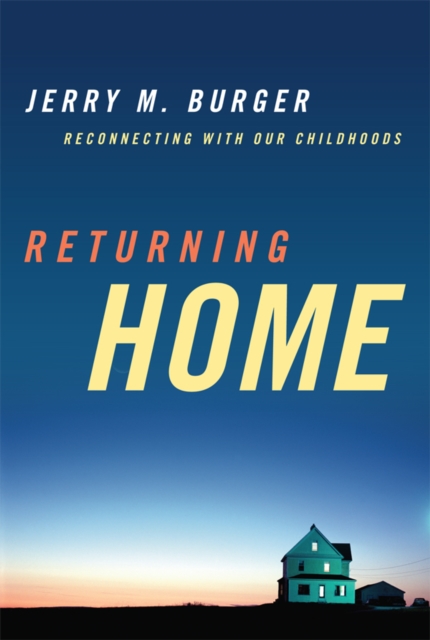
Returning home
Each year millions of American adults visit a childhood home. Few can anticipate the effect it will have on them. Often serving several important psychological needs, these trips are not intended as visits with people from their past. Rather, those returning to their homes have a strong desire to visit the places that comprised the landscape of their childhood. Approximately one third of American adults over the age of thirty have visited a childhood home. This book describes some of their experiences and the psychology behind the journeys. Most people who visit a childhood home are motivated by a desire to connect with their past. Seeing the buildings, schools, parks, and playgrounds from their youth helps to establish the psychological and emotional link between the child in the black-and-white photographs and the person they are today. Many people use the trip to get in touch with the values and principles they were taught as children, often as a means to get their lives back on track. Others use that journey to strengthen emotional bonds between themselves and loved ones. Still others return to former homes to work through psychological issues left over from sad or traumatic childhoods. No matter the reason, there are few experiences in one's life that can move a person as deeply and unpredictably as returning home.
eBook

Homesick : stories
Dark, irreverent, and truly innovative, the speculative stories in Homesick meditate on the theme of home and our estrangement from it, and what happens when the familiar suddenly shifts into the uncanny. In stories that foreground queer relationships and transgender or nonbinary characters, Cipri delivers the origin story for a superhero team comprised of murdered girls; a housecleaner discovering an impossible ocean in her least-favorite clients' house; a man haunted by keys that appear suddenly in his throat; and a team of scientists and activists discovering the remains of a long-extinct species of intelligent weasels.
Book
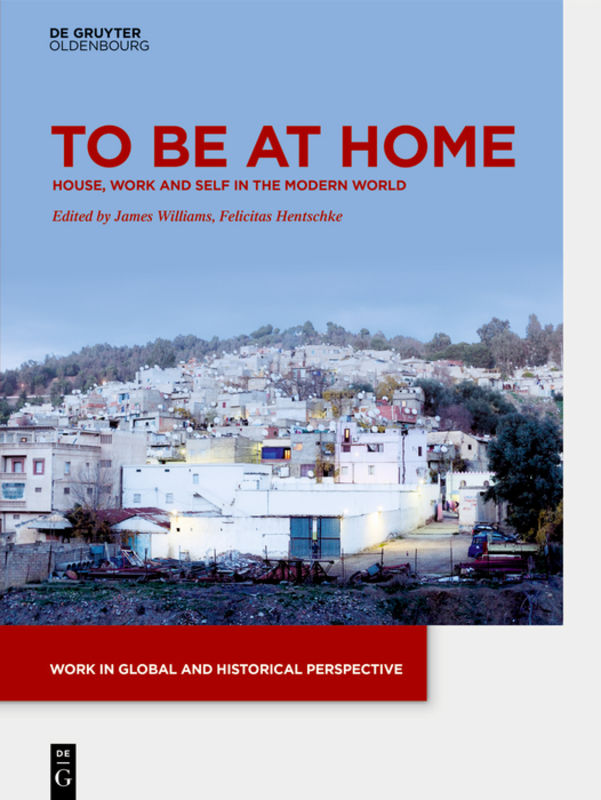
To be at Home
This series will trace at the example of work the historical connections between regions and critically engage with the idea of the North Atlantic World as normal and the rest as exceptional. The aim is to publish studies that change focus back and forth from the intimacy and complexity of relationships in specific places and their connections to distant places and long-term processes of change thereby looking beyond locality and region.
eBook