
Catalogue Search | MBRL


Are you sure you want to remove the book from the shelf?

{{itemTitle}}
1,236
result(s) for
"Iconoclasm."
Sort by:

Under the hammer : iconoclasm in the Anglo-American tradition
Summary: Iconoclasm is not a barbaric act which takes place somewhere else but is instead a central strand of Anglo-American modernity. Our horror at the destruction of art derives in part from the fact that we did, and still do, that. This is most obviously true of England's iconoclastic century between 1538 and 1643, which stands at the core of this book.
Book
Broken images : the aesthetics and ethics of cinematic iconoclasm
This thesis explores the issue of iconoclasm in Western European cinema after World War II. While little attention has been given to this topic in the specific field of film studies, history, philosophy and religious studies have investigated it thoroughly, so much so that it is possible to apply some of the work carried out in these disciplines to the analysis of iconoclasm in the cinema. Iconoclasm refers to the wilful destruction of images that can be either literal or metaphorical, and which depends on the interpretation of the nature of the image and of the copy-prototype relationship. Scholars in history and philosophy (Besançon 2009; Bettetini 2006; Ladner 1953; Mondzain 2003, 2005; Wunenburger 1999) have examined the issue of iconoclasm, outlining its route from Plato's dialogues in the fourth century BCE to the Byzantine controversy in the eighth and ninth centuries, up to the present day. The issue of iconoclasm in the cinema has only been partially investigated, primarily in a few articles (Groys 2002; Perniola 2013), and more recently in Poirson- Dechonne's (2016) work on iconoclastic tendencies in cinema. This thesis examines cinematic iconoclasm with particular attention to two types of images - the Greek eikôn and eidôlon. The eikôn, which eventually became the icon during the religious controversy over sacred representations, stands for an image that establishes a connection between both the sensible and the intelligible realms. Conversely, the eidôlon, which came to signify the idol, is an image grounded exclusively in the visible sphere and which hides its nature as a copy. In the thesis I demonstrate that the cinema embodies the same dichotomy that has inhabited Western thought about images since ancient times. This division occurs between the image as a faithful reproduction of reality, and the image as a false and deceitful copy. The thesis is divided into three sections. The first section consists in the theoretical framework for the research and delineates the genealogy of the Western image and the development of an iconoclastic thought from Plato to cinema. The second and the third sections are dedicated to the discussion of theoretical and practical forms of cinematic iconoclasm. Specifically, the second section focuses on the critique of the cinematic image as eidôlon, namely as an illusory and deceptive representation of reality, drawing examples from some exponents of Marxist film theory and filmmakers such as Isidore Isou, Guy Debord and Jean-Luc Godard. The third section examines the production of what I term the iconoclastic eikôn in the cinema. By this I mean a type of image that aims at representing an intelligible model, thus establishing a link between what is visible on the screen and an invisible prototype - the peculiarity of the eikôn - without resorting to mimetic reproduction. To this end I primarily engage with Ingmar Bergman's and Krzysztof Kieślowski's work. My overall contention is that iconoclasm in the arts, and specifically in the cinema, consists in a questioning of our modes of producing and consuming what is visible. Furthermore, cinematic iconoclasm can produce an ethics of (in)visibility. That is, the negation of a figurative image (the destruction of the eidôlon) has the potential to stimulate a critical reflection on what and how we see, and on the responsibility of one's look, thereby investigating the limits of our right to see and show everything on a screen.
Dissertation

Ancient Egyptian statues : their many lives and deaths
\"Why do ancient Egyptian statues so often have their noses, hands, or genitals broken? Although Late Antiquity appears to have been one of the major moments of large-scale vandalism against pagan monuments, various contexts bear witness to several phases of reuse, modification, or mutilation of statues throughout and after the pharaonic period. Reasons for this range from a desire to erase the memory of specific rulers or individuals for ideological reasons to personal vengeance, war, tomb plundering, and the avoidance of a curse; or simply the reuse of material for construction or the need to ritually \"deactivate\" and bury old statues, without the added motive of explicit hostility toward the subject in question. Drawing on the latest scholarship and over 100 carefully selected illustrations, Ancient Egyptian Statues proceeds from a general discussion of the production and meaning of sculptures, and the mechanisms of their destruction, to review the role of ancient statuary in Egyptian history and belief. It then moves on to explore the various means of damage and their significance, and the role of restoration and reuse. Art historian Simon Connor offers an innovative and lucidly written reflection on beliefs and practices relating to statuary, and images more broadly, in ancient Egypt, showing how statues were regarded as the active manifestations of the entities they represented, and the ways in which they could endure many lives before being finally buried or forgotten.\"-- Provided by publisher.
BOOK

El paisaje monumental conmemorativo de la batalla de San Carlos en la diacronía: latencias y tensiones (Buenos Aires, Argentina, 1872)
This article explores the commemorative monumentality of the Battle of San Carlos, focusing on material evidence, documentary sources, and oral memory spanning nearly a century of monumental landscape (1935-2024) at the site of Los Cuatro Vientos (Bolívar, Buenos Aires, Argentina). By examining these landscapes as activators of memory, this study sheds light on their role in shaping and perpetuating hegemonic discourses that overlap, persist, and conflict over time, as well as the social actors involved. The objective is to understand the monument’s place within dominant narratives and the sociohistorical context of each period as part of its social history. Archaeology, as a science of traces, reveals not only the phases or stages of monumentality but also attempts at erasure, damage, or decay due to time and environmental factors, uncovering multiple layers of meaning that can be excavated both literally and metaphorically. Far from being a static landscape, the site is continually redefined through new meanings, social actors, commemorative practices, and performative actions. In contemporary times, conflicting discourses and materialities coexist within the landscape. Like all representations of the past, the monument selectively relates to historical events, contributing to both remembrance and oblivion, including and excluding, exalting and concealing, amplifying certain voices while silencing others. Initially, this monument was intended to symbolize the triumph of civilization over the so-called barbarism of the desert, casting the indigenous population as the defeated, relegated to invisibility through their forced incorporation into the Argentine nation-state. However, the memory of the defeated persists, latent within the city and embedded in the landscape’s folds. En este trabajo se analiza la monumentalidad conmemorativa de la batalla de San Carlos. Para ello se revisa la evidencia material, documental y la memoria oral de los casi cien años de paisaje monumental (1935-2024) en el paraje Los Cuatro Vientos (Bolívar, Buenos Aires, Argentina), en una serie de fases constitutivas. El estudio de estos paisajes como activadores de memoria contribuye a problematizar su función frente a la construcción de discursos hegemónicos que se superponen, permanecen y entran en tensión en su devenir y los actores implicados. El objetivo de este artículo será comprender la existencia del monumento como parte de los discursos imperantes y la coyuntura sociohistórica de cada etapa como parte de su historia social. La arqueología, como ciencia de las huellas, puede dar cuenta de fases o etapas monumentales, así como también de intentos de borramiento, daño o pérdidas por el accionar del tiempo y los elementos, al vislumbrar los múltiples sentidos plausibles de ser excavados tanto metafórica como literalmente. Lejos de constituirse como un paisaje estático, sigue en constante redefinición por medio de nuevos significados, actores sociales, actos conmemorativos y performáticos. De esta manera, en la contemporaneidad coexisten discursos y materialidades antagónicas. Como toda representación del pasado, el monumento es selectivo en relación con los acontecimientos pretéritos. Aporta tanto al recuerdo como al olvido, incluye y excluye, exalta y oculta, otorga voz y silencia. Este monumento buscó materializar, en su origen, el triunfo de la civilización sobre la barbarie del desierto, siendo el indígena el enemigo vencido y relegado a la invisibilidad que presupone su incorporación forzosa al Estado nación argentino. Pero los vencidos y su memoria siguieron y siguen latentes en la ciudad y en los pliegues del paisaje. neste artigo, é analisada a monumentalidade comemorativa da batalha de San Carlos. Para isso, são revisadas as evidências materiais e documentais e a memória oral dos quase 100 anos de paisagem monumental (1935-2024) na área de Los Cuatro Vientos (Bolívar, Buenos Aires, Argentina), em uma série de fases constitutivas. O estudo dessas paisagens, como ativadoras da memória, contribui para problematizar sua função na construção de discursos hegemônicos que se sobrepõem, permanecem e entram em tensão em seu desenvolvimento e nos atores envolvidos. O objetivo deste artigo é compreender a existência do monumento como parte dos discursos dominantes e a conjuntura sócio-histórica de cada etapa como parte de sua história social. A arqueologia, como ciência dos vestígios, pode dar conta das fases ou estágios monumentais, bem como das tentativas de apagamento, dano ou perda pela ação do tempo e dos elementos, vislumbrando os múltiplos significados plausíveis de serem escavados tanto metafórica quanto literalmente. Longe de ser constituída como paisagem estática, ela permanece em constante redefinição por meio de novos significados, atores sociais, atos comemorativos e performativos. Dessa forma, discursos e materialidades antagônicos coexistem na contemporaneidade. Como qualquer representação do passado, o monumento é seletivo em relação a eventos passados. Ele contribui tanto para a lembrança quanto para o esquecimento, inclui e exclui, exalta e oculta, dá voz e silencia. Esse monumento buscou materializar, em sua origem, o triunfo da civilização sobre a barbárie do deserto, sendo o indígena o inimigo derrotado e relegado à invisibilidade que pressupõe sua incorporação forçada ao Estado-Nação argentino. Mas os vencidos e sua memória permaneceram e permanecem latentes na cidade e nas brechas da paisagem.
Journal Article


The Destruction of Buddhas: Dissonant Heritage, Religious or Political Iconoclasm?
This article attempts to explore the main impulses that might have led to the destruction of Buddha statues by Taliban in the Bamiyan Valley of Afghanistan. Drawing on existing literature, and anecdotal evidence, this article suggests that the main impulses that have led to destruction
are rather linked to the overall political context of that time (i.e., political iconoclasm) rather than to pure Islamic iconoclasm or an explicit condition of disharmony in heritage (i.e., dissonant heritage). First, the Taliban did not consider the statues as \"their\" cultural heritage. The
act of destruction, therefore, cannot be subscribed to the Afghan cultural dynamics but rather to the political-religious ideology imported by Taliban from outside of the country. Secondly, it seemed that Mullah Omar was viewing the statues as a revenue source at the beginning and as
a political bargain chip at the end. In both circumstances, religion seems not to have played the main role. Lastly, the destruction seems a political iconoclasm-that is, a political exploitation, if not a direct political act. The Taliban and especially their external allies were very
well aware of the consequences of the act of destruction. It seems implausible to suggest that there were no religion and/or culture in play when ordering the destruction of the statues. The latter is the least what this article aims for. However, to conclude that the destruction was solely
triggered by theological and cultural factors might also be improbable. The author does not, in any way, attempt to rationalize the act of destruction, let alone justify the barbaric act.
Journal Article
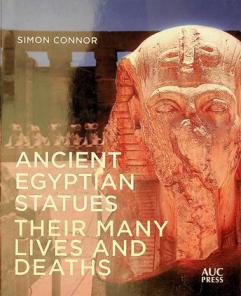
Ancient Egyptian statues : their many lives and deaths
\"Why do ancient Egyptian statues so often have their noses, hands, or genitals broken? Although Late Antiquity appears to have been one of the major moments of large-scale vandalism against pagan monuments, various contexts bear witness to several phases of reuse, modification, or mutilation of statues throughout and after the pharaonic period. Reasons for this range from a desire to erase the memory of specific rulers or individuals for ideological reasons to personal vengeance, war, tomb plundering, and the avoidance of a curse; or simply the reuse of material for construction or the need to ritually \"deactivate\" and bury old statues, without the added motive of explicit hostility toward the subject in question. Drawing on the latest scholarship and over 100 carefully selected illustrations, Ancient Egyptian Statues proceeds from a general discussion of the production and meaning of sculptures, and the mechanisms of their destruction, to review the role of ancient statuary in Egyptian history and belief. It then moves on to explore the various means of damage and their significance, and the role of restoration and reuse. Art historian Simon Connor offers an innovative and lucidly written reflection on beliefs and practices relating to statuary, and images more broadly, in ancient Egypt, showing how statues were regarded as the active manifestations of the entities they represented, and the ways in which they could endure many lives before being finally buried or forgotten.\"-- Provided by publisher.
BOOK

Muğla, Seydikemer'de İkonoklast Bezemeli Bir Mağara Şapeli: Bahattin Samanlığı
Muǧla ili, Seydikemer İlçesine baǧli Bayir köyünün 10 km. batisinda bulunan Naldöken kayasi mevkiinde, kuzeyindeki ovaya doǧru bir cephe oluşturacak şekilde sirali bir kaya kütlesi uzanmaktadir. Kaya kütlesinin en alt bölümünde halk arasinda \"Bahattin Samanliǧi\" olarak anilan, dairesel bir düzenlemeye sahip, girişi geniş bir açikliktan oluşan, doǧal bir oyuk yer almaktadir. Hiçbir ekleme yapilmadan kullanilmiş olan bu doǧal oyuǧun içerisi, üst örtüden başlayarak zeminden İm yüksekliǧe kadar, fresko tekniǧinde yapilmiş figüratif olmayan bir resim programiyla bezenmiştir.Tamami is tabakasi ile kapli olan üst örtüyü, çift şeritli dairesel bir formun çevrelediǧi kalan izlerden anlaşilmaktadir. Dairesel formun alt bölümünü, içerisinde geometrik düzenlemelerin bitkisel motiflerle bezendiǧi bir bordür dolanmaktadir. Bordürün alt kisminda, şeritlerle birbirinden ayrilmiş içleri haç, bitkisel ve geometrik düzenlemelerden oluşan farkli formlarda yapilmiş 6 pano yer almaktadir. Panolardan 3'ü bütünüyle, diǧer 3'ü ise kismen mevcuttur. Bu bölümün alt sirasinin kuzeybatisinda haç, bitkisel motif ve yazit, güneydoǧusunda ise kismen korunmuş geometrik süslemeler, mekânin son bezeme kuşaǧinin iki ayri panosunu oluşturmaktadir. Bahattin Samanliǧi Maǧarasinda, iç mekâni kaplayan duvar resimlerinin korunmuş bölümlerinde haç, bitkisel ve geometrik motiflerin yani sira yazitlarin da yer aldiǧi anikonik bir bezeme programi uygulanmiştir. Diǧer İkonoklastik örneklerde olduǧu gibi bezemede hâkim unsur haçtir. Haç sembol olarak, en erken tarihlerden itibaren bereket, ölümsüzlük, hayat, ruh gibi bulunduǧu kültürlere göre anlami deǧişen yaygin bir kullanim göstermiştir. Bahattin Samanliǧi kaya oyuǧunun duvar resimlerinde, haç motifinden sonra en yaygin süslemeyi, bazi panolarda haç motiflerinin etrafinda, bazilarinda tek başlarina yer yer de stilize bitkisel motifleri eşlikçi olarak kullanan geometrik formlar oluşturmaktadir. Haç kültü gibi geometrik ve bitkisel süsleme repertuari da ikonoklazma çaǧina özgü deǧildir. İncelediǧimiz ikonoklast dönem özellikleri taşiyan resimlerle motif ve üslup özellikleri açisindan benzerlikler göstermekle birlikte, yazitlardaki harf karakterleri, ilk evreye ait resimlerin de anikonik motiflerden oluştuǧuna işaret eden haç ve motif kalintilari, Bahattin Samanliǧindaki duvar resimlerinin ikonoklazmanin öncesi ya da ikonoklastik akimin ilk evresini oluşturan 7.yüzyilin başlarindan 8.yüzyilin başlarina kadarki bir dönem içinde yapilmiş olabileceǧine işaret etmektedir.
Journal Article

