
Catalogue Search | MBRL


Are you sure you want to remove the book from the shelf?

{{itemTitle}}
150
result(s) for
"Idols and images in art"
Sort by:

Breaking Resemblance
In recent decades curators and artists have shown a distinct interest in religion, its different traditions, manifestations in public life, gestures and images. Breaking Resemblance explores the complex relationship between contemporary art and religion by focusing on the ways artists re-work religious motifs as a means to reflect critically on our desire to believe in images, on the history of seeing them, and on their double power— iconic and political. It discusses a number of exhibitions that take religion as their central theme, and a selection of works by Bill Viola, Lawrence Malstaf, Victoria Reynolds, and Berlinde de Bruyckere—all of whom, in their respective ways and media, recycle religious motifs and iconography and whose works resonate with, or problematize the motif of, the true image.
eBook
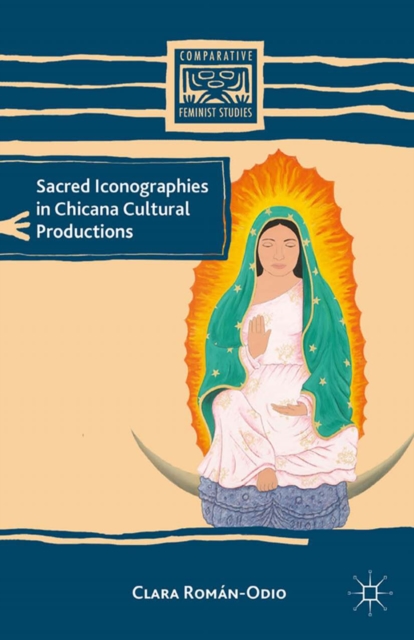
Sacred iconographies in Chicana cultural productions
This book examines the iconography of the Virgin of Guadalupe as a force for social justice and feminist emancipation within Chicana cultural productions from 1975-2010. In these productions the Virgin serves as a paradigm to unlock the histories of conquest and colonization, racism, and sexual oppression in the US-Mexico borderland and beyond.
eBook
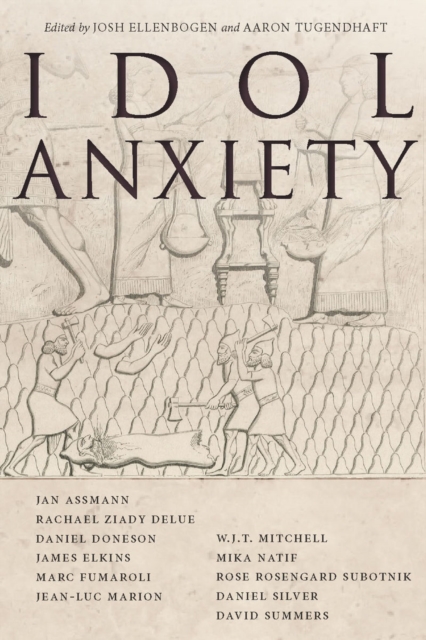
Idol anxiety
This interdisciplinary collection of essays addresses idolatry, a contested issue that has given rise to both religious accusations and heated scholarly disputes. Idol Anxiety brings together insightful new statements from scholars in religious studies, art history, philosophy, and musicology to show that idolatry is a concept that can be helpful in articulating the ways in which human beings interact with and conceive of the things around them. It includes both case studies that provide examples of how the concept of idolatry can be used to study material objects and more theoretical interventions. Among the book's highlights are a foundational treatment of the second commandment by Jan Assmann; an essay by W.J.T. Mitchell on Nicolas Poussin that will be a model for future discussions of art objects; a groundbreaking consideration of the Islamic ban on images by Mika Natif; and a lucid description by Jean-Luc Marion of his cutting-edge phenomenology of the visible.
eBook

Aisha's cushion : religious art, perception, and practice in Islam
Westerners have a strong impression that Islam does not allow religious imagery. Elias corrects this view. Unearthing shades of meaning in Islamic thought throughout history, he argues that Islamic perspectives on representation and perception should be sought in diverse areas such as optics, alchemy, dreaming, vehicle decoration, Sufi metaphysics.
eBook

The Sacred Gaze
\"Sacred gaze\" denotes any way of seeing that invests its object-an image, a person, a time, a place-with spiritual significance. Drawing from many different fields, David Morgan investigates key aspects of vision and imagery in a variety of religious traditions. His lively, innovative book explores how viewers absorb and process religious imagery and how their experience contributes to the social, intellectual, and perceptual construction of reality. Ranging widely from thirteenth-century Japan and eighteenth-century Tibet to contemporary America, Thailand, and Africa,The Sacred Gazediscusses the religious functions of images and the tools viewers use to interpret them. Morgan questions how fear and disgust of images relate to one another and explains how scholars study the long and evolving histories of images as they pass from culture to culture. An intriguing strand of the narrative details how images have helped to shape popular conceptions of gender and masculinity. The opening chapter considers definitions of \"visual culture\" and how these relate to the traditional practice of art history. Amply illustrated with more than seventy images from diverse religious traditions, this masterful interdisciplinary study provides a comprehensive and accessible resource for everyone interested in how religious images and visual practice order space and time, communicate with the transcendent, and embody forms of communion with the divine.The Sacred Gazeis a vital introduction to the study of the visual culture of religions.
eBook


The Ceremonial Sculptures of the Roman Gods
This study examines the visual and textual evidence for free-standing images of gods which functioned ceremonially in order to determine the distinct formats, the defining characteristics, and in which ceremony or ceremonies each type functioned.
eBook


Art in Dispute
A re-examinination of the Catholic Church's response to Reformation-era iconoclasm by reconstructing debates about sacred images held in the fifteen years preceding the Council of Trent's image decree (1563). The volume contains editions and translations of the original texts.
eBook

Images as a Resource for Catholic Theology
The aim of this article is to demonstrate why Catholic theology should actively engage with artistic images and elucidate how they could serve as a valuable resource for theological knowledge and content. The discussion is articulated in three distinct steps. Firstly, drawing from theological-historical perspectives within Christian tradition, it is shown that certain images possess significant theological potential. There have been various forms of interaction between theology and the visual representation of faith. The second step discusses the gradual reduction of theological reflection towards rational and conceptual cognition. The author relies predominantly on inner-theological arguments to advocate for the necessity of expanding the intellectual and conceptual horizons of contemporary Catholic theology so as to include the aesthetic dimension. In the final, third part, these insights are substantiated through the examination of two examples from contemporary Catholic theology: the works of Alex Stock and Peter Hofmann, exploring how artistic images can enrich systematic theology by serving as a “locus theologicus”. In conclusion, the author asserts that images have the potential to expand and concretize abstracted topics within dogmatic theology. They can also facilitate the reintegration of fragmented theological disciplines and forge a more direct link between theology and the lived experience of faith.
Journal Article