
Catalogue Search | MBRL


Are you sure you want to remove the book from the shelf?

{{itemTitle}}
5,425
result(s) for
"Induction motors"
Sort by:

Performance Comparison of High-Speed Motors for Electric Vehicle
It is predicted that the maximum speed of EV traction motors will increase in the future due to reductions in size and weight. The high-speed motors are required to have high mechanical strength of the rotor for high-speed rotation, in addition to satisfying the required output and high efficiency in the wide operation area. Therefore, it is necessary to evaluate the advantages and disadvantages of motors in terms of both electrical and mechanical points of view. In this research, three motor types, PMSM, SRM, and IM, which targeted the output power of 85 kW and the maximum speed of 52,000 min−1, are designed for use with EV traction motors, and the study clarifies which the type of motor is most suitable for application in high-speed motors of EVs in terms of their mechanical and electrical characteristics.
Journal Article
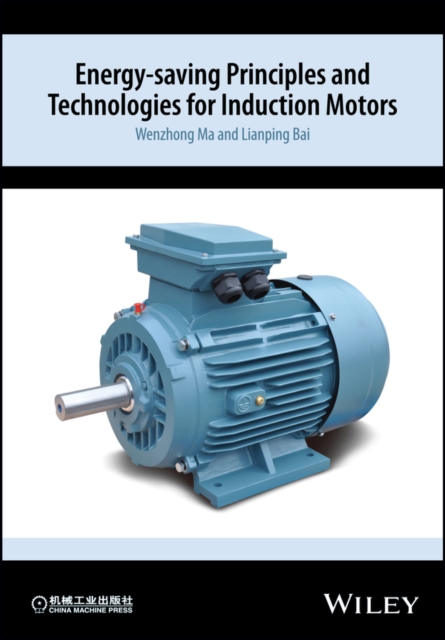
Energy-Saving Principles and Technologies for Induction Motors
A unique guide to the integration of three-phase induction motors with the emphasis on conserving energy - The energy-saving principle and technology for induction motor is a new topic, and there are few books currently available; this book provides a guide to the technology and aims to bring about significant advancement in research, and play an important role in improving the level of motor energy saving; Includes new and innovative topics such as a case study of energy saving in beam pumping system, and reactive compensation as a means of energy saving; The authors have worked in this area for 20 years and this book is the result of their accumulated research and expertise. It is unique in its integration of three-phase induction motors with the emphasis on conserving energy; Integrates the saving-energy principle, technology, and method of induction motors with on-site experiences, showing readers how to meet the practical needs and to apply the theory into practice. It also provides case studies and analysis which can help solve problems on-site.
eBook
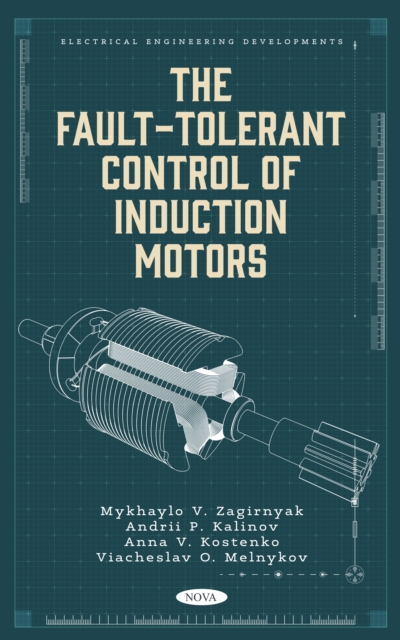
The Fault-Tolerant Control of Induction Motors
Under the conditions of increased consumption of energy resources, the problem of their conservation and rational use is topical. About 50-70 % of all energy produced in the world is consumed by the electric drive. However, its operation is often accompanied by the appearance of various kinds of defects and damage caused by poor-quality manufacturing or repair, failure of individual elements of electric motors without loss of performance. It results in more energy consumption and premature repair of electrical equipment, and hence in an increase in material costs and enlarged use of energy resources. To eliminate the negative consequences of the operation of an electric drive with defects and damage to induction motors, the monograph presents methods and systems of fault-tolerant control that allow the adjustment of the operating modes using the means of a variable-frequency electric drive. The main idea of such systems is to maintain the operability of technological mechanisms in the event of various malfunctions. The worked out methods and systems make it possible to detect various types of damage at the initial stages of their development. Then, based on the obtained information, they allow upgrading the control algorithm to maintain the operable state of the electromechanical equipment to the possibility of replacing the corresponding equipment or repairing the electric drive motor. That is, the most rational area for using the developed fault-tolerant control systems is industrial equipment, which must continue to operate, despite the deterioration in dynamic characteristics and energy efficiency.
eBook

Evaluation of the Effects of Increasing Standard Uncertainty on the Combined Uncertainties: Case of an IE2 5.5 kW Induction Motor
Developing electric motors with higher efficiencies for energy savings and environmental protection is crucial. The efficiency of grid-connected induction motors can be measured using various approaches; the preferred method is the indirect approach, which evaluates the separate losses from the additional losses due to residual losses. This approach follows the traditional approach to efficiency determination, introducing experimental procedures to assess additional losses by measuring the torque delivered by the motors. As noted in previous articles, the procedure is complex and requires numerous direct measurements. One area of interest is the determination of measurement uncertainty. This work aims to quantify the sensitivity of the combined uncertainties of losses and efficiency to variations in directly measured input variables: power frequency, rotational speed, torque, power, current, voltage, resistance, coolant temperature, and cold frame temperature. The results presented here help select measurement instrumentation, depending on whether the tests are aimed solely at determining efficiency or whether it is necessary to analyze the trend of the various types of loss, as occurs in optimization and experimental verification processes with high-performance materials, based on a comprehensive analysis of all standard and combined uncertainties, and with experimental data to assign a realistic value to the uncertainties themselves.
Journal Article

Direct torque control of doubly fed induction motor using three-level NPC inverter
This article presents the direct torque control (DTC) strategy for the doubly fed induction motor (DFIM) connected to two three-level voltage source inverters (3LVSIs) with neutral point clamped (NPC) structure. This control method allows to reduce the torque and flux ripples as well as to optimize the total harmonic distortion (THD) of motor currents. The use of 3LVSI increases the number of generated voltage, which allows improving the quality of its waveform and thus improves the DTC strategy. The system modeling and control are implemented in Matlab/Simulink environment. The analysis of simulation results shows the better performances of this control, especially in terms of torque and flux behavior, compared to conventional DTC.
Journal Article

Modeling of a C-Frame Reluctance-Enhanced Shaded-Pole Induction Motor—Study of Shaded-Coil Design
Shaded-pole induction motors are the most frequently used single-phase electric motors in low power applications. Their main advantages are reliability, robustness, low level of noise and vibration, relatively simple manufacturing technology and cost effectiveness. These motors are the driving units of choice in the applications where the variable speed and high starting torque are not of utmost importance, in spite of the fact that they are characterized by inferior efficiency, power factor and starting torque compared to their single-phase counterparts. They are equipped with auxiliary massive copper coils at the stator side, which makes them self-starting, and strongly influence the motor characteristics. This study deals with the numerical modeling and analysis of a shaded-pole induction motor with a C-shaped stator frame. The analysis was performed using 2D finite element-based transient magnetic numerical modeling. The primary objective was to investigate the influence of the number and size of the auxiliary shaded coils on the output torque speed characteristic. We explored the possibility of reducing the amount of material used while preserving the crucial/nominal properties of the motor. Our results have important implications in manufacturing simplification, which may be important for the eco-design of small motors and actuators, including their recycling and/or reuse process.
Journal Article

Effective Variable‐Speed Bearing Fault Diagnosis From Motor Current Signals Using Kurtosis‐Guided VMD and Multi‐Branch Convolutional Neural Network
Bearing fault diagnosis in induction motors under variable load and speed conditions remains a challenging task due to the complexity of fault‐induced transients in current signals. This study presents a novel deep learning‐based fault classification framework utilising Variational Mode Decomposition (VMD) for adaptive feature extraction and a Multi‐branch Convolutional Neural Network (1D‐MCNN) architecture for classification. The VMD hyperparameters were optimised based on kurtosis to ensure the extraction of the most informative Intrinsic Mode Functions (IMFs), significantly enhancing feature quality. Experimental validation under fixed, variable and noisy operating conditions demonstrated the superior performance of the proposed approach. The 1D‐CNN multi‐branch model consistently outperformed conventional artificial neural network (ANN) and single‐branch convolutional neural network (CNN) architectures, achieving 99.85% accuracy in fixed‐speed conditions and 99.75% in variable‐speed operations. Moreover, t‐SNE visualisations revealed improved class separability, confirming the robustness of the extracted features. These results highlight the efficacy of VMD‐guided deep learning architectures in accurately detecting bearing faults across diverse operational scenarios, reinforcing their potential for industrial predictive maintenance.
Journal Article

Review of Traction Motors for Electric Vehicle Application
The accelerating demand for electric vehicles (EVs) and the necessity to reduce fossil fuel dependence have intensified research on advanced traction motor technologies. This paper presents a comparative analysis of key traction motors including DC Series, Induction, Permanent Magnet Synchronous (PMSM), Switch Reluctance (SRM), and Brushless DC (BLDC) motors. A quantitative evaluation is conducted considering torque density, efficiency, and cost-effectiveness. Results indicate that PMSMs achieve peak efficiencies of 93-95% with excellent speed control, while induction motors maintain strong cost-performance ratios. SRMs offer durability and fault tolerance but exhibit torque ripple, whereas BLDCs provide compact integration with high dynamic response. These insights serve as guidelines for EV motor selection. Keywords—Traction Motors, Electric Vehicles, Performance Comparison, Efficiency Analysis, Rare-Earth-Free Motors, Cost Optimization.
Journal Article

Estimation of the parameters for multi-cage models of induction motors using manufacturer data and PSO
This paper presents a new method to estimate the parameters of multi-cage models of induction motors using only the information provided by manufacturers available in technical data sheets. The parameters are obtained through the solution of an optimization problem solved through the particle swarm optimization algorithm. We tested and validated the model using models with two, three, four, and five cages in the rotor. Besides, experimental results of 200 induction motors with power ranging from 22 to 90 kW proved that the method provides reliable estimates of the parameters that can correctly reproduce both the dynamic and steady-state behavior of induction motors. The accurate knowledge of the estimated parameters is essential to several control schemes, particularly those based on vector field orientation.
Journal Article
Advanced Fault Classification in Induction Motors for Electric Vehicles Using A Stacking Ensemble Learning Approach
This study proposes an innovative stacking ensemble learning framework for classifying faults in induction motors utilized in Electric Vehicles (EVs). Employing a comprehensive dataset comprising motor data, such as speed, torque, current, and voltage, the analysis encompasses six distinct conditions: normal operating mode, over-voltage fault, under-voltage fault, overloading fault, phase-to-phase fault, and phase-to-ground fault. The proposed model integrates Gradient Boosting (GB), K-Nearest Neighbors (KNN), Gradient Boosting (XGBoost), Support Vector Machine (SVM), Decision Tree (DT), and Random Forest (RF) algorithms in a synergistic manner. The findings reveal that the RF–GB–DT–XGBoost combination achieves a remarkable accuracy of 98.53%, significantly surpassing other methods reported in the literature. Performance is evaluated through metrics including accuracy, precision, sensitivity, and F1-score, with results analyzed in comparison to practical applications and existing studies. Validated with real-world data, this study demonstrates that the proposed model offers a groundbreaking solution for predictive maintenance systems in the EV industry, exhibiting high generalization capacity despite complex operating conditions. This approach holds transformative potential for both academic research and industrial applications. The dataset used in this study was generated using a MATLAB 2018/Simulink-based Variable Frequency Drive (VFD) model that emulates real-world EV operating conditions rather than relying solely on laboratory data. This ensures that the developed model accurately reflects practical electric vehicle environments.
Journal Article