
Catalogue Search | MBRL


Are you sure you want to remove the book from the shelf?

{{itemTitle}}
55,554
result(s) for
"Infants Development."
Sort by:


Do NICU developmental care improve cognitive and motor outcomes for preterm infants? A systematic review and meta-analysis
Background
The aim of this study was to review the effects of developmental care in neonatal intensive care unit (NICU) setting on mental and motor development of preterm infants.
Method
We searched PubMed, EMBASE, CINAHL, Scopus, Web of Science and Cochrane library until October 8th 2017, and included randomized controlled trials that assessed effects of developmental care in NICU on mental and motor development of preterm infants at 12 and 24 months of age, using the Bayley scale of infant development in this systematic review. In addition, data were pooled by random effects model and Standardized Mean Difference (SMD) with 95% confidence intervals (CI), calculated for meta-analysis.
Results
Twenty one studies were eligible to be included in this systematic review; however, only thirteen studies had data suitable for meta-analysis. According to statistical analysis, developmental care in NICU improved mental developmental index (MDI) (standardized mean difference [SMD] 0.55, 95% confidence interval [CI] 0.23–0.87;
p
< 0.05), and psychomotor developmental index (PDI) (SMD 0.33, [CI] 95% CI 0.08–0.57;
p
< 0.05) of BSID at 12 months of age and PDI at 24 months of age (SMD 0.15, 95% CI -0.02–0.32;
p
< 0.1) of preterm infants. However, the benefit was not detected at 24 months of age on MDI (SMD 0.15, 95% CI -0.05–0.35;
p
= 0.15).
Conclusion
Current evidence suggests that developmental care in only NICU setting could have significant effect on mental and motor development of preterm infants, especially at 12 months of age. However, because of clinical heterogeneity, more studies are needed to evaluate the effects of developmental NICU care in the development of preterm infants.
Journal Article


Glucose-regulatory hormones and growth in very preterm infants fed fortified human milk
Background
Bovine colostrum (BC) contains a range of milk bioactive components, and it is unknown how human milk fortification with BC affects glucose-regulatory hormones in very preterm infants (VPIs). This study aimed to investigate the associations between hormone concentrations and fortification type, birth weight (appropriate/small for gestational age, AGA/SGA), milk intake, postnatal age, and body growth.
Methods
225 VPIs were randomized to fortification with BC or conventional fortifier (CF). Plasma hormones were measured before, one and two weeks after start of fortification. ΔZ-scores from birth to 35 weeks postmenstrual age were calculated.
Results
Compared with CF, infants fortified with BC had higher plasma GLP-1, GIP, glucagon, and leptin concentrations after start of fortification. Prior to fortification, leptin concentrations were negatively associated with growth, while IGF-1 concentrations associated positively with growth during fortification. In AGA infants, hormone concentrations generally increased after one week of fortification. Relative to AGA infants, SGA infants showed reduced IGF-1 and leptin concentrations.
Conclusion
Fortification with BC increased the plasma concentrations of several glucose-regulatory hormones. Concentrations of IGF-1 were positively, and leptin negatively, associated with growth. Glucose-regulatory hormone levels were affected by birth weight, milk intake and postnatal age, but not closely associated with growth in VPIs.
Impact
Little is known about the variation in glucose-regulatory hormones in the early life of very preterm infants (VPIs).
This study shows that the levels of glucose-regulatory hormones in plasma of VPIs are highly variable and modified by birth weight (appropriate or small for gestational age, AGA or SGA), the type of fortifier, enteral nutritional intake, and advancing postnatal age.
The results confirm that IGF-1 levels are positively associated with early postnatal growth in VPIs, yet the levels of both IGF-1 and other glucose-regulatory hormones appeared to explain only a small part of the overall variation in growth rates.
Journal Article

Fidelity of implementation in assessment of infants and toddlers : evaluating developmental milestones and outcomes
This book examines the challenges in developmental assessment of infants and toddlers and provides best practices for implementing standardized assessments in early intervention settings. It starts with an overview of standardized assessment practices and discusses how specific tools can be used in early intervention for different purposes (e.g., eligibility for services). The book explains the importance of the Fidelity of Implementation of Assessment (FOI-A) approach in creating standardized assessment for infants and toddlers. Chapters provide a checklist-based framework for FOI-A, with details on technological supports for test administration and data collection as well as training and supervision models. In addition, chapters discuss ways of engaging families, gaining their trust, and including them in their children's educational planning. Topics featured in this book include: The Battelle Development Inventory, 2nd Edition (BDI-2) and its use in the assessment of young children. Using checklists to improve fidelity of implementation for standardized assessments. Using checklists to support early intervention directors and teams. How to provide feedback to early interventionists and other professionals on FOI-A. Recommendations to improve FOI-A. Fidelity of Implementation in Assessment of Infants and Toddlers is a must-have resource for researchers, clinicians and related professionals, and graduate students in varied fields including child and school psychology, pediatrics, social work, behavioral therapy, infant and early childhood development, and early education and care.
Book

Everyday ethics
This book explores the moral lives of mental health clinicians serving the most marginalized individuals in the US healthcare system. Drawing on years of fieldwork in a community psychiatry outreach team, Brodwin traces the ethical dilemmas and everyday struggles of front line providers. On the street, in staff room debates, or in private confessions, these psychiatrists and social workers confront ongoing challenges to their self-image as competent and compassionate advocates. At times they openly question the coercion and forced-dependency built into the current system of care. At other times they justify their use of extreme power in the face of loud opposition from clients. This in-depth study exposes the fault lines in today's community psychiatry. It shows how people working deep inside the system struggle to maintain their ideals and manage a chronic sense of futility. Their commentaries about the obligatory and the forbidden also suggest ways to bridge formal bioethics and the realities of mental health practice. The experiences of these clinicians pose a single overarching question: how should we bear responsibility for the most vulnerable among us?
eBook


Controlled Trial of Two Incremental Milk-Feeding Rates in Preterm Infants
In this randomized trial involving very preterm or very-low-birth-weight infants, there was no significant difference in survival without moderate or severe neurodevelopmental disability at 24 months with a strategy of advancing milk feeding volumes in daily increments of 30 ml per kilogram of body weight as compared with 18 ml per kilogram.
Journal Article

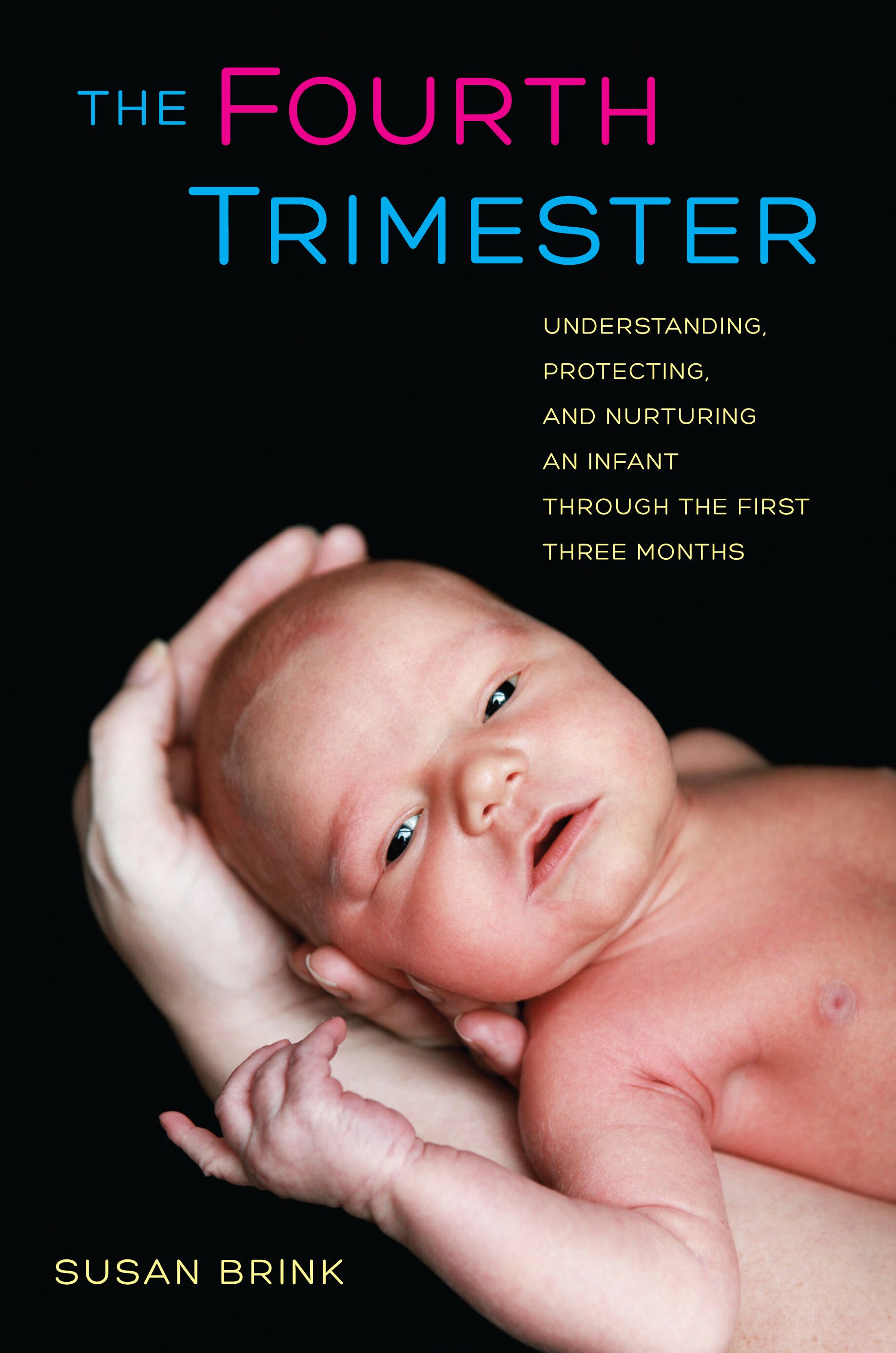
The fourth trimester
The first three months of a baby’s life is an outside-the-uterus period of intense development, a biological bridge from fetal life to preparation for the real world. The fourth trimester has more in common with the nine months that came before than with the lifetime that follows. This comprehensive, intimate, and much-needed “operating manual” for newborns presents a new paradigm of a baby's early life that shifts our focus and alters our priorities. Combining the latest scientific findings with real-life stories and experiences, Susan Brink examines critical dimensions of newborn development such as eating and nutrition, bonding and attachment, sleep patterns, sensory development, pain and pleasure, and the creation of foundations for future advancement. Brink offers well-informed, practical information and the reasons behind her advice so that parents and caretakers can make their own decisions about how to care for a newborn during this crucial period. The Fourth Trimester assures readers that infants are as biologically capable as they are physically helpless. They thrive on what is readily available in every household: consistent, loving attention.
eBook