
Catalogue Search | MBRL


Are you sure you want to remove the book from the shelf?

{{itemTitle}}
78,316
result(s) for
"Infarction"
Sort by:

While my sister sleeps
When her sister, a world-class runner, suffers a massive heart attack that leaves her in a coma from which she may never wake up, a woman and her family struggle to cope with the tragedy as their relationships are put to the ultimate test.
Book

Colchicine in Acute Myocardial Infarction
Inflammation is associated with adverse cardiovascular events. Data from recent trials suggest that colchicine reduces the risk of cardiovascular events.
In this multicenter trial with a 2-by-2 factorial design, we randomly assigned patients who had myocardial infarction to receive either colchicine or placebo and either spironolactone or placebo. The results of the colchicine trial are reported here. The primary efficacy outcome was a composite of death from cardiovascular causes, recurrent myocardial infarction, stroke, or unplanned ischemia-driven coronary revascularization, evaluated in a time-to-event analysis. C-reactive protein was measured at 3 months in a subgroup of patients, and safety was also assessed.
A total of 7062 patients at 104 centers in 14 countries underwent randomization; at the time of analysis, the vital status was unknown for 45 patients (0.6%), and this information was most likely missing at random. A primary-outcome event occurred in 322 of 3528 patients (9.1%) in the colchicine group and 327 of 3534 patients (9.3%) in the placebo group over a median follow-up period of 3 years (hazard ratio, 0.99; 95% confidence interval [CI], 0.85 to 1.16; P = 0.93). The incidence of individual components of the primary outcome appeared to be similar in the two groups. The least-squares mean difference in C-reactive protein levels between the colchicine group and the placebo group at 3 months, adjusted according to the baseline values, was -1.28 mg per liter (95% CI, -1.81 to -0.75). Diarrhea occurred in a higher percentage of patients with colchicine than with placebo (10.2% vs. 6.6%; P<0.001), but the incidence of serious infections did not differ between groups.
Among patients who had myocardial infarction, treatment with colchicine, when started soon after myocardial infarction and continued for a median of 3 years, did not reduce the incidence of the composite primary outcome (death from cardiovascular causes, recurrent myocardial infarction, stroke, or unplanned ischemia-driven coronary revascularization). (Funded by the Canadian Institutes of Health Research and others; CLEAR ClinicalTrials.gov number, NCT03048825.).
Journal Article
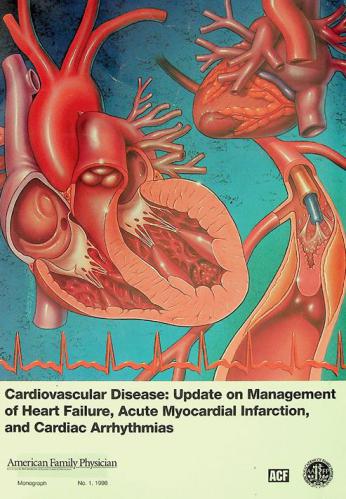
Restrictive or Liberal Transfusion Strategy in Myocardial Infarction and Anemia
In patients with myocardial infarction and anemia, a liberal transfusion strategy led to fewer deaths and heart attacks than a restricted transfusion strategy, but the difference was of borderline significance.
Journal Article
Trial of Thrombectomy for Stroke with a Large Infarct of Unrestricted Size
In patients with acute stroke and a large infarct of unrestricted size, use of thrombectomy and medical care within 7 hours after symptom onset led to better functional outcomes and lower mortality than medical care alone.
Journal Article
Timing of Complete Revascularization with Multivessel PCI for Myocardial Infarction
In patients with ST-segment elevation myocardial infarction, immediate multivessel PCI was noninferior to staged multivessel PCI with respect to the risk of death and adverse cardiovascular events at 1 year.
Journal Article
FFR-Guided Complete or Culprit-Only PCI in Patients with Myocardial Infarction
In a registry-based trial, FFR-guided PCI of nonculprit lesions did not result in a lower risk of a composite of death from any cause, myocardial infarction, or unplanned revascularization than culprit-lesion-only PCI.
Journal Article
Endovascular Treatment for Stroke Due to Occlusion of Medium or Distal Vessels
In this trial involving 543 patients with stroke due to occlusion of medium or distal vessels, endovascular treatment within 24 hours after the onset of symptoms was not effective in improving functional outcome at 90 days.
Journal Article

Left ventricular functional recovery of infarcted and remote myocardium after ST-segment elevation myocardial infarction (METOCARD-CNIC randomized clinical trial substudy)
Background
We aimed to evaluate the effect of early intravenous metoprolol treatment, microvascular obstruction (MVO), intramyocardial hemorrhage (IMH) and adverse left ventricular (LV) remodeling on the evolution of infarct and remote zone circumferential strain after acute anterior ST-segment elevation myocardial infarction (STEMI) with feature-tracking cardiovascular magnetic resonance (CMR).
Methods
A total of 191 patients with acute anterior STEMI enrolled in the METOCARD-CNIC randomized clinical trial were evaluated. LV infarct zone and remote zone circumferential strain were measured with feature-tracking CMR at 1 week and 6 months after STEMI.
Results
In the overall population, the infarct zone circumferential strain significantly improved from 1 week to 6 months after STEMI (− 8.6 ± 9.0% to − 14.5 ± 8.0%;
P
< 0.001), while no changes in the remote zone strain were observed (− 19.5 ± 5.9% to − 19.2 ± 3.9%;
P
= 0.466). Patients who received early intravenous metoprolol had significantly more preserved infarct zone circumferential strain compared to the controls at 1 week (
P
= 0.038) and at 6 months (
P
= 0.033) after STEMI, while no differences in remote zone strain were observed. The infarct zone circumferential strain was significantly impaired in patients with MVO and IMH compared to those without (
P
< 0.001 at 1 week and 6 months), however it improved between both time points regardless of the presence of MVO or IMH (
P
< 0.001). In patients who developed adverse LV remodeling (defined as ≥ 20% increase in LV end-diastolic volume) remote zone circumferential strain worsened between 1 week and 6 months after STEMI (
P
= 0.036), while in the absence of adverse LV remodeling no significant changes in remote zone strain were observed.
Conclusions
Regional LV circumferential strain with feature-tracking CMR allowed comprehensive evaluation of the sequelae of an acute STEMI treated with primary percutaneous coronary intervention and demonstrated long-lasting cardioprotective effects of early intravenous metoprolol.
Trial registration
ClinicalTrials.gov,
NCT01311700
. Registered 8 March 2011 - Retrospectively registered.
Journal Article