
Catalogue Search | MBRL


Are you sure you want to remove the book from the shelf?

{{itemTitle}}
15,477
result(s) for
"Intelligence - physiology"
Sort by:
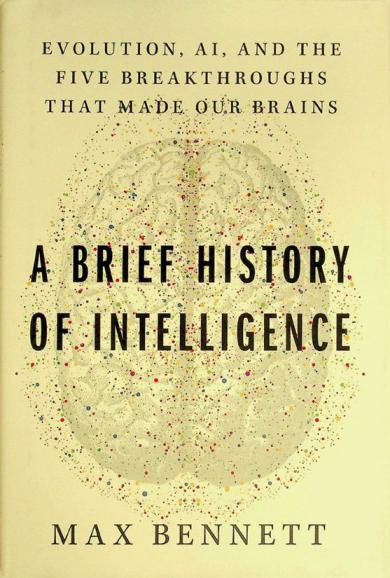
A brief history of intelligence : evolution, AI, and the five breakthroughs that made our brains
\"In the last decade, the science of understanding the human brain and replicating its most complicated processes through artificial intelligence has grown exponentially. Intricate neurological functions ranging from writing poetry to crafting original articles, arenas that had long been thought of as science fiction, have become our reality. And yet, large gaps remain in what AI can achieve-gaps that, as pioneering artificial intelligence entrepreneur Max Bennett argues compellingly, exist because there is still too much we don't understand about our own brains. Finding these answers requires diving into the long billion-year history of how animal brains emerged from matter; a history filled with countless half-starts, calamities, opportunities, and clever innovations. Not only do our brains have a story to tell-in fact the future of AI depends on it. Now, in A Brief History of Brains, Bennett bridges the gap between neuroscience and AI to tell the brain's evolutionary story, while demonstrating how understanding that story will shape the next generation of great AI breakthroughs. Deploying fresh perspective and lively storytelling, Bennett sheds long overdue light on evolutionary neuroscience, a historically small scientific field that holds the keys to the biggest secrets in AI. Working with support from many of the top minds in the field, Bennett consolidates four billion years into an approachable new model, identifying the Five Breakthroughs that mark the brain's most important evolutionary leaps. As we go back further in time, brains get much simpler and behavior gets much simpler, making it easier to understand these ancient brains and the complexity that emerges at each subsequent iteration. As each breakthrough brings new insight to the biggest mysteries of human development, it also contains fascinating corollaries to developments in AI, showing where our technological skill has matched the brain's evolution and where the missing links continue to hold us back. Indeed, until we understand and embrace every part of our brain's journey, parts of AI-including ones that we need to grow and evolve-will remain elusive. Endorsed and lauded by the brightest and best neuroscientists in the field today, Bennett's work synthesizes the most relevant scientific knowledge and cutting-edge research to create an easy-to-understand and riveting evolutionary story. With sweeping scope and stunning insights, A Brief History of Brains proves that understanding the arc of our brain's history can unlock the tools for successfully navigating our technological future\" -- Provided by publisher.
Book

Brain Training Game Boosts Executive Functions, Working Memory and Processing Speed in the Young Adults: A Randomized Controlled Trial
Do brain training games work? The beneficial effects of brain training games are expected to transfer to other cognitive functions. Yet in all honesty, beneficial transfer effects of the commercial brain training games in young adults have little scientific basis. Here we investigated the impact of the brain training game (Brain Age) on a wide range of cognitive functions in young adults.
We conducted a double-blind (de facto masking) randomized controlled trial using a popular brain training game (Brain Age) and a popular puzzle game (Tetris). Thirty-two volunteers were recruited through an advertisement in the local newspaper and randomly assigned to either of two game groups (Brain Age, Tetris). Participants in both the Brain Age and the Tetris groups played their game for about 15 minutes per day, at least 5 days per week, for 4 weeks. Measures of the cognitive functions were conducted before and after training. Measures of the cognitive functions fell into eight categories (fluid intelligence, executive function, working memory, short-term memory, attention, processing speed, visual ability, and reading ability).
Our results showed that commercial brain training game improves executive functions, working memory, and processing speed in young adults. Moreover, the popular puzzle game can engender improvement attention and visuo-spatial ability compared to playing the brain training game. The present study showed the scientific evidence which the brain training game had the beneficial effects on cognitive functions (executive functions, working memory and processing speed) in the healthy young adults.
Our results do not indicate that everyone should play brain training games. However, the commercial brain training game might be a simple and convenient means to improve some cognitive functions. We believe that our findings are highly relevant to applications in educational and clinical fields.
UMIN Clinical Trial Registry 000005618.
Journal Article

What a fish knows : the inner lives of our underwater cousins
\"Do fishes think? Do they really have three-second memories? And can they recognize the humans who peer back at them from above the surface of the water? In [this book], the myth-busting ethologist Jonathan Balcombe addresses these questions and more, taking us under the sea, through streams and estuaries, and to the other side of the aquarium glass to reveal the surprising capabilities of fishes\"--Dust jacket flap.
Book

Relational Integration Training Modulated the Frontoparietal Network for Fluid Intelligence: An EEG Microstates Study
Relational integration is a key subcomponent of working memory and a strong predictor of fluid intelligence. Both relational integration and fluid intelligence share a common neural foundation, particularly involving the frontoparietal network. This study utilized a randomized controlled experiment to examine the effect of relational integration training on brain networks using electroencephalogram (EEG) and microstate analysis. Participants were randomly assigned to either a relational integration training group (
n
= 29) or an active control group (
n
= 28) for one month. The Sandia matrices task assessed fluid intelligence, while rest-EEG was recorded during pre- and post-tests. Microstate analysis revealed that, for microstate D, the training group demonstrated a significant increase in occurrence and contribution following the intervention compared to the control group. Additionally, microstate D occurrence was negatively correlated with reaction times (RTs). Post-training, the training group showed a lower occurrence and contribution of microstate C compared to the control group. Regarding transfer probability, the training group exhibited a decrease between microstates A and B, and an increase between microstates C and D. In contrast, the control group showed increased transfer probability between microstates A, B, and C, and a decrease between microstate D and other microstates (B and A). These findings indicate that relational integration training influences frontoparietal networks associated with fluid intelligence. The current study suggests that relational integration training is an effective intervention for enhancing fluid intelligence.
Journal Article


Neural circuitry of emotion regulation: Effects of appraisal, attention, and cortisol administration
Psychosocial well-being requires effective regulation of emotional responding in context of threat or stress. Neuroimaging studies have focused on instructed, volitional regulation (e.g., reappraisal or distancing), largely ignoring implicit regulation that does not involve purposeful effort to alter emotional experience. These implicit processes may or may not involve the same neural pathways as explicit regulatory strategies. We examined the neurobiology of implicit emotional regulation processes and the impact of the stress hormone cortisol on these processes. Our study task employed composite pictures of faces and places to examine neural activity during implicit emotional processing (of emotional faces), while these responses were implicitly regulated by attention shift away from the emotionally evocative stimuli, and while subjects reflectively appraised their own emotional response to them. Subjects completed the task in an fMRI scanner after random assignment to receive placebo or hydrocortisone (HCT), an orally administered version of cortisol. Implicit emotional processing activated insula/IFG, dACC/dMPFC, midbrain and amygdala. With attention shifting, we saw diminished signal in emotion generating/response regions (e.g., amygdala) and increased activations in task specific attention regions like parahippocampus. With appraisal of emotions, we observed robust activations in medial prefrontal areas, where activation is also seen in instructed reappraisal studies. We observed no main effects of HCT administration on brain, but males and females showed opposing neural effects in prefrontal areas. The data suggest that different types of emotion regulation utilize overlapping circuits, but with some strategy specific activation. Further study of the dimorphic sex response to cortisol is needed.
Journal Article

Maintaining the feelings of others in working memory is associated with activation of the left anterior insula and left frontal-parietal control network
The maintenance of social/emotional information in working memory (SWM/EWM) has recently been the topic of multiple neuroimaging studies. However, some studies find that SWM/EWM involves a medial frontal-parietal network while others instead find lateral frontal-parietal activations similar to studies of verbal and visuospatial WM. In this study, we asked 26 healthy volunteers to complete an EWM task designed to examine whether different cognitive strategies— maintaining emotional images, words, or feelings— might account for these discrepant results. We also examined whether differences in EWM performance were related to general intelligence (IQ), emotional intelligence (EI), and emotional awareness (EA). We found that maintaining emotional feelings, even when accounting for neural activation attributable to maintaining emotional images/words, still activated a left lateral frontal-parietal network (including the anterior insula and posterior dorsomedial frontal cortex). We also found that individual differences in the ability to maintain feelings were positively associated with IQ and EA, but not with EI. These results suggest that maintaining the feelings of others (at least when perceived exteroceptively) involves similar frontal-parietal control networks to exteroceptive WM, and that it is similarly linked to IQ, but that it also may be an important component of EA.
Journal Article

Working memory training in children: Effectiveness depends on temperament
Studies revealing transfer effects of working memory (WM) training on non-trained cognitive performance of children hold promising implications for scholastic learning. However, the results of existing training studies are not consistent and provoke debates about the potential and limitations of cognitive enhancement. To examine the influence of individual differences on training outcomes is a promising approach for finding causes for such inconsistencies. In this study, we implemented WM training in an elementary school setting. The aim was to investigate near and far transfer effects on cognitive abilities and academic achievement and to examine the moderating effects of a dispositional and a regulative temperament factor, neuroticism and effortful control. Ninety-nine second-graders were randomly assigned to 20 sessions of computer-based adaptive WM training, computer-based reading training, or a no-contact control group. For the WM training group, our analyses reveal near transfer on a visual WM task, far transfer on a vocabulary task as a proxy for crystallized intelligence, and increased academic achievement in reading and math by trend. Considering individual differences in temperament, we found that effortful control predicts larger training mean and gain scores and that there is a moderation effect of both temperament factors on post-training improvement: WM training condition predicted higher post-training gains compared to both control conditions only in children with high effortful control or low neuroticism. Our results suggest that a short but intensive WM training program can enhance cognitive abilities in children, but that sufficient self-regulative abilities and emotional stability are necessary for WM training to be effective.
Journal Article

Are Daily Well-Being and Emotional Reactivity to Stressors Modifiable in Midlife?: Evidence from a Randomized Controlled Trial of an Online Social Intelligence Training Program
The complex set of challenges that middle-aged adults encounter emphasizes a need for mental health interventions that promote resilience and positive outcomes. The present study evaluated whether an online, self-guided social intelligence training (SIT) program (8 h) improved midlife adults’ daily well-being and emotion regulation in the context of their own naturalistic everyday environment. A randomized controlled trial was conducted with 230 midlife adults allocated into either a SIT program or an attentional control (AC) condition that focused on healthy lifestyle education. Intent-to-treat analyses examined two bursts of 14-day daily surveys that participants completed pre- and post-treatment. Multilevel models evaluated pre-to post-treatment changes in mean positive and negative affect, as well as daily emotional reactivity to stressors and responsiveness to uplifts. Compared to the AC group, those in the SIT program reported improvements (i.e., decreases) in mean negative affect, positive emotional reactivity to daily stressors (i.e., smaller decreases in positive affect on stressor days), and negative emotional responsiveness to uplifts (i.e., lower negative affect on days without uplifts). Our discussion considers potential mechanisms underlying these improvements, highlights downstream effects on midlife functioning, and elaborates on how online delivery of the SIT program increases its potential for positive outcomes across adulthood. ClinicalTrials.gov Identifier: NCT03824353.
Journal Article

Training-induced plasticity of the social brain in autism spectrum disorder
Autism spectrum disorder (ASD) is linked to social brain activity and facial affect recognition (FAR).
To examine social brain plasticity in ASD.
Using FAR tests and functional magnetic resonance imaging tasks for FAR, we compared 32 individuals with ASD and 25 controls. Subsequently, the participants with ASD were assigned to FAR computer-aided cognitive training or a control group.
The ASD group performed more poorly than controls on explicit behavioural FAR tests. In the scanner, during implicit FAR, the amygdala, fusiform gyrus and other regions of the social brain were less activated bilaterally. The training group improved on behavioural FAR tests, and cerebral response to implicit affect processing tasks increased bilaterally post-training in the social brain.
Individuals with ASD show FAR impairments associated with hypoactivation of the social brain. Computer-based training improves explicit FAR and neuronal responses during implicit FAR, indicating neuroplasticity in the social brain in ASD.
Journal Article