
Catalogue Search | MBRL


Are you sure you want to remove the book from the shelf?

{{itemTitle}}
446
result(s) for
"Interviewing in sociology"
Sort by:

'Ice in the family': Exploring the experiences of close family members when another family member is using methamphetamine. A longitudinal qualitative study
Objective: To explore the experiences of close family members when another family member is using methamphetamine and how the family member responds over time.
Background: Methamphetamine use has widespread implications and harms for both people who use the drug and those that live with them. While there is a significant representation in the literature relating to family members of people who use drugs or alcohol, there are limited studies specifically considering family members experiences of methamphetamine use. Families have been shown to have both positive and negative impacts on people using drugs, but less is known on the impact on the family members themselves.
Study design and methods: Multiple semistructured qualitative interviews were conducted with 11 families (17 individual participants) from regional and metropolitan Western Australia over a 12-month period. Interpretative Phenomenological Analysis was used in data collection and analysis.
Results: Four main themes were identified: 1. the New Lifeguard describes family members' unplanned insertion into a new role and their rapidly changing experience of the person using methamphetamine. 2. Hit by the Wave demonstrates participants' experience of repeated and unpredictable impacts on their lives. 3. Life in the Ocean describes the groundlessness associated with changes to goals and family structure. 4. Learning to Surf illuminates the changing strategies employed over time, moving away from trying to fix the person, to participants managing their own wellbeing.
Discussion: This study identified common aspects within the lived experience of close family members of people using methamphetamine and ascertained a commonality in the process of this experience. Significant impacts to all areas of life were reported, and distress was fluctuating and unpredictable in line with the cyclical nature of the drug use. Participant responses to these changes varied over time between resentment and trying to fix things, and acceptance and resilience, while gaining or maintaining like-minded supports.
Conclusion: Understanding the issues faced by families around this unique drug is vital in providing informed interventions for this group. Family members experience a broad range of financial, social and health impacts and harms over a protracted length of time. They are often not the focus of available support and in adapting to these issues, will themselves seek support away from treatment services for the person using methamphetamine.
Implications for practice
Understanding the complex journey of families has a broad range of implications (and opportunities) for a variety of areas such as criminal justice, family support and child protection. There is an opportunity for these areas to consider broader and more specific supports and approaches, and to develop more appropriate, bespoke, and inclusive treatment for families of people using methamphetamine.
What is already known about the topic?
- Methamphetamine is recognised worldwide as a harmful drug with few effective treatments for methamphetamine dependence.
- Few studies exist exploring the specific impact of methamphetamine on family members.
- Fewer studies explore the experiences over time. What this paper adds:
- Family members with a relative who is using methamphetamine experience a range of harms in many areas of their lives.
- The impact of methamphetamine use is unpredictable and takes place over long periods of time, affecting both individual family members and impacting on the overall structure of the family unit.
- Families and family members adapt their approach over time, from attempting to fix the situation, to stepping back and seeking support from others who they perceive to be in similar circumstances.
Journal Article
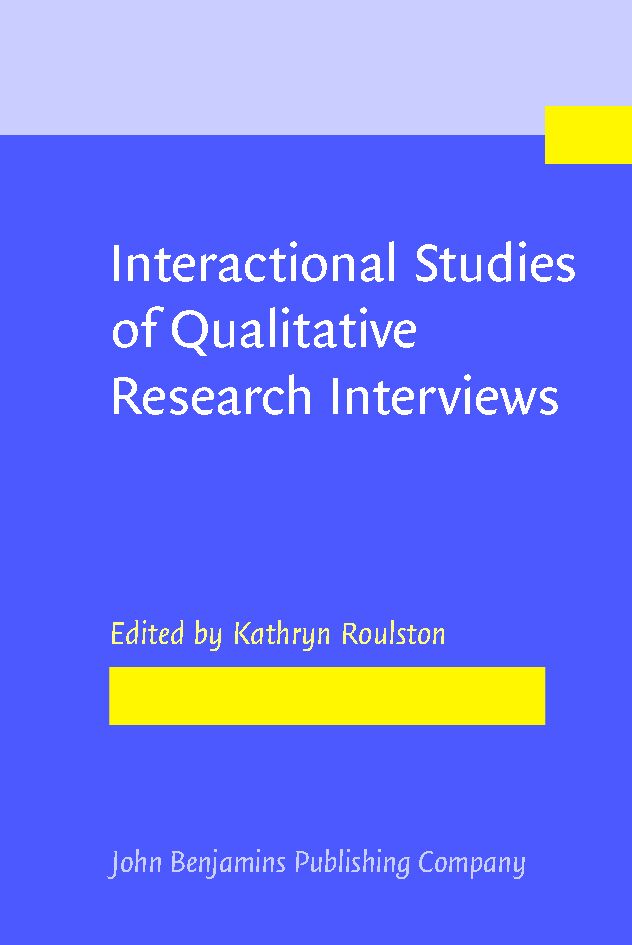
Interactional Studies of Qualitative Research Interviews
Methodological accounts of research interviews find that how researchers use this tool in their work varies widely: there are many ways of interviewing. This edited collection unpacks the interactional dynamics of qualitative research interviews from studies conducted in education, second language acquisition, applied linguistics and disability studies from scholars in the UK, USA, Italy, Portugal and Korea. These studies explore the interactional details of how the identities of researchers and their participants matter for the generation of interview data, as well as the kinds of discursive resources and social actions that occur in tandem with the production of data for research projects. Given the widespread use of qualitative interviews for social research, this book provides a robust contribution to what Tim Rapley has called the social studies of interviewing. This book is relevant to audiences across disciplines who use the interview as a primary research method.
eBook

Verbatim theatre and a dramaturgy of belonging
The process of creating verbatim theatre often involves interviewing a community of storytellers, documenting these conversations and using the stories to inform the creative development of a play. These practices prompt the act of personal storytelling, and the material generated in a verbatim theatre process often includes the core features of belonging, such as identity narratives, people making sense of their experiences and discursively identifying their sense of self and how they belong in their community. I suggest that these features, in combination with the common verbatim conventions of direct address and diegetic theatricality, form a dramaturgy of belonging. I propose a dramaturgy of belonging and suggest that the sense of community belonging experienced by audiences is a direct result of the practice of community immersion and interviewing in a verbatim theatre process.
Journal Article
Sociological methods in action. Questionnaires and interviews
How do school students negotiate the pressures to perform well academically alongside the pressure to be popular and cool? Carolyn Jackson combined questionnaires and interviews to research this question and this film uses her study, Lads and Ladettes, to illustrate why these methods are chosen, their respective strengths and limitations and how the strengths of one can be used to offset the limitations of the other.
Streaming Video

Interaction and the Standardized Survey Interview
This study investigates in detail the interaction between interviewers and respondents in standardised social survey interviews. Applying the techniques of conversation analysis, Hanneke Houtkoop-Steenstra reveals how certain rules of normal conversation fail to apply in interviews based on a standard questionnaire, and offers original empirical evidence to show what really happens. Her book demonstrates that interview results can only be understood as products of the contingencies of the interview situation, and not, as is usually assumed, the unmediated expressions of respondents' real opinions. Her conclusions have important implications for anyone interested in effective survey compilation and interpretation. The book is highly accessible, setting out the basic tools of conversation analysis simply and clearly, and suggesting ways of improving questionnaire design wherever possible. Its approach will be of great interest to students and researchers of survey methodology.
eBook
Analyzing Race Talk
The interview is one of the most important sources of social scientific data yet there has been relatively little exploration of the way interviews are conducted and interpreted. By asking internationally respected scholars from a range of traditions in discourse studies including conversation analysis, discursive psychology, and sociolinguistics to respond to the same material, this exciting new book sheds light on some key differences in methodology and theoretical perspective. Key topics are addressed such as the forms of knowledge produced in interviews, the interview as social interaction and the foundations for the study of talk and texts in qualitative research. The use of interviews exploring attitudes to race further broadens the scope of the book, enabling the contributors to explore sensitive issues around the construction and interpretation of interviews on controversial topics and specifically on issues for race and ethnicity.
eBook
Analysing Racist Discourse: Multidisciplinary Approaches to the Interview
The interview is one of the most important sources of social scientific data yet there has been relatively little exploration of the way interviews are conducted and interpreted. By asking internationally respected scholars from a range of traditions in discourse studies including conversation analysis, discursive psychology, and sociolinguistics to respond to the same material, this exciting new book sheds light on some key differences in methodology and theoretical perspective. Key topics are addressed such as the forms of knowledge produced in interviews, the interview as social interaction and the foundations for the study of talk and texts in qualitative research. The use of interviews exploring attitudes to race further broadens the scope of the book, enabling the contributors to explore sensitive issues around the construction and interpretation of interviews on controversial topics and specifically on issues for race and ethnicity.
eBook

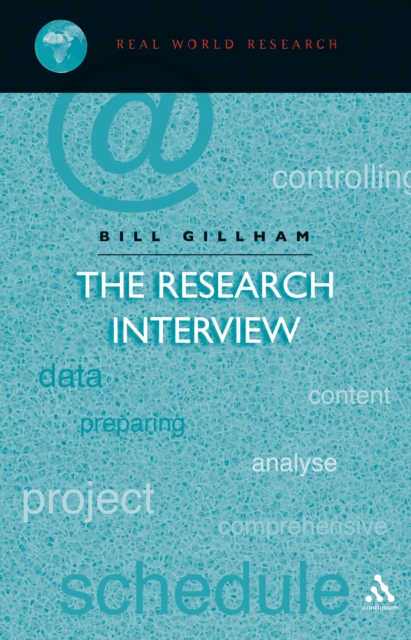
The research interview
The Research Interview acts as an aid to students and professionals who aim to achieve high standards of research, either when training in research methods is unavailable or when practical guidance is needed.This book provides a comprehensive knowledge of the basic techniques of interviewing as well as lessons in controlling an interview schedule.
eBook

Research Interviewing
Interviews hold a prominent place among the various research
methods in the social and behavioral sciences. This book presents a
powerful critique of current views and techniques, and proposes a
new approach to interviewing. At the heart of Elliot
Mishler 's argument is the notion that an interview is a
type of discourse, a speech event: it is a joint product, shaped
and organized by asking and answering questions. This view may seem
self-evident, yet it does not guide most interview research. In the
mainstream tradition, the discourse is suppressed. Questions and
answers are regarded as analogues to stimuli and responses rather
than as forms of speech; questions and the interviewer's behavior
are standardized so that all respondents will receive the same
\"stimulus\"; respondents' social and personal contexts of meaning
are ignored. While many researchers now recognize that context must
be taken into account, the question of how to do so effectively has
not been resolved. This important book illustrates how to implement
practical alternatives to standard interviewing methods. Drawing on
current work in sociolinguistics as well as on his own extensive
experience conducting interviews, Mishler shows how interviews can
be analyzed and interpreted as narrative accounts. He places
interviewing in a sociocultural context and examines the effects on
respondents of different types of interviewing practice. The
respondents themselves, he believes, should be granted a more
extensive role as participants and collaborators in the research
process. The book is an elegant work of synthesis-clearly and
persuasively written, and supported by concrete examples of both
standard interviewing and alternative methods. It will be of
interest to both scholars and clinicians in all the various fields
for which the interview is an essential tool.
eBook