
Catalogue Search | MBRL


Are you sure you want to remove the book from the shelf?

{{itemTitle}}
21,543
result(s) for
"Iraq, Armed Forces"
Sort by:

Sound targets : American soldiers and music in the Iraq War
Though a part of American soldiers' lives since the Revolutionary War, by World War II music could be broadcast to the front. Today it accompanies soldiers from the recruiting office to the battlefield. For this book, Jonathan Pieslak interviewed returning veterans to learn about the place of music in the Iraq War and in contemporary American military culture in general. Pieslak describes how American soldiers hear, share, use, and produce music both on and off duty. He studies the role of music from recruitment campaigns and basic training to its use in country before and during missions. Pieslak explores themes of power, chaos, violence, and survival in the metal and hip-hop music so popular among the troops, and offers insight into the daily lives of American soldiers in the Middle East.
eBook

Iraqi air power reborn : the Iraqi air arms since 2004
\"Iraqi Air Power Reborn provides the most authoritative account of the Iraqi air arms in the years following Operation Iraqi Freedom. In the space of over a decade since Harpia Publishing presented its groundbreaking and ever-popular Iraqi Fighters, the Iraqi Air Force has undergone an unprecedented transformation. Having been almost entirely decimated by coalition air strikes in 2003, and during the insurgency that followed, Baghdad has set about rebuilding its air power from scratch. This book summarises the history of the Iraqi Air Force and its various incarnations until 2003 before detailing the efforts to establish a new-look Air Force, which began with training formations, before adding transport and reconnaissance squadrons, and finally attack and fighter squadrons. Coverage also extends to Iraqi Army Aviation, and its various transport, special operations, armed reconnaissance and attack squadrons, as well as the latest air operations against the so-called Islamic State.\"-- Publisher description.
Book

Getting Out
Eventually every conqueror, every imperial power, every occupying army gets out. Why do they decide to leave? And how do political and military leaders manage withdrawal? Do they take with them those who might be at risk if left behind? What are the immediate consequences of departure? For Michael Walzer and Nicolaus Mills, now is the time to ask those questions about exiting-and to worry specifically about the difficulties certain to arise as we leave-Iraq.Getting Outapproaches these issues in two sections. The first, entitled \"Lessons Learned,\" examines seven historical cases of how and how not to withdraw: Britain's departure from the American colonies and from India, the French withdrawal from Algeria, Israel's unilateral withdrawal from Gaza, and the U.S. decision to leave (or not leave) the Philippines, Korea, and Vietnam. These cases offer a comparative perspective and an opportunity to learn from the history of political and military retreats. The second section, \"Exiting Iraq,\" begins with an introduction to just how the United States got into Iraq and continues with an examination of how the U.S. might leave from a diversity of voices, ranging from those who believe that the Iraq war has produced no real good to those who hope for a decent ending. In addition to essays by volume editors Walzer and Mills,Getting Outfeatures contributions by Shlomo Avineri, Rajeev Bhargava, David Bromwich, Frances FitzGerald, Stanley Karnow, Brendan O'Leary, George Packer, Todd Shepard, Fred Smoler, and Stanley Weintraub.
eBook


Why the Iraqi Resistance to the Coalition Invasion Was So Weak
Draws upon information derived primarily from interviews with and interrogations of senior Iraqi military and civilian officials to examine why the Iraqi resistance in March and April 2003 was so weak. It focuses on two questions: (1) Why did the Iraqi Regular Army and Republican Guard forces do so little fighting? and (2) Why did Iraqi leaders fail to adopt certain defensive measures that would have made the Coalition's task more difficult?
eBook
Embedded
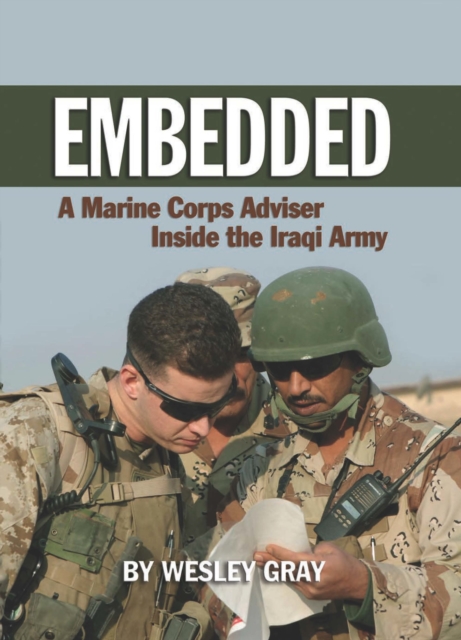
In 2006, 1st Lt. Wesley Gray was deployed as a U.S. Marine Corps military adviser to an Iraqi Army battalion in the Haditha Triad. For 210 days, he lived and fought beside Iraqi soldiers in the most dangerous and austere province of western Iraq. Al-Anbar was filled with an insurgent population traumatized by a recent massacre of twenty-four men, women, and children shot at close range by U.S. Marines in retaliation for the death of one of their comrades in a roadside bombing. Despite the high tensions created by the shootings, Gray was able to form a bond with the Iraqis because he had an edge that very few U.S. service members possess -the ability to communicate in Iraqi Arabic. His language skills and his understanding of the culture led the Iraqi soldiers to call him a brother and fondly name him Jamal. By the end of his tour he was a legend within the Iraqi Army. Gray draws on the brutally honest and detailed record he kept during his tour, including extensive interviews with Iraqi soldiers and citizens. He offers a comprehensive portrait of the struggles of the Iraqi people to make their country a nation once again and includes a compelling report on the status and prospects of the U.S. government's strategy for success in Iraq.
eBook
Iraq between the two world wars: the militarist origins of tyranny
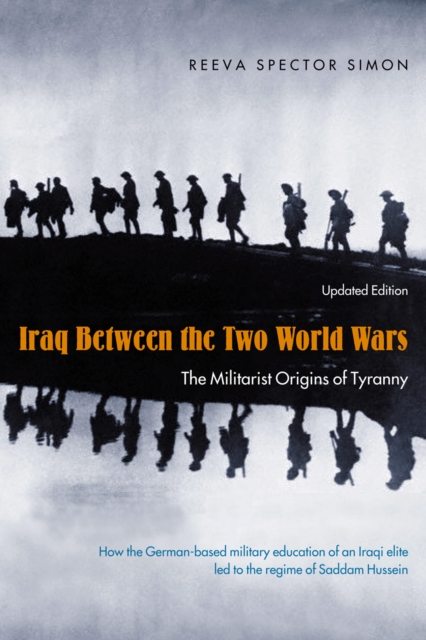
Why did a group from the Iraqi army seize control of the government and wage a disastrous war against Great Britain, rejecting British and liberal values for those of a militaristic Germany? What impact did these actions have on the regime of Saddam Hussein? Departing from previous studies explaining modern Iraqi history in terms of class theory, Simon shows that cultural and ideological factors played an equal, if not more important, role in shaping events. In 1921 the British created Iraq, and an entourage of ex-Ottoman army officers, the Sharifians, became the new ruling elite. Simon contends that this elite, returning to an Iraq made up of different ethnic, religious, and social groups, had to weld these disparate elements into a nation. Pan-Arabism was to be the new focus for loyalty. Schools and the army became the means through which to implement it, and a series of military coups gave the officers the chance to act out the ideology. The result was an abortive revolt against Britain in 1941. The legacy of the revolt is still apparent in the next two generations of Iraqi officers that led to the regime of Saddam Hussein.
eBook