
Catalogue Search | MBRL


Are you sure you want to remove the book from the shelf?

{{itemTitle}}
301
result(s) for
"Islamic art and symbolism."
Sort by:


Saint George Between Empires
This volume examines Saint George's intertwined traditions in
the competing states of the eastern Mediterranean and
Transcaucasia, demonstrating how rival conceptions of this
well-known saint became central to Crusader, Eastern Christian, and
Islamic medieval visual cultures.
Saint George Between Empires links the visual cultures
of Byzantium, North Africa, the Levant, Syria, and the Caucasus
during the Crusader era to redraw our picture of interfaith
relations and artistic networks. Heather Badamo recovers and
recontextualizes a vast body of images and literature-from
etiquette manuals and romances to miracle accounts and
chronicles-to describe the history of Saint George during a period
of religious and political fragmentation, between his \"rise\" to
cross-cultural prominence in the eleventh century and his
\"globalization\" in the fifteenth. In Badamo's analysis, George
emerges as an exemplar of cross-cultural encounter and global
translation.
Featuring important new research on monuments and artworks that
are no longer available to scholars as a result of the occupation
of Syria and parts of Iraq, Saint George Between Empires
will be welcomed by scholars of Byzantine, medieval, Islamic, and
Eastern Christian art and cultural studies.
eBook

The Sasanian Imperial Standard from Arab-Islamic Conquest Narratives to Modern Nationalist Myths
With its capture at the outset of the conquest of Iran in the early seventh century, the imperial Sasanian standard, known as the Derafsh-e kaviyan, became a metaphor for imperial corruption, underscoring both the righteousness of the Islamic caliphate and the piety of the Arab-Muslim warriors who founded it. Two centuries later, it served as a potent symbol of pre-Islamic Persian splendor and the continuity of its rich tradition. Later still, modern Iranian nationalists raised the \"banner of Kaveh\" as part of their campaign to foster a sense of national consciousness and pride in the country's ancient heritage. Today, the Derafsh-e kaviyan continues to be a powerful symbol for secular Iranian nationalists campaigning against the Islamic Republic of Iran; for Kurdish nationalists seeking political autonomy; and for Tajik state authorities linking their nation to a mythical past.
Journal Article
The Sasanian Imperial Standard
With its capture at the outset of the conquest of Iran in the early seventh century, the imperial Sasanian standard, known as the Derafsh-e kaviyan, became a metaphor for imperial corruption, underscoring both the righteousness of the Islamic caliphate and the piety of the Arab-Muslim warriors who founded it. Two centuries later, it served as a potent symbol of pre-Islamic Persian splendor and the continuity of its rich tradition. Later still, modern Iranian nationalists raised the \"banner of Kaveh\" as part of their campaign to foster a sense of national consciousness and pride in the country's ancient heritage. Today, the Derafsh-e kaviyan continues to be a powerful symbol for secular Iranian nationalists campaigning against the Islamic Republic of Iran; for Kurdish nationalists seeking political autonomy; and for Tajik state authorities linking their nation to a mythical past.
Journal Article

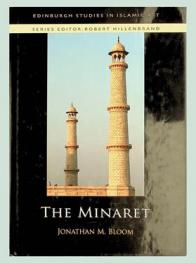
The minaret
Bloom reveals that the Minaret, long understood to have been invented in the early years of Islam as the place from which the muezzin gives the call to prayer, was actually invented some two centuries later to be a visible symbol of Islam. Drawing on buildings, archaeological reports, medieval histories, geographies, and early Arabic poetry, he reinterprets the origin, development, and meanings of the minaret and provides a sweeping historical and geographical tour of the minaret's position as the symbol of Islam.
Book

The Cover of the Holy Building, the Symbol of Politics: The Historical Power Rivalry over the Kiswa of the Ka'ba
For Muslims, the Ka‘ba holds immense significance as the destination of pilgrimage—an obligatory act of worship—and as the direction toward which prayers are performed. The kiswa is a cover that has been placed on the Ka‘ba, the holiest place in Islam, since the Jāhiliyya period as an expression of respect for it. Although there are some exceptions in Islamic history, it is usually changed once a year and it was woven in different colours according to the period, and finally it became a tradition to be black. The kiswa of the Ka‘ba is one of the most important religious and political symbols of Islamic history. This article analyses the role of the kiswa of the Ka‘ba in the relations between Muslim rulers in the Islamic world throughout history. From the earliest periods of Islam, the kiswa has been recognized as a symbol of legitimacy and a means of asserting control over the administration of pilgrimage. Many states, such as the Abbāsids, Mamlūks, and Ottomans, expressed or reinforced their political legitimacy among Muslims by showing their influence over the Ka‘ba through the tradition of the kiswa. In the medieval Islamic world, Muslim states or local administrators of these states especially used the kiswa as a symbol of sovereignty, thus increasing their influence in the regions they governed. Some Muslim administrators who wanted to send the kiswa to the Ka‘ba competed with each other or prevented the other from sending the kiswa to the Ka‘ba because each year only one kiswa was sent to Mecca. In this study, the position of the kiswa as a political symbol in the quest for the legitimacy of Muslim rulers in Islamic history and the historical development of this issue are discussed and analysed with examples.
Journal Article
The Third Conquest of Constantinople: The Symbolism of Hagia Sophia’s Reconversion to a Mosque
This article discusses the conversion of Hagia Sophia to a mosque in 2020. Examining this act through the prism of the neo-Ottoman political platform and with consideration of the meaning and importance of this historic cultural monument, it is inferred that the reconversion constitutes a political decision par excellence, intended to symbolically mark the beginning of a new era for Turkey while closing the chapter of Kemalism. In doing so, the current political establishment seeks to communicate its resolution to invert the process of secularisation, as a form of revanche for the Westernisation of the country and the identity erosion that it caused. Further, the reconversion symbolically connotes the conquest of Constantinople and the triumph of Islam over Christianity anew, harking back to past glories and upholding them as guidelines for the future, thus hinting to a revisionist political agenda, applicable both domestically and abroad, intended, according to rhetoric at least, to consolidate Turkey as a regional power and a worthy successor of the Ottoman Empire.
Journal Article