
Catalogue Search | MBRL


Are you sure you want to remove the book from the shelf?

{{itemTitle}}
14
result(s) for
"Italy Civilization 1945-"
Sort by:

The shaping of Tuscany : landscape and society between tradition and modernity
\"To its many tourists and visitors, the Tuscan landscape evokes a sense of timelessness and harmony. Yet, the upheavals of the twentieth century profoundly reshaped rural Tuscany. Uncovering the experiences of ordinary people, Professor Gaggio traces the history of Tuscany to show how the region's modern conflicts and aspirations have contributed to forging its modern-day beauty. We learn how the rise of Fascism was particularly violent in rural Tuscany, and how struggles between Communist sharecroppers and their landlords raged long after the end of the dictatorship. The flight from the farms in the 1950s and 1960s disorientated many Tuscans, prompting ambitious development projects, and in more recent decades the emergence of the heritage industry has raised the spectre of commodification. This book tells the story of how many Tuscans themselves have become tourists in their own land - forced to adapt to rapid change and reinvent their landscape in the process\"-- Provided by publisher.
Book
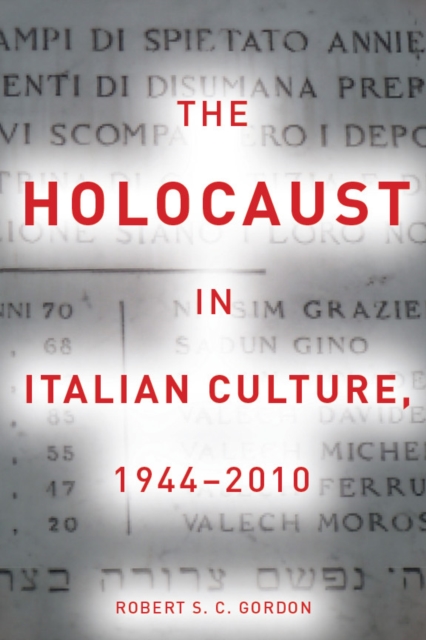
The Holocaust in Italian Culture, 1944–2010
The Holocaust in Italian Culture, 1944–2010 is the first major study of how postwar Italy confronted, or failed to confront, the Holocaust. Fascist Italy was the model for Nazi Germany, and Mussolini was Hitler's prime ally in the Second World War. But Italy also became a theater of war and a victim of Nazi persecution after 1943, as resistance, collaboration, and civil war raged. Many thousands of Italians—Jews and others—were deported to concentration camps throughout Europe. After the war, Italian culture produced a vast array of stories, images, and debate through which it came to terms with the Holocaust's difficult legacy. Gordon probes a rich range of cultural material as he paints a picture of this shared encounter with the darkest moment of twentieth-century history. His book explores aspects of Italian national identity and memory, offering a new model for analyzing the interactions between national and international images of the Holocaust.
eBook

Italian fashion since 1945 : a cultural history
In the course of the twentieth century, Italy succeeded in establishing itself as one of the world's preeminent fashion capitals, despite the centuries-old predominance of Paris and London. This book traces the story of how this came to be, guiding readers through the major cultural and economic revolutions of twentieth-century Italy and how they shaped the consumption practices and material lives of everyday Italians. In order to understand the specific character of the \"Italian model,\" Emanuela Scarpellini considers not only aspects of craftsmanship, industrial production and the evolution of styles, but also the economic and cultural changes that have radically transformed Italy and the international scene within a few decades: the post-war economic miracle, the youth revolution, the consumerism of the 1980s, globalization, the environmentalism of the 2000s and the Italy of today. Written in a lively style, full of references to cinema, literature, art and the world of media, this work offers the first comprehensive overview of a phenomenon that has profoundly shaped recent Italian history.--Back cover.
Book

Revisioning Italy
This volume covers a range of subjects drawn from Italy and abroad to study the historical and contemporary formations of Italian national identity. In doing so, the work illuminates Italy past and present as well as the local and global dimensions of national identity in general. Contributors: Mohamed Aden, John Agnew, Ayele Bekerie, Elaine K. Chang, Antonio Marazzi, Francesca Miller, Antonio Negri, Graziella Parati, Karen Pinkus, Paul Robinson, Pasquale Verdicchio, Marguerite R. Waller, and David Ward.
eBook

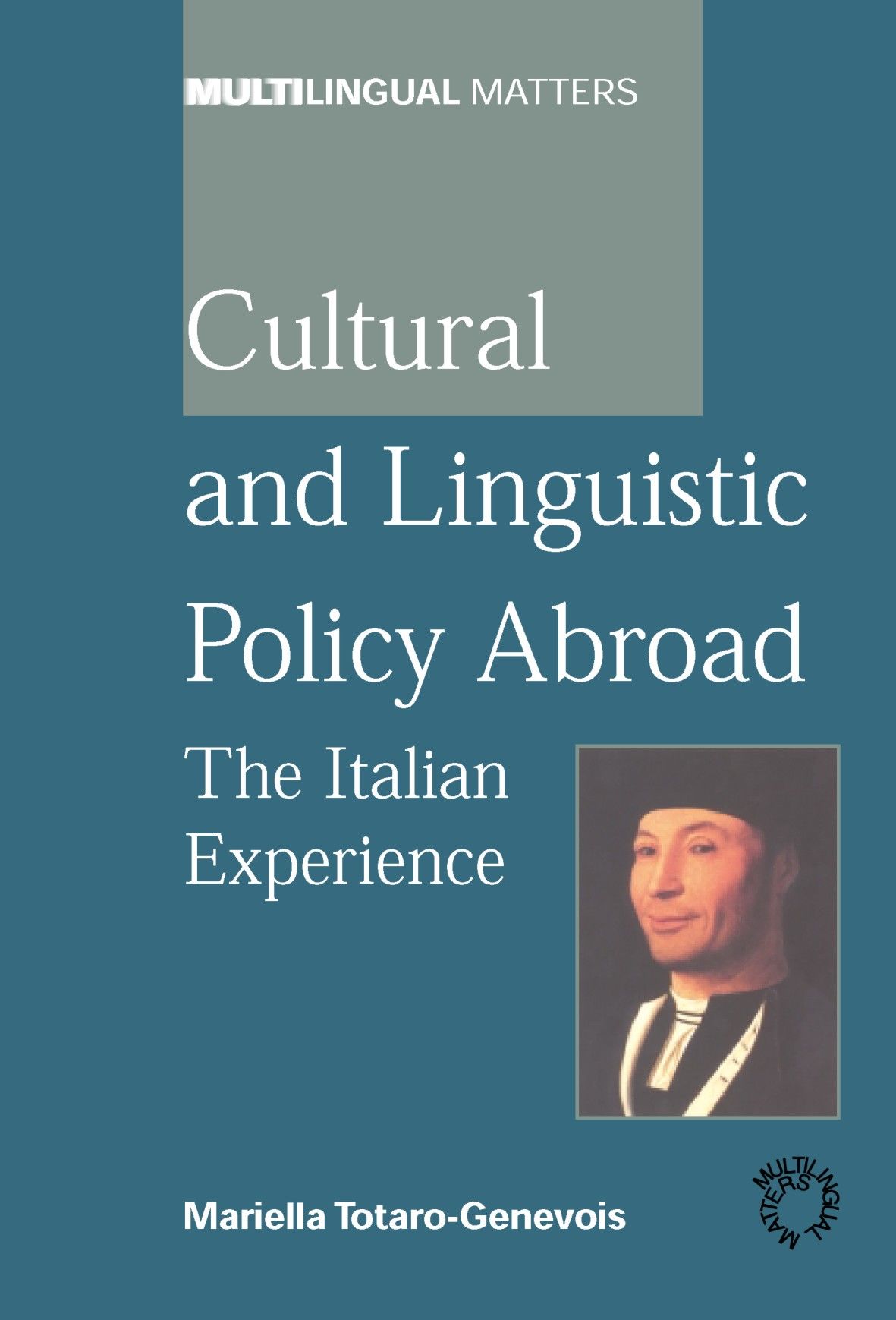
Cultural and linguistic policy abroad : the Italian experience
This book investigates Italian foreign cultural policy from the 1947 Constitution to the present. The analysis reveals two interesting and parallel features: on the one hand the requirement to promote 'high culture' and on the other the need to deal with complex issues relating to emigration. How has this dilemma inherent in Italian foreign cultural policy been dealt with? To what extent has the Italian State confronted these two apparently opposite challenges? The Australian context is used here as an example to show how the dichotomy of migrants versus culture-promotion abroad has gradually been addressed, with a view to a reconciliation which now seems imminent.
eBook

Marketing modernity : Italian advertising from fascism to postmodernity
\"Marketing modernity traces the development of consumer culture in Italy from the 1920s to the present day. In so doing, Adam Arvidsson argues that the culture of consumption we see in Italy today has its direct roots in the social vision articulated by the advertising industry in the years following the First World War. He then goes on to discuss how that vision was further elaborated by advertising's interaction with subsequent major actors in twentieth-century Italy: Fascism, post-war mass political parties and the counter-culture of the 1960s and 1970s.\"--Jacket.
Book

Italy and the Wider World
Richard Bosworth's overview of Italy's role in European and world politics from 1860 to 1960 is lively and iconclastic. Based on a combination of primary research and secondary material he examines Italian diplomacy, military power, commerce, culture, tourism and ideology. His account challenges many aspects of current Italian historiography and offers an original vision of the place of Italy in modern history.
eBook

The Fascist Effect
In The Fascist Effect , Reto Hofmann uncovers the
ideological links that tied Japan to Italy, drawing on extensive
materials from Japanese and Italian archives to shed light on the
formation of fascist history and practice in Japan and beyond.
Moving between personal experiences, diplomatic and cultural
relations, and geopolitical considerations, Hofmann shows that
interwar Japan found in fascism a resource to develop a new order
at a time of capitalist crisis.
Hofmann demonstrates that fascism in Japan was neither a
European import nor a domestic product; it was, rather, the result
of a complex process of global transmission and reformulation. Far
from being a vague term, as postwar historiography has so often
claimed, for Japanese of all backgrounds who came of age from the
1920s to the 1940s, fascism conjured up a set of concrete
associations, including nationalism, leadership, economics, and a
drive toward empire and a new world order.
eBook

Benefits of Empire? Capital Market Integration North and South of the Alps, 1350–1800
This article addresses two questions. First, when and to what extent did capital markets integrate north and south of the Alps? Second, how mobile was capital? Analysing a unique new dataset on pre-modern urban annuities, we find that northern markets were consistently better integrated than Italian markets. Long-term integration was driven by initially peripheral places in the Netherlands and Upper Germany integrating with the rest of the Holy Roman Empire where the distance and volume of inter-urban investments grew primarily in the sixteenth century. The institutions of the Empire contributed to stronger market integration north of the Alps.
Journal Article