
Catalogue Search | MBRL


Are you sure you want to remove the book from the shelf?

{{itemTitle}}
5
result(s) for
"Kazakh figures"
Sort by:
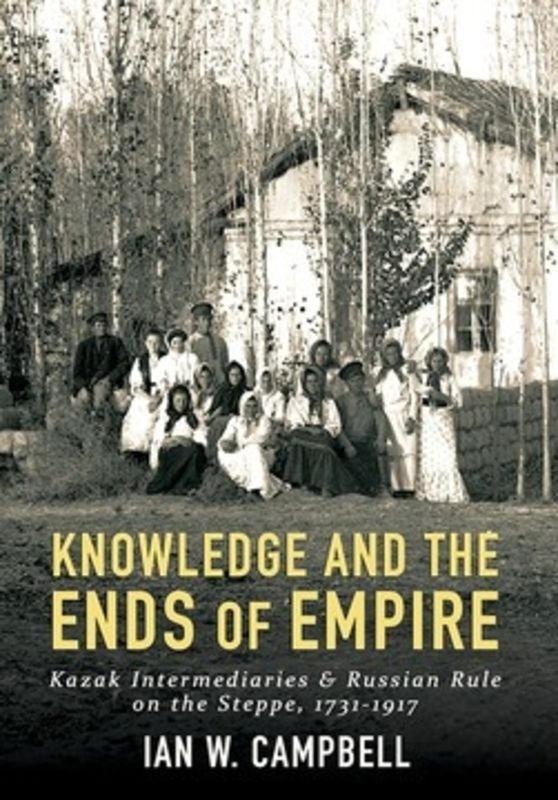
Knowledge and the Ends of Empire
In Knowledge and the Ends of Empire, Ian W. Campbell investigates the connections between knowledge production and policy formation on the Kazak steppes of the Russian Empire. Hoping to better govern the region, tsarist officials were desperate to obtain reliable information about an unfamiliar environment and population. This thirst for knowledge created opportunities for Kazak intermediaries to represent themselves and their landscape to the tsarist state. Because tsarist officials were uncertain of what the steppe was, and disagreed on what could be made of it, Kazaks were able to be part of these debates, at times influencing the policies that were pursued.Drawing on archival materials from Russia and Kazakhstan and a wide range of nineteenth-century periodicals in Russian and Kazak, Campbell tells a story that highlights the contingencies of and opportunities for cooperation with imperial rule. Kazak intermediaries were at first able to put forward their own idiosyncratic views on whether the steppe was to be Muslim or secular, whether it should be a center of stock-raising or of agriculture, and the extent to which local institutions needed to give way to imperial institutions. It was when the tsarist state was most confident in its knowledge of the steppe that it committed its gravest errors by alienating Kazak intermediaries and placing unbearable stresses on pastoral nomads. From the 1890s on, when the dominant visions in St. Petersburg were of large-scale peasant colonization of the steppe and its transformation into a hearth of sedentary agriculture, the same local knowledge that Kazaks had used to negotiate tsarist rule was transformed into a language of resistance.
eBook

Cognitive Linguistic Analysis of Hyperbole-based Phraseological Expressions in Kazakh and English Languages
The relevance of the research lies in the fact that in the modern Kazakh and English languages there are a huge number of expressive techniques of phraseological expressions, which are actively used in one way or another. The aim of the study is to conduct a cognitive linguistic analysis of the features of phraseological expressions based on hyperbole in the Kazakh and English languages. The study employs an integrated methodology encompassing cognitive, descriptive, and linguistic approaches to analyze hyperbole-based phraseological units in Kazakh and English, aiming to uncover their figurative basis, structural characteristics, and cognitive underpinnings. The study explores hyperbole-based phraseological units, particularly in Kazakh and English, categorizing them based on figurative aspects and formal structure. It reveals that seemingly similar phrases often have unique conceptual differences, emphasizing the role of culture and context in interpretation. This interdisciplinary research underscores the complexities of understanding these linguistic expressions. In conclusion, this study underscores the significance of cognitive linguistic analysis in understanding hyperbole-based phraseological units, revealing idiosyncratic conceptual differences across languages and emphasizing the importance of refining methodological approaches in this field of research.
Journal Article

Cognitive Aspects of the Phraseology of Precipitation in the Kazakh and Kyrgyz Languages
The phraseology of precipitation as a weather phenomenon occupies an important part in the Kazakh and Kyrgyz languages. Each phraseological fund encompasses rich imagery and specific cognitive characteristics. The objectives of this research were to discover the cognitive characteristics of rain, snow and hail based on their participation in phraseology. A qualitative research design grounded in the apparatus and methodology of cognitive linguistics was employed for cognitive and linguo-cultural analysis of a set of 50 phrasemes collected from lexicographic and corpus-based sources. The study also used theoretical principles of the Conventional Figurative Language Theory to explain the meaning and motivation of the phrasemes in question which were further classified according to the meaning of target domains. It was found that the Kazakh and Kyrgyz languages share many weather vocabulary and phraseological units which appeared during common historical development. The major finding is that the mappings of precipitation concepts of ‘rain’, ‘snow’ and ‘hail’ are characterization of a precipitation type, personal qualities, or intensity of an action. Though the research scope is limited to the two languages of the Kipchak subgroup, it will contribute to further examine the preservation of shared Turkic phraseology which reflects unique views on the nature shared by one of the largest language families.
Journal Article

Folk Motifs in Poetic Language of Ilyas Zhansugurov and Their Interpretation in Modern Times
This paper examines the significance of folk motifs in Ilyas Zhansugurov's poetry and analyzes their interpretations within contemporary literary and cultural contexts. To achieve these objectives, the study employs stylistic analysis, contextual analysis, an intertextual approach, and comparative analytical methods. The findings reveal that Ilyas Zhansugurov's poetry is rich in folk motifs, and the poet focuses on describing the steppe, nomadic lifestyle, and the customs of the Kazakh people, showcasing the values of wisdom, courage, and honor, and glorifying Kazakh traditions and the indigenous lifestyle. It was found that Ilyas Zhansugurov contributed to the personification of the dombra, the development of epic storytelling, the use of folklore-based symbolism, and the incorporation of proverbs and sayings within the poetic texts. The research demonstrated that Ilyas Zhansugurov's poetry inspired modern Kazakh poets, leading to the incorporation of folk motifs into their works. Besides, four key motifs in Ilyas Zhansugurov's poetry were outlined. They included the dombra (identity, history, and the voice of the nation), the steppe (freedom, endurance, and the nomadic way of life), the horse (betrayal, loss, and political oppression), and the kuishi (bridge between generations). Additionally, it was revealed that several stylistic devices were employed in Ilyas Zhansugurov's poetry. They included the following: metaphor, hyperbole, symbolism, imagery, personification, repetition, rhetorical question, contrast, irony, and allusion. The findings offer valuable implications for contemporary literary studies.
Journal Article

Wayward shamans
Wayward Shamans tells the story of an idea that humanity’s first expression of art, religion and creativity found form in the figure of a proto-priest known as a shaman. Tracing this classic category of the history of anthropology back to the emergence of the term in Siberia, the work follows the trajectory of European knowledge about the continent’s eastern frontier. The ethnographic record left by German natural historians engaged in the Russian colonial expansion project in the 18th century includes a range of shamanic practitioners, varied by gender and age. Later accounts by exiled Russian revolutionaries noted transgendered shamans. This variation vanished, however, in the translation of shamanism into archaeology theory, where a male sorcerer emerged as the key agent of prehistoric art. More recent efforts to provide a universal shamanic explanation for rock art via South Africa and neurobiology likewise gloss over historical evidence of diversity. By contrast this book argues for recognizing indeterminacy in the categories we use, and reopening them by recalling their complex history.
eBook