
Catalogue Search | MBRL


Are you sure you want to remove the book from the shelf?

{{itemTitle}}
20,775
result(s) for
"Leadership Case studies"
Sort by:

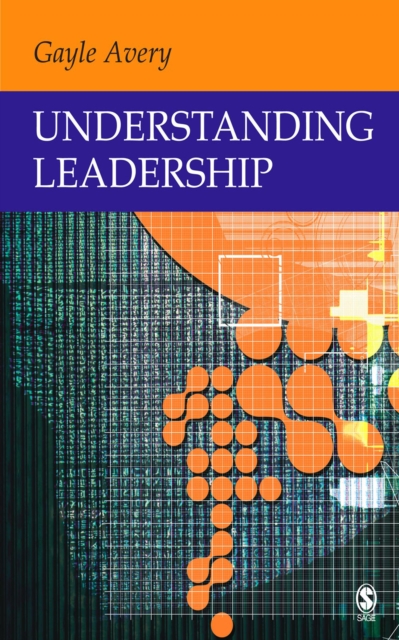
Understanding leadership : paradigms and cases
With a huge range of definitions and theories of leadership available, the field of leadership has become confusing for both students and practitioners. Understanding Leadership provides a framework for making sense of the field. In Part One, Gayle C Avery integrates a fragmented field into four broad paradigms or forms of leadership, helping to simplify and clarify the ill-defined field of leadership. The second part provides 10 case studies from leading organizations across Europe, Australia and the United States to illustrate how diverse leadership can be in successful organizations. At the end of each case, specific questions guide the reader in interpreting and analyzing the cases, connecting them to the leadership frameworks and theories in Part One. Written in simple, accessible language, and assuming no prior knowledge Understanding Leadership can be used by readers with no prior knowledge of leadership. With its overview of major theories in the field and presentation of a simple and effective framework for analyzing these theories, the book will be essential reading for advanced undergraduate and MBA students.
eBook

Cases in leadership
The Ivey School of Business and SAGE have partnered to offer a distinctive collection of real-world leadership cases Cases in Leadership, Fifth Edition is a unique collection of 30 real-world leadership cases from Ivey Publishing plus 15 practitioner readings from the Ivey Business Journal. This up-to-date casebook instructs business students to gain a better understanding of leadership and prepares them to be more effective leaders throughout their careers. Editors W. Glenn Rowe and Laura Guerrero included selected cases showcasing complex leadership issues. This casebook has proven to be an invaluable companion to any standard leadership text by connecting theory to practice through actual cases. The new edition is fully updated with the most recent cases and readings and features a new chapter on followership.
Book

Leaders and international conflict
The role of leadership in international conflict has recently become one of the most dynamic research agendas in international relations. This book seeks to explain why and when political leaders decide to initiate international wars and argues that the fate of leaders shapes their decisions to initiate international conflict.
eBook


Presidents and the dissolution of the union
The United States witnessed an unprecedented failure of its political system in the mid-nineteenth century, resulting in a disastrous civil war that claimed the lives of an estimated 750,000 Americans. In his other acclaimed books about the American presidency, Fred Greenstein assesses the personal strengths and weaknesses of presidents from George Washington to Barack Obama. Here, he evaluates the leadership styles of the Civil War-era presidents.
Using his trademark no-nonsense approach, Greenstein looks at the presidential qualities of James K. Polk, Zachary Taylor, Millard Fillmore, Franklin Pierce, James Buchanan, and Abraham Lincoln. For each president, he provides a concise history of the man's life and presidency, and evaluates him in the areas of public communication, organizational capacity, political skill, policy vision, cognitive style, and emotional intelligence. Greenstein sheds light on why Buchanan is justly ranked as perhaps the worst president in the nation's history, how Pierce helped set the stage for the collapse of the Union and the bloodiest war America had ever experienced, and why Lincoln is still considered the consummate American leader to this day.
Presidents and the Dissolution of the Unionreveals what enabled some of these presidents, like Lincoln and Polk, to meet the challenges of their times--and what caused others to fail.
eBook

Global cosmopolitans : the creative edge of difference
\"As globalization creates the need for leaders who transcend national borders, this book provides an insider's view of what makes them special. This is the first book to present a framework for understanding this fast-growing and influential group and it provides tools for readers to discover their own inner competitive edge\"-- Provided by publisher.
Book

Democracys Blameless Leaders
From the American and British counter-insurgency in Iraq to the bombing of Dresden and the Amristar Massacre in India, civilians are often abused and killed when they are caught in the cross-fire of wars and other conflicts. In Democracy's Blameless Leaders, Neil Mitchell examines how leaders in democracies manage the blame for the abuse and the killing of civilians, arguing that politicians are likely to react in a self-interested and opportunistic way and seek to deny and evade accountability. Using empirical evidence from well-known cases of abuse and atrocity committed by the security forces of established, liberal democracies, Mitchell shows that self-interested political leaders will attempt to evade accountability for abuse and atrocity, using a range of well-known techniques including denial, delay, diversion, and delegation to pass blame for abuse and atrocities to the lowest plausible level. Mitchell argues that, despite the conventional wisdom that accountability is a 'central feature' of democracies, it is only a rare and courageous leader who acts differently, exposing the limits of accountability in democratic societies. As democracies remain embroiled in armed conflicts, and continue to try to come to grips with past atrocities, Democracy's Blameless Leaders provides a timely analysis of why these events occur, why leaders behave as they do, and how a more accountable system might be developed.
eBook

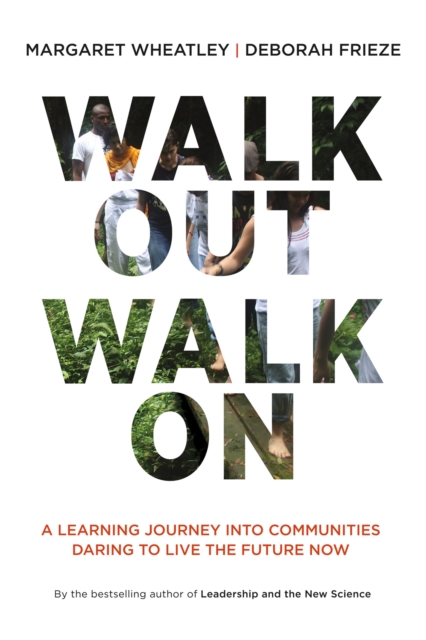
Walk out walk on
Bestselling author Margaret Wheatley and long-time Berkana Institute collaborator Deborah Frieze take readers on a learning journey into seven diverse communities that have walked out of limiting beliefs and practices and walked on to something new. From Brazil to Ohio, they demonstrate how each of these communities made a conscious choice to develop a healthier, more resilient world based on the idea to \"create with what we have.\".
eBook