
Catalogue Search | MBRL


Are you sure you want to remove the book from the shelf?

{{itemTitle}}
58
result(s) for
"Lernspiel"
Sort by:
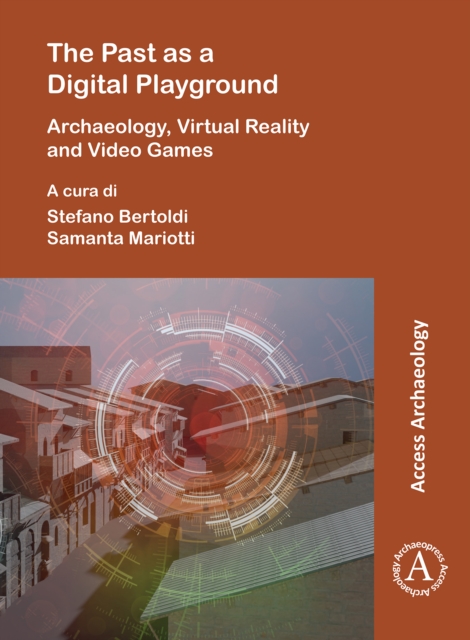
Past as a Digital Playground
The Past as Digital Playground: Archaeology, Virtual Reality, and Video Games collects the contributions to a two-day conference which illustrate a digital project developed at the Archaeological and Technological Park of Poggibonsi (Siena, Tuscany), where Virtual Reality and an educational video game are being used to enhance the archaeological content deriving from the excavation of the medieval site. In recent decades, digital technologies have pervaded every aspect of the production of archaeological knowledge, from data collection to analysis and interpretation, to interaction with the public. The increasing convenience of 3D and interactive technologies has led to a proliferation of digital tools (VR, AR, mobile applications) used to communicate the past in a more engaging way, offering the public an experience that takes place largely outside of the traditional channels. Alongside the experience at Poggibonsi, the book also gathers important contributions originating from other Italian and international case studies in the fields of digital technologies applied to archaeological heritage.
eBook

Playing with complex systems?
The current socio-ecological challenges and phenomena that are major topics of geography education, like climate change and migration, are highly complex. Maturity in these contexts requires a networked way of thinking, and a systemic competence that is difficult to develop in geography classes alone. Digital games that simulate complex systems which include the pressing issues of today's challenges may be a useful supplement to foster systems thinking. In this study, [the authors] develop a framework to assess the complexity of in-game systems. A subsequent analysis of a selection of current commercial strategy and simulation games shows how system complexity is designed differently in the various games. Based on these results, [the authors] make recommendations for the selection and use of different games in formal and informal learning contexts. (Orig.).
Journal Article
Studying Gaming Literacies
Organized into two sections, Studying Gaming Literacies explores the rich methodological approaches to gaming literacies scholarship as well as the possibilities of engaging in research in both classrooms and informal learning settings.
eBook

Games versus reality?
Digital entertainment games frequently address current societal issues that are also dealt with in geography education, such as climate change or sustainable city development, and give various opportunities for learning. However, in order to be fully able to determine the games’ educational potential and to instruct meaningful reflection on them in class, the designers’ approaches to realism regarding these topics need to be understood. Therefore, [the authors] have developed a model of realism in games and conducted 9 interviews with 10 experts from the entertainment game industry about their understanding of and dealing with realism concerning the represented geographical topics. In many cases, the interviewees’ approach to incorporating real-world issues can be regarded as beneficial for their games’ educational potential, and some designers even pursued learning goals. However, [the authors] also identified approaches that can result in questionable presentations of real societal issues. [The authors] found the most problematic one to be the prioritization of player expectations for the sake of perceived realism. This approach may lead to the depiction of stereotypes and common misconceptions. The results presented in our study may help teachers to prepare reflection on such misrepresentations in class, or designers to become more aware of the educational implications of different forms of game realism. (Orig.).
Journal Article

Digital games and learning
The popularity of entertainment gaming over the last decades has led to the use of games for non-entertainment purposes in areas such as training and business support.The emergence of the serious games movement has capitalized on this interest in leisure gaming, with an increase in leisure game approaches in schools, colleges, universities and in.
eBook

Airing your dirty laundry
In this article, the authors describe a simple classroom game that demonstrates the advantage of tradable emissions permits in regulating environmental pollution. Students take on the role of polluters who must consider the costs of complying with a uniform reduction and a tradable permits program. The class is divided into high-cost polluters and low-cost polluters so students can observe the gains from trade as high-cost students purchase pollution rights from the low-cost students in the tradable permits scenario. A major advantage of the game is that it can be conducted within as little as 20 minutes and does not require that students have prior knowledge of economics or regulatory policies. This makes the game appropriate for economics and noneconomics courses alike.
Journal Article

Postsecondary play
The college application process - which entails multiple forms, essays, test scores, and deadlines - can be intimidating. For students without substantial school and family support, the complexity of this process can become a barrier to access. [The editors] approach this challenge innovatively. Using the tools of online games and social media, they have developed ways to make applying for college much less intimidating. While the vast majority of college students use social media and gaming in their everyday lives, colleges and universities have been slow to recognize and harness the power of either. [The book] explores the significance of games and social media in higher education, and particularly how they can be used to attract, retain, educate, and socialize students. (DIPF/Orig.).
eBook
Gamification with moodle
This book describes how teachers can use Gamification design within the Moodle Learning Management System. Game elements can be included in course design by using, badges, rubrics, custom grading scales, forums, and conditional activities. Moodle courses do not have to be solo-learning experiences that replicate Distance Education models. The Gamification design process starts by profiling players and creating levels of achievement towards meeting learning outcomes. Each task is defined, valued, and sequenced. Motivation loops are devised to keep the momentum going. In a gaming studio, this approach would require a team of specialists with a large budget and time frames. Preparing for a class rarely has these optimal conditions. The approach used in this book is to introduce game elements into the course design gradually. First, apply gamification to just one lesson and then build up to gamifying a series of lessons over a term. Each example will indicate the difficulty level and time investment. Try it out to see what is most effective with your learners and choose wisely in your use of technology. By the end of this book, you will be able to create Moodle courses that incorporate choice, communication, challenge, and creativity.
eBook

Technology-based assessments for 21st century skills
In this book, leading scholars from multiple disciplines present their latest research on how to best measure complex knowledge, skills, and abilities using technology-based assessments. All authors discuss theoretical and practical implications from their research and outline their visions for the future of technology-based assessments. Chapters Two through Seven discuss game-based or simulation-based assessments developed using the ECD [Evidence Centered Design] framework. In Chapter 8, the authors present 'Good Assessment for Twentyfirstcentury Education' (GATE) and outline a framework for using games as assessments. In Chapter 9, the authors present an architecture for game-based assessment and describe relationships of learning goals, cognitive demands, and domain and task features. Chapters 10 and 11 focus specifically on using technology to assess inquiry learning. In Chapters 12, 13, and 14, the authors use cognitive load theory as a framework for designing technology-based assessments. The volume concludes with two Chapters, which explore technology-based assessments at a meta-level. (DIPF/Orig./pr).
Book
The playful entrepreneur : how to adapt and thrive in uncertain times
A compelling account of how incorporating play into work can help us overcome the uncertainty and turbulence that surrounds work How can we learn to deal with uncertainty at work? The answer, as Dodgson and Gann eloquently portray in this pathfinding book, is to learn from the adaptive behaviors of entrepreneurs. Play, the authors show, is a crucial component of this. It encourages exploration, experimentation, and curiosity while it also challenges established practices and orthodoxies. It facilitates change in people and organizations. Drawing on in-depth interviews with entrepreneurs and innovators, this book explains why we should incorporate play into work, what play looks like, and how to encourage playfulness in individuals and organizations. Dodgson and Gann identify four key behaviors that endorse, encourage, and guide play: grace, craft, fortitude, and ambition, and provide a blueprint for an alternative way of working that fosters resilience and encourages innovation and growth in difficult times.
eBook