
Catalogue Search | MBRL


Are you sure you want to remove the book from the shelf?

{{itemTitle}}
1,915
result(s) for
"Liberalism Canada."
Sort by:

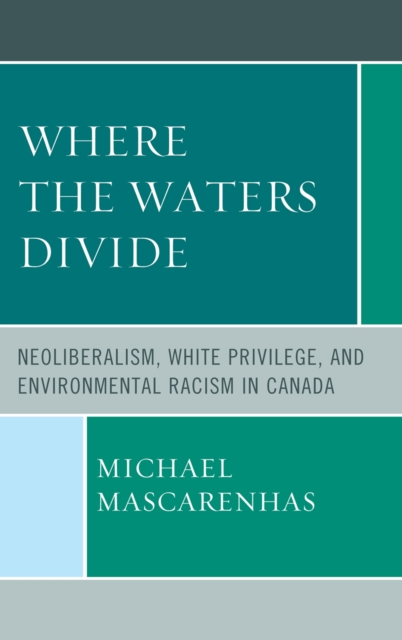
Where the waters divide
This timely and important scholarship advances an empirical understanding of Canada’s contemporary “Indian” problem. Where the Waters Divide is one of the few book monographs that analyze how contemporary neoliberal reforms (in the manner of de-regulation, austerity measures, common sense policies, privatization, etc.) are woven through and shape contemporary racial inequality in Canadian society. Using recent controversies in drinking water contamination and solid waste and sewage pollution, Where the Waters Divide illustrates in concrete ways how cherished notions of liberalism and common sense reform — neoliberalism — also constitute a particular form of racial oppression and white privilege. Where the Waters Divide brings together theories and concepts from four disciplines — sociology, geography, Aboriginal studies, and environmental studies — to build critical insights into the race relational aspects of neoliberal reform. In particular, the book argues that neoliberalism represents a key moment in time for the racial formation in Canada, one that functions not through overt forms of state sanctioned racism, as in the past, but via the morality of the marketplace and the primacy of individual solutions to modern environmental and social problems. Furthermore, Mascarenhas argues, because most Canadians are not aware of this pattern of laissez faire racism, and because racism continues to be associated with intentional and hostile acts, Canadians can dissociate themselves from this form of economic racism, all the while ignoring their investment in white privilege. Where the Waters Divide stands at a provocative crossroads. Disciplinarily, it is where the social construction of water, an emerging theme within Cultural Studies and Environmental Sociology, meets the social construction of expertise — one of the most contentious areas within the social sciences. It is also where the political economy of natural resources, an emerging theme in Development and Globalization Studies, meets the Politics of Race Relations — an often-understudied area within Environmental Studies. Conceptually, the book stands where the racial formation associated with natural resources reform is made and re-made, and where the dominant form of white privilege is contrasted with anti-neoliberal social movements in Canada and across the globe.
eBook


Liberals at the Border
Lloyd Axworthy, former Minister of Foreign Affairs, rose to international prominence in the mid-1990s for his comprehensive campaign to ban the use of anti-personnel landmines, which led to the signing of the Ottawa Treaty in 1997 by 122 countries and his own nomination for the Nobel Peace Prize.
In this wide-ranging lecture, Axworthy reflects on liberal values, Canadian politics, and the rise of U.S./Canadian border issues since the terrorist attack on the United States in September 2001. Axworthy's distinctive voice shines through with personal anecdotes about his life in politics and his thoughts on Canada's sometimes uneasy relations with its southern neighbour and largest trading partner.
Axworthy addresses many troubling issues, including the conflict in Afghanistan where Canadian soldiers potentially contravened Canada's international treaties by handing over prisoners to the U.S. He also discusses Canadian territorial sovereignty in the context of U.S. 'homeland security,' as well as international inaction on conflicts in Africa that resulted in the deaths of hundreds of thousands of people.
Dr. Axworthy deliveredLiberals at the Borderin March 2002 as the sixth annual Senator Keith Davey Lecture at Victoria University in the University of Toronto.
eBook


Canada's Origins
Ajzenstat and Smith challenge the idea of Canada as a country whose liberal individualism, unlike that of the United States, is redeemed by a tradition of government intervention in economic and social life: the so-called \"tory touch.\" This ground-breaking book begins with the now classic article in which the red tory view was formulated. It then presents a new and illuminating picture of Canadian political life, in which liberal individualism confronts not toryism but the participatory tradition of civic republicanism. In the final section the two editors, one a liberal, the other a civic republican, debate the crucial questions dominating Canadian politics today-including Quebec's search for recognition-from the perspective of their shared understanding of Canada's founding.
eBook


Navigating neoliberalism : self-determination and the Mikisew Cree First Nation
This remarkable book argues that neoliberalism, which drives government policy concerning First Nations in Canada, can also drive self-determination -- including the Mikisew First Nation, which successfully exploited opportunities for greater autonomy and well-being that the current political and economic climate has presented.
eBook

TRANSNATIONAL DIALOGUE ON LANGUAGE EDUCATION IN CANADA AND BRAZIL: HOW DO WE MOVE FORWARD IN THE FACE OF NEOCONSERVATIVE/NEOLIBERAL TIMES?
ABSTRACT This interview with Prof. Dr. Brian Morgan from York University presents some of Dr. Morgan and Dr. Ferraz's perspectives in relation to language education in Canada and Brazil. The conversation plunges into essential topics to be problematized by language educators from both countries: neoconservative politics, neoliberalism, plurilingualism, philosophy of language (Derrida, Bakhtin, Foucault, Deleuze), cultural studies, teacher education, teaching practices. Brian Morgan invites us to go through a process of further thinking in terms of: 1. The Neoliberal agenda within educational policies and actions, 2. The relationship between theories (philosophies of language, cultural studies) and practices (how such theories impact - or not - public teachers' pedagogical practices), 3. The design of pedagogical projects (e.g., the Get Involved Project, MONTE MOR; MORGAN, 2014) that provide critical spaces for working within and against neoliberal agendas. RESUMO Esta entrevista com o Prof. Dr. Brian Morgan da Universidade de York apresenta as perspectivas dos professores Morgan e Ferraz em relação à educação linguística no Canadá e no Brasil. A conversa focaliza temas essenciais para a educação linguística em ambos os contextos: políticas neoconservadoras, neoliberalismo, filosofia da linguagem (Derrida, Bakhtin Foucault, Deleuze), estudos culturais, formação de professores e práticas de ensino. Brian Morgan nos convida a repensar: 1. A agenda neoliberal nas ações e políticas educacionais; 2. As relações entre teorias (filosofias da linguagem, estudos culturais) e práticas (por exemplo, como tais teorias impactam ou não as práticas pedagógicas dos professores da escola pública); 3. O desenho de práticas pedagógicas (por exemplo, o projeto Get Involved, MONTE MÓR; MORGAN, 2014) que proveem momentos críticos para se trabalhar com e contra as agendas neoliberais.
Journal Article

Activist resistance in neoliberal times: stories from Canada
Neoliberal efforts to extend the impact of the market on social life have been ongoing for several decades - and so has resistance to these efforts. In this article, key developments and effects of neoliberalism in Canada are outlined, especially those of most significance to social work. Within the current context, the work of civil society organisations is particularly remarkable. Allying with this form of resistance to neoliberalism, the article highlights stories from two such organisations told by the workers themselves. The story by the Disability Action Hall is about people with disabilities developing a collective identity and taking social action. The story by the Pembina Institute is about strategies to resist private amassing of profits from a public resource. The article concludes with a brief review of the work of the two organisations using tools available through the perspective of emancipatory social inquiry.
Journal Article