
Catalogue Search | MBRL


Are you sure you want to remove the book from the shelf?

{{itemTitle}}
128
result(s) for
"Library of Congress Exhibitions"
Sort by:
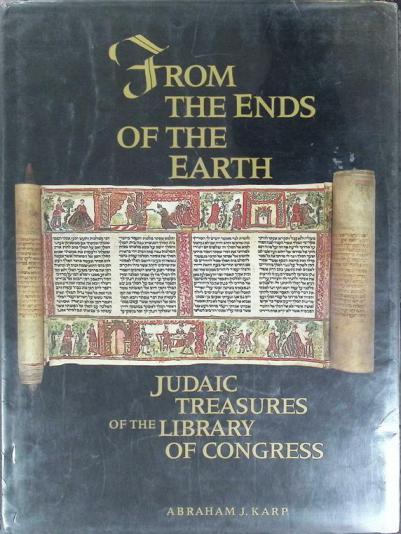
From the ends of the earth : Judaic treasures of the Library of Congress : essays
\"From the Ends of the Earth\" is a comprehensive scholarly survey of the world-renowned Judaic collections housed within the Library of Congress. Authored by the distinguished historian and bibliographer Abraham J. Karp, this volume was published to commemorate the 75th anniversary of the Hebraic Section. Through a series of thematic essays, Karp explores the depth and diversity of the Library’s holdings, which span over a millennium of Jewish history, liturgy, science, and literature. The work serves not only as a catalog of rare artifacts but as a narrative history of the Jewish Diaspora, as told through the books and manuscripts that traveled \"from the ends of the earth\" to find a home in the American national library.
BOOK

Public Engagement Through Programming in Archives: A Systematic Review of Activities and Resultant Outcomes
Archives have the potential to contribute to national development by preserving historical records and providing access to information. However, their impact is constrained by ineffective outreach strategies, insufficient institutional investment, and low public visibility. Public programming has been used as a strategic approach to bridge the gap between archival institutions and their user communities through engagement initiatives. Therefore, the objective of this study was to systematically review and analyse the diverse public programming activities undertaken by archival institutions globally and to identify the resultant outcomes of these engagements. To achieve this, the study employed a systematic literature review methodology, examining scholarly publications to synthesise existing evidence on public engagement in archives, thereby providing a comprehensive overview of current practices and their demonstrated impacts. The systematic review was conducted in accordance with PRISMA guidelines, utilising a two-stage selection process involving a search of six databases and four specialised journals. This search yielded 39 publications that met the inclusion criteria. Methodological rigour was evaluated using the CASP checklist. The results from the study indicated that exhibitions, educational programmes, community outreach, and digital initiatives were the most common public programming strategies. These activities enhance public awareness, increase accessibility, and foster community engagement. Despite the availability of various public programming activities, challenges such as inadequate funding, lack of digital infrastructure, and bureaucratic constraints hinder their effectiveness. The need for structured outreach strategies, institutional support, and the integration of emerging technologies to optimise public programming in archives is emphasised. The findings contribute to improving archival accessibility and user engagement in a rapidly evolving digital landscape.
Journal Article

The BIALL Conference 1970 to 2019
In this article, the authors, Catherine Bowl, John Furlong and Caroline Mosley look at the direction the Association's Annual Conference has taken over the past 50 years since the first Conference in Liverpool in 1970. The emphasis is on the mid-1990s to the present day, during which period the authors served as Chairs of BIALL's Conference Committee1.
Journal Article

Local studies in the Wentworth library NSW Our sense of place
On most days in Wentworth Shire Library, 300 metres from the junction of the Murray-Darling rivers, you will find volunteers from the Wentworth Historical Society busy researching queries, accessioning donations and indexing records. Pastoral station, riverboat trade, local government, church, community and family history records are housed in archival conditions in the Jeff Whyte Local History Room, publicly accessible during library hours. The relationship between the library and historical society, integrating local history and community in a comfortable atmosphere, reflects our sense of place. Edited version of a paper presented at A sense of place: local studies in Australia and New Zealand conference Sydney 5-6 May 2011.
Journal Article

Design it yourself surabaya: Reflective notes on designing a festival
As a relatively new, imported word, the term desain (design) in Indonesian is still mostly understood within its relations to three common academic fields-graphic, interior, and product design-and thus tends to be viewed as belonging to the 'merely' visual. While local cultural events and festivals have proliferated in Indonesia, the scope for a conference or a festival that explicitly address design therefore tends to be rather limited. This is not to say that design exhibitions and festivals do not exist. In fact, they have flourished in the country, particularly among university students, reflecting the growth of university design programs and schools to meet contemporary demand. Yet visual-based, market-led development has not been accompanied by institutional development in research and outreach (in the form of dialogues or critical publications), particularly ones that connect that development across different fields. Attaching the word desain to an event in Indonesia invariably means it is associated with either design student exhibitions, or an industrial expo showcasing printers or interior furnitures. This curated piece emerges as our reflection on designing-cobbling up, and calibrating-a design conference-festival from Surabaya, East Java, Indonesia in light of the national context in which desain is received and made meaningful.
Journal Article

National Museums in Southeast Europe: (En)countering Balkanism?
The collapse of sclerotic and dysfunctional one-party regimes in central and eastern Europe, associated with the end of the USSR, and in parts of the Balkans, with the death of President Tito of Yugoslavia in 1980, was followed by violence and war, which brought the region to the world's attention. These events, and inevitably the historical causes, were and still are interpreted to an international audience, largely through a global media, over which Balkan countries have limited influence. Todorova (Slavic Review 53(2):453–452, 1994, 2009, 1997) identified a trend or convention in these interpretations which was largely negative, which she called 'Balkanism', and which was at least partly constructed 'from the outside' (1994, p. 445). She argued that our knowledge of the Balkans is mediated through a distorting lens: we see it as a dark 'other'. By contrast, national museums funded by national governments would seem to offer a channel through which the states in the region might be able to tell their own stories, in their own way. This survey of national museums attempts to map these stories against specific aspects of Balkanism. Are they complicit in its construction, or do they run counter to or align with it? It is argued that the key elements of these displays counter some aspects of Balkanism but align with it or reinforce it in other ways.
Journal Article

Words Matter! Bringing Cataloging from Behind-the- Scenes to Center Stage
Berman and many others since him, including my social justice activist cataloging contemporaries, Violet Fox (creator of The Cataloging Lab), Tina Gross (featured in the documentary \"Change the Subject\"), and Amber Billey (member of the Homosaurus Board), have tirelessly blazed this critical cataloging trail, encouraging us all to do better.2 I am continually seeking ways to bring cataloging from behind the scenes to center stage so that I can expound upon what my life's work as a cataloger is all about. The Inclusive Cataloging Movement Takes Flight In Fresno State University's Special Collections space, we decided to provide a sister exhibition to further the discussion about cataloging with the inclusion of critical cataloging, also known as inclusive, ethical, reparative, or radical cataloging. Fresno State professors and students of art, languages, history, anthropology, ethnic studies, and the sciences have shown a particular interest in this exhibition, as have several schools of Library and Information Science (SLIS) professors and students. The Art Cards has been an on-going drop-in activity, where students can stop by SCRC and spend time drawing an art card.
Trade Publication Article
The prime minister and other leaders contribute to a great start to Australia's first national year of reading
On 14 February 2012 and throughout the week, there were celebrations all around Australia to welcome the start of the National Year of Reading (NYR) - an initiative first proposed at the April 2008 Auslib Reading critical: developing readers in Australia and New Zealand conference, in Melbourne and later adopted at the first Alia Public Libraries Summit in Canberra in July 2009.
Journal Article

Una colección, un congreso, una asociación. Antecedentes de la creación de un Museo y Biblioteca de Indias en Madrid
In the midst of the civil war the government of the Spanish Republic decided, in October 1937, to create in Madrid a Museum and Library of the Indies. Such enterprise was possible thanks to the donation made by Juan Larrea of his collection of Peruvian antiques. This article examines the context in which this cultural and scientific project was conceived. To this end, it presents the actors who were involved in this decision-making process and explains why the name “Indies” was given to the two new cultural institutions that were to be created, the seed of the current Museum of America. It also analyzes how this governmental decision of 1937 is the culmination of a series of initiatives adopted in the Republican years to promote the knowledge of American archaeology and ethnography in academic circles and in Spanish society.
En octubre de 1937 el gobierno de la República española, en medio de la Guerra Civil, decidió crear un museo y una biblioteca de Indias en Madrid, impulsado por la donación efectuada por Juan Larrea de su colección de antigüedades peruanas. En este artículo se examina el contexto en el que se gestó esa iniciativa cultural y científica. Para ello se presenta a los actores que se involucraron en esa toma de decisión y se explica el porqué de la denominación de “Indias” para las dos nuevas instituciones culturales que se pretendía crear, germen del actual Museo de América. Y también se analiza cómo esa decisión gubernamental de 1937 es el colofón de una serie de iniciativas adoptadas en los años republicanos para promover el conocimiento de la arqueología y la etnografía americanas en los medios académicos y en la sociedad española.
Journal Article

Biases in the classification of Welsh art material
Purpose - The purpose of this article is to explore some of the biases that affect the classification of Welsh art materials and to examine how they are being perpetuated both in library classification systems and beyond.Design methodology approach - A discourse analysis, in the loosest sense, was used to explore the research topic. Using a hermeneutic and interpretative approach facilitated an examination of some of the tacit assumptions and conceptions that shape the way in which Welsh art is spoken about, thought about, and generally represented.Findings - The paper explores biases in the classification of Welsh art in relation to the analytical categories of dispersion, dilettantism, and depreciation. Evidence is drawn from three examples of discursive practice: the application of Library of Congress subject headings in the library in Howard Gardens; the Salisbury Collection classification scheme at Cardiff University; and the descriptive text taken from the web site of the National Museum, Cardiff. The paper concludes with a discussion of the nature of classification, and the role of the information professional as active player in the practice of representation in and through various methods of classification.Originality value - The paper contributes to the literature of classification bias. The focus on the specific rather than the more general biases both adds to Olsen and Schlegl's work and reflects a sensitivity to the subject matter itself. The paper also contributes to the literature at a methodological level in its use of a hermeneutic and interpretative analytical framework to explore representation in classification.
Journal Article