
Catalogue Search | MBRL


Are you sure you want to remove the book from the shelf?

{{itemTitle}}
22
result(s) for
"Literature of Aliyah"
Sort by:
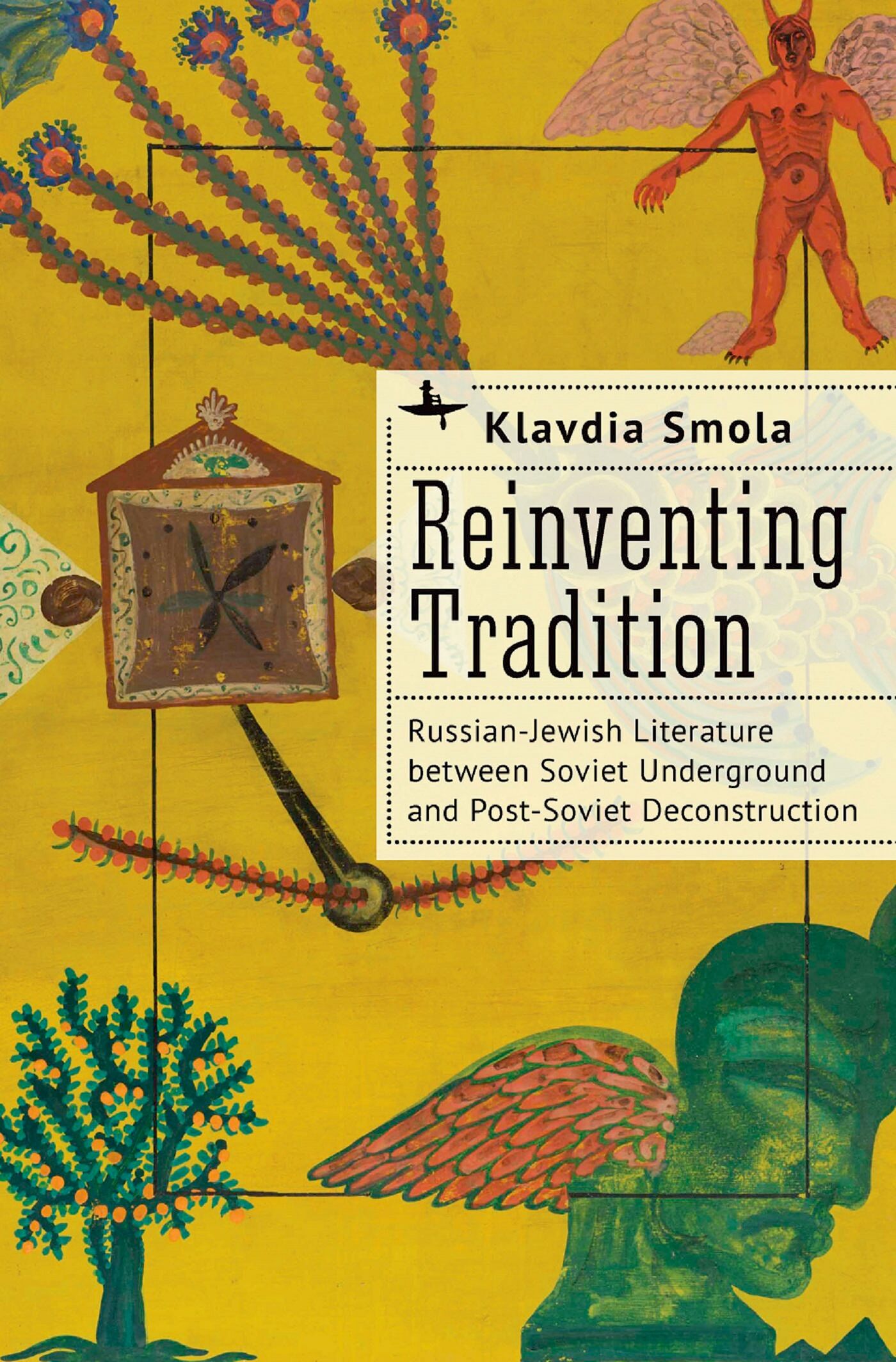
Reinventing Tradition
How was the Jewish tradition reinvented in Russian-Jewish literature after a long period of assimilation, the Holocaust, and decades of Communism? The process of reinventing the tradition began in the counter-culture of Jewish dissidents, in the midst of the late-Soviet underground of the 1960-1970s, and it continues to the present day. In this period, Jewish literature addresses the reader of the ‘post-human’ epoch, when the knowledge about traditional Jewry and Judaism is received not from the family members or the collective environment, but rather from books, paintings, museums and popular culture.
Klavdia Smola explores how contemporary Russian-Jewish literature turns to the traditions of Jewish writing, from biblical Judaism to early-Soviet (anti-)Zionist novels, and how it ‘re-writes’ Haskalah satire, Hassidic Midrash or Yiddish travelogues.
eBook

Challenging Contemporary Historiography in Shmuel Yosef Agnon's Only Yesterday
Agnon's Temol Shilshom (Only Yesterday) masterfully depicts twentieth century Palestinian Jewish life and responds critically to Second Aliyah narratives popular in his day which lauded seasonal workers and stressed their critical role in Yishuv development. Agnon found the Second Aliyah image contrived; his novel presents an alternative view of the period. His protagonist Isaac Kumer, like other Second Aliyah workers, proves unable to resolve the ongoing tension between Zionist commitment and his lingering feelings of familial obligation. When he fails to participate in the grand redemptive narrative that would enable him simultaneously to persevere as a Zionist and aid his family, he is punished, “sacrificed” as a self-absorbed immigrant whose preoccupation with his own needs prevents him from conceiving a grander Zionist vision that would address the needs of European Jewry. In the wake of the Holocaust, Agnon encourages a broadening of the vision to meet the survivors' needs.
Journal Article

The Development of Madrasa Education in Indonesia
Madrasas are educational institutions characterized by Islam religion, a combination of Islamic boarding school (pesantren) and public schools. Madrasa's development in this paper is divided into two stages in outline, namely before and after Indonesian independence. Thus this article aims at explaining the development of Madrasa of those two stages. In writing this article, the researcher followed the systematic literature review method. The researcher collected and analyzed the data from books and scientific journals that explain about Madrasa. The analysis results show that before Indonesian independence, the Madrasa was founded by religious individuals and organizations. Meanwhile, after Indonesian independence, mainly since the Ministry of Religion's establishment, efforts to develop madrassas have been continuously carried out by the government. Among the policies that have been made are joint decision letter/decree (SKB) of three Ministers, joint decision letter/decree (SKB) of Ministers, the 1984 curriculum, Special Program Madrasah Aliyah or Religious Madrasah Aliyah, 1994 curriculum, and Featured Madrasah. Those regulations show that the government supports the development of Madrasa in Indonesia.
Journal Article

Palestine for the Third Time
Palestine for the Third Time is a book of reportage
originally published in Poland in 1933 by Ksawery Pruszyński, a
young reporter working for a Polish newspaper, who went to Mandate
Palestine to see for himself whether the Zionist dream of returning
to Eretz Yisrael had a chance of turning into reality. Travelling
widely and talking to people he happened to meet on his way-Jews,
Arabs, committed dreamers and the disaffected-he was trying to
explain to his readers what he was seeing. This book is a unique
firsthand account of the early stages in formation of the state and
nation of Israel. But it's not just a nostalgic vignette. It
resonates powerfully today, linking Tony Judt, Edward Said, and
Amos Oz, illuminating the hotly debated questions of modern
Israel.
eBook

Father, Goethe, Kant, and Rilke: The Ideal of Bildung, the Fifth Aliyah, and German-Jewish Integration into the Yishuv
This paper examines the ideal of Bildung (self-development and education) as an obstacle to integration for German-Jewish immigrants of the Fifth Aliyah to Palestine. Drawing on a number of unpublished memoirs of German Jews, including several memoirs written by women, the article argues that the salient values of Bildung, including an individualistic view of the self, impacted the ability of the new immigrants to assimilate to the dominant pioneer, Zionist-socialist ethos of the Yishuv. By privileging the voices and stories of memoirists not previously discussed in scholarly literature, this article illuminates a unique aspect of German-Jewish life in the Yishuv, namely, the role of the imagination in immigrant experience and the way that the values and ethos of Bildung impacted shifting cultural identities. I wanted to live my life on a higher plane, the plane Father and Goethe and Kant and Rilke stood for... above all I want to strive for perfection as a human being, for the divine, [I] want to be a woman of genuine, beautiful femininity and to be a German. --Lotte Fairbrook, Hannover, Germany
Journal Article

When Der Struwwelpeter Made Aliyah: Germanness in Hebrew Children's Literature during Israel's Nation-Building Era
Focusing on Hebrew-language children's books published in Palestine in the 1930s and 40s by first-generation immigrants from German-speaking countries, this article explores the cultural and social legacy that this community of recently arrived German speakers sought to transmit to its children. It illustrates this immigrant community's ambivalence toward both socialist-Zionist discourse—which was hegemonic among Jews in Palestine—and its own German cultural heritage. It shows that these publishing initiatives gave voice to an alternative model of immigrant adaptation: accepting and even embracing the patriotic local culture in Palestine, without completely merging with it. Even in the 1940s, when German culture was generally taboo, subtle yet persistent attempts to reproduce Germanness in Hebrew-language children's books revealed that this first generation of immigrants harbored conflicting feelings about their country of origin and their new national identity.
Journal Article
Jewish American Literature Makes Aliyah? Jewish/Non-Jewish Boundary Maintenance and the Israeli Approach to the Diaspora
This paper analyzes the ideological ambivalence inherent in the critical reception of Jewish American literature in Israel from the late 1950s through the 1980s. On the one hand, there was a tendency in Israeli literary discourse to particularize and “Judaize” universal aspects of works by Jewish American authors and to take pride in their literary achievements, generally exhibiting an affinity to diaspora Jewish culture. On the other hand, there was also a tendency to (over)emphasize the difficulty of living as a Jew in a non-Jewish world, from both a spiritual and intellectual standpoint and a physical and social one, in a way that bolstered Israeli sovereignty as the only true solution for contemporary Jewish existence. This dialectical Israeli perception of American Jewish culture entailed both inclusivity and dismissal, implied both communal affinity and unequal hierarchy, and may be emblematic of the dual nature of the Israeli approach to diaspora existence in general.
Journal Article
Rabid Reading: Melancholia and the Mad Dog in S. Y. Agnon's Temol shilshom
In 1945, the writer S. Y. Agnon published his magnum opus—the Hebrew novel Temol shilshom (Only Yesterday). The novel follows the life of Second Aliyah immigrant Yitshak Kumer, who eventually dies after being bitten by a rabid dog. Informed by the growing field of the medical humanities, the present article reexamines the aesthetic significance of this canine figure. I begin by tracing the medico-cultural history of rabies, its etiology and symbols, and its relationship to melancholia. I then analyze the variety of melancholic symptoms and cultural-historical signifiers that are woven into the novel. Finally, I conclude by drawing on Sigmund Freud's “Mourning and Melancholia” in order to investigate the intersection of melancholia, rabies, and style in Agnon's text. Rabies and melancholia, as will become clear, are not only conditions thematized by Temol shilshom. They are also the stylistic ciphers of the text.
Journal Article

\Turning goyim into Jews\: Aliyah and the Politics of Cultural Anxiety in the Zionist Movement, 1933–1939
[...]the burning question,\" he asserted, is:
Journal Article
Zionism, Aliyah, and the Jews of Glasgow: Belonging and Believing in Postwar Britain
This article unpicks the meanings of Zionist identification in postwar Britain, making a case study of the Jewish community of Glasgow. It questions how the existence of Israel, especially in times of crisis, impacted on British Jewish communities and individuals, and what these impacts may tell us about Jewish postwar lives. Focusing on material from the Scottish Jewish Archives Centre and oral history interviews with Jews that migrated to Israel from Glasgow, the article considers the role of Zionism in rearticulating and redefining Jewishness in the postwar period, notably in the context of evolving Holocaust consciousness, and declining religiosity across the country. It unpicks the workings and meanings of diasporic subjectivities, analyzing changing Jewish thinking about belonging and home. Ultimately, I argue, Glaswegian Zionism should be understood as a manifestation of postwar Britishness, which informed and underwrote evolving diasporic consciousness within Jewish communities. British Jews engaged with Israel with motivations and anxieties that reflected their lives in multicultural Britain more than Israeli culture or politics. This reality shaped the nature of British Zionism, explains why comparatively few British Jews made aliyah, and why the overwhelming majority supported Israel on their own terms from their British homes.
Journal Article