
Catalogue Search | MBRL


Are you sure you want to remove the book from the shelf?

{{itemTitle}}
77
result(s) for
"Mauritius Languages."
Sort by:

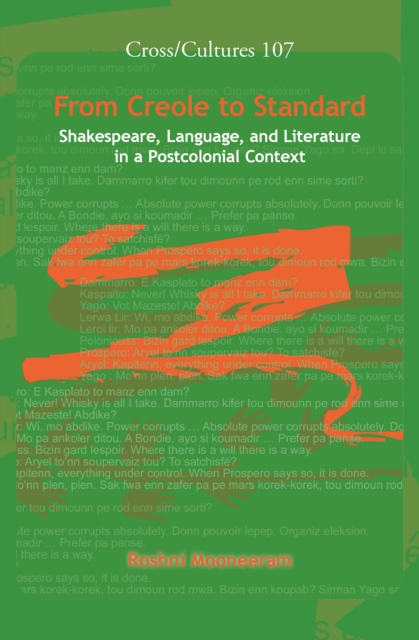
From Creole to standard : Shakespeare, language, and literature in a postcolonial context
This book gives a fascinating account of the unique history of the national - creole - language of Mauritius and the process of standardization that it is undergoing in postcolonial times. The central question is how far a creative writer's activity may affect the status and linguistic forms of a regional language. The book focuses on the work of the author Dev Virahsawmy, who, particularly through his Shakespeare translations, is an active agent in the standardization of Mauritian creole. The approaches employed in From Creole to Standard combine a sociolinguistic examination of (changing) language attitudes with detailed textual studies of some of Virahsawmy's works to show the relation of his work to the process of language development. This book is relevant to the study of other creole languages undergoing standardization as well as to questions of language development more widely. Its strength lies precisely in its interdisciplinary approach, which addresses different readerships. Mooneeram's study is of great interest to both postcolonial thinking and sociolinguistics but also has important implications for debates about the role of canonical literary works and their transmission in the wider world. Her book is also a contribution to Shakespeare studies and the field of literary linguistics. There are interesting parallels between the contemporary situation of Mauritian creole and English in the sixteenth and seventeenth centuries. Virahsawmy's adaptations and translations into creole echo the role Shakespeare's 'originals' played for English, and Mooneeram demonstrates how other writers have followed Virahsawmy in using literary forms to enrich the language.
eBook

Little India
Little India is a rich historical and ethnographic examination of a fascinating example of linguistic plurality on the island of Mauritius, where more than two-thirds of the population is of Indian ancestry. Patrick Eisenlohr's groundbreaking study focuses on the formation of diaspora as mediated through the cultural phenomenon of Indian ancestral languages—principally Hindi, which is used primarily in religious contexts. Eisenlohr emphasizes the variety of cultural practices that construct and transform boundaries in communities in diaspora and illustrates different modes of experiencing the temporal relationships between diaspora and homeland.
eBook

Plain language in Mauritius: an empirical study of legal communication in Mauritius
Purpose
Irrespective of various forms of language existent worldwide, it is still imperative that recipients of professional legal advice be communicated in clear terms to avoid a chaotic situation and to better fulfil obligations and enjoy the rights to which they are entitled to appropriately. As such, the objectives of this paper are twofold: firstly, this paper aims to assess the extent to which clients of the legal profession prefer plain over traditional legal language in Mauritius, a country using a myriad of languages, and secondly, to suggest recommendations for the legal stakeholders in Mauritius regarding guidelines and mechanisms on plain language provisions.
Design/methodology/approach
This study will use a desk-based research methodology by analysing existing literature on the importance of plain language in legal writing. In addition, an empirical study will be conducted to gather information on clients’ preferences in legal communication.
Findings
The responses were received on a complete anonymous basis, and it was found that in general, clients of the legal profession in Mauritius are more at ease when law practitioners use simple, direct and straightforward terms, sentences structured in active voice rather than passive voice or the use of legal jargons or complicated words. These clients also prefer when their legal advisers explain the legal meaning or interpretation in a document or agreement even if these advices may be longer than shorter sentences with only the legal jargons.
Originality/value
At present, there are few literature on the researched topic and this study will be among the first academic writings on the effectiveness of using plain language in legal documentation in Mauritius. The study is carried out with the aim of combining a large amount of empirical, theoretical and factual information that can be of use to various stakeholders and not only to academics.
Journal Article

Grade 4 learners with reading and writing difficulties in Mauritius: Oral reading and spelling characteristics
BackgroundLearners with reading and writing difficulties (RWD) are accommodated in Mauritian government schools without formal curriculum adjustment and teacher support. Little is known about their RWD. The aim was to describe the characteristics of Grade 4 learners with RWD.AimTo describe the characteristics of Grade 4 learners with RWD.SettingGovernment primary schools in Mauritius, in urban and rural areas.MethodsGrade 4 learners with RWD from 20 randomly selected schools were identified with the Screening Tool for Learning Disorders (STLD). A comparative design was used. Parents of 67 learners with RWD (research group [RG]) gave consent. Forty-nine learners without RWD were selected as a control group (CG) based on academic performance and consent. Hearing loss and visual impairment were excluded. The Clinical Evaluation of Language Function Observation Rating Scale (CELF-5 ORS), the Schonell Spelling Test and the Gray Oral Reading Test were used.ResultsThe CELF-5 ORS showed a wide range of difficulties of the RG with speaking, listening, oral reading and writing. There were significant differences between the RG and CG with reading and spelling. Despite being in Grade 4 (mean age 9.0 years), the mean spelling age for the RG was 5.5 years, corresponding to a Grade 1 level. Positive correlations were found between the STLD and listening, speaking and reading on the CELF-5 ORS for the RG. The more likely it was that participants had specific learning disorders on the STLD, the worse the spelling. Those with a history of speech and language delay performed more poorly with reading and spelling.ConclusionDifficulties were confirmed by all the measures. Diagnostic assessments for specific learning disorders are required to exclude intellectual disability and other comorbidities. There is a dire need for intervention programs for learners with RWD in mainstream government schools in Mauritius. Programs should include speech-language therapists and aim at prevention, identification, diagnosis and intervention.ContributionThe study is important for speech–language therapists working in the education system and primary school teachers. There is a dire need to implement intervention programs for learners with RWD in mainstream government schools in Mauritius.
Journal Article

From Race to Religion in a Creole Society
Mauritian Muslims have undergone a long process of religious standardization and sectarian segmentation. How have sharp religious boundaries such as those that separate Muslims from Hindus and Christians, as well as those that divide Muslims internally along sectarian lines emerged in a creole society such as Mauritius? This article traces how religionization has supplanted race as the chief category of incorporation of people of Indian origins in the creole society of Mauritius. Religionization emerged as a shared project among Mauritians of Indian origins who subsequently became known as Hindus and Muslims. Given the historical interconnectedness of Christianization and creolization in plantation societies such as Mauritius, the shift from race to religion as modes of incorporation among Mauritians of Indian background offers a distinct angle on the question of creolization and religion. It requires a distinction between creolization in a broader sense, and creolization in a deeper sense, the latter inseparable from racialization and Christianization, pointing to the difficulties of the creolization concept in coming to terms with settings of profound religious diversity.
Journal Article

Exploring the Linkage Between Public Corruption and Political Trust in Mauritius: a PLS-SEM Approach
This research examines, analyses, and explains—from a citizen’s perspective—public-sector corruption in order to determine whether public opinion and belief concerning it in the case of Mauritius matters in assessing political trust. The findings confirm the existence of a strong and significant inverse relationship between citizens’ perception of corruption and political trust, suggesting that corruption viewed through the citizens’ lens erodes trust in government. Mediation tests further confirm that improvement of service delivery is a better strategy to mitigate citizens’ perceived extent of public-sector corruption and ultimately repair the deficit of political trust than placing reliance on anti-corruption agencies.
Journal Article

Decolonizing Creole on the Mauritius islands: Creative practices in Mauritian Creole
Many Caribbean and Indian Ocean islands have a common history of French and British colonization, where a Creole language developed from the contact of different colonial and African/ Indian languages. In the process, African languages died, making place for a language which retained close lexical links to the colonizer’s tongue. This paper presents the case of Mauritian Creole, a language that emerged out of a colonial context and which is now the mother tongue of 70% of Mauritians, across different ethnic and linguistic backgrounds. It pinpoints the residual colonial ideologies in the language and looks at some creative practices, focusing on its oral and scribal aspects, to formulate a ‘decolonial aesthetics’ (Mignolo, 2009). In stressing the séga angazé (protest songs) and poetry in Mauritian Creole in the history of resistance to colonization, it argues that the language is, potentially, a carrier of decolonial knowledges.
Journal Article

Multilingual Language and Literacy Practices and Social Identities in Sunni Madrassahs in Mauritius: A Case Study
This study analyzes the connections among multilingual language practices, multilingual literacy practices, and social identities in two Sunni madrassahs in Mauritius. The study is framed by sociolinguistic and poststructuralist perspectives on language and identity, and social practice views of literacy. Data collection and analysis involved observations, interviews, and the analysis of written documents. In a national context that has long rejected Mauritian Creole as a language of education and literacy, the madrassah is nonetheless a place where both oral and written Mauritian Creole, among other languages, is used to religiously educate the children. The study revealed that the madrassah is a site where multilingual, multiliterate, and multiscriptural practices are used as resources to provide religious instruction, while at the same time being a place where fluid identities are shaped and negotiated through these resources. These findings suggest that dichotomies between institutionalized and local vernacular literacies and between religious and secular identities do not reflect the complexity of identities being constituted and expressed at the observed madrassahs. Speakers and readers may use multiple oral and written codes to negotiate social identities, with some identities being more negotiable than others.
Journal Article