
Catalogue Search | MBRL


Are you sure you want to remove the book from the shelf?

{{itemTitle}}
4,164
result(s) for
"Mechanical movements"
Sort by:


Handbook of compliant mechanisms
A fully illustrated reference book giving an easy-to-understand introduction to compliant mechanisms
A broad compilation of compliant mechanisms to give inspiration and guidance to those interested in using compliant mechanisms in their designs, the Handbook of Compliant Mechanisms includes graphics and descriptions of many compliant mechanisms. It comprises an extensive categorization of devices that can be used to help readers identify compliant mechanisms related to their application. It also provides chapters on the basic background in compliant mechanisms, the categories of compliant mechanisms, and an example of how the Compendium can be used to facilitate compliant mechanism design.
* Fully illustrated throughout to be easily understood and accessible at introductory levels
* Covers all aspects pertaining to classification, elements, mechanisms and applications of compliant mechanisms
* Summarizes a vast body of knowledge in easily understood diagrams and explanations
* Helps readers appreciate the advantages that compliant mechanisms have to offer
* Practical approach is ideal for potential practitioners who would like to realize designs with compliant mechanisms, members and elements
* Breadth of topics covered also makes the book a useful reference for more advanced readers
Intended as an introduction to the area, the Handbook avoids technical jargon to assist non engineers involved in product design, inventors and engineers in finding clever solutions to problems of design and function.
eBook
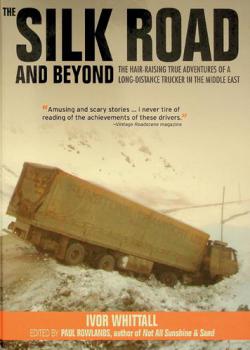
The silk road and beyond : the hair-raising true adventures of a long-distance trucker in the Middle East
The true tales of a long-distance trucker in the Middle East during the 1970s and 80s. Full of disastrous near misses, mechanical failures, cultural misunderstandings and border control mix-ups, as well as spicy amorous encounters and intense home sickness.
Book

Worm-Like Locomotion Systems
Das zentrale Objekt der Theorie der wurmartigen Fortbewegung ist ein mechanisches System in Form einer Kette von Massenpunkten, die ihre unidirektionale Beweglichkeit mittels idealer Spikes erhalten. Davon ausgehend werden Kinematik, Dynamik und Steuerung derartiger Systeme untersucht. Bei den Steuerungsaufgaben stehen adaptive Regler im Vordergrund, da etwa Systemparameter und externe Parameter mit Unsicherheiten behaftet sind. Für Haft- und Gleitreibung werden verschiedene Modelle angegeben und diskutiert, die sogenanntes Stick-Slip-Verhalten realisieren.
eBook

The mechanics of robot grasping
\"In this comprehensive textbook about robot grasping, you will find an integrated look at the major concepts and technical results in robot grasp mechanics. A large body of prior research, including key theories, graphical techniques, and insights on robot hand designs, is organized into a systematic review, using common notation and a common analytical framework. With introductory and advanced chapters that support senior undergraduate and graduate level robotics courses, this book provides a full introduction to robot grasping principles that are needed to model and analyze multi-finger robot grasps, and serves as a valuable reference for robotics students, researchers, and practicing robot engineers. Each chapter contains many worked-out examples, exercises with full solutions, and figures that highlight new concepts and help the reader master the use of the theories and equations presented\"-- Provided by publisher.
Book

Adapting the coordination of eyes and head to differences in task and environment during fully-mobile visual exploration
How are eyes and head adapted to meet the demands of visual exploration in different tasks and environments? In two studies, we measured the horizontal movements of the eyes (using mobile eye tracking in Studies 1 and 2) and the head (using inertial sensors in Study 2) while participants completed a walking task and a search and retrieval task in a large, outdoor environment. We found that the spread of visual exploration was greater while searching compared with walking, and this was primarily driven by increased movement of the head as opposed to the eyes. The contributions of the head to gaze shifts of different eccentricities was greater when searching compared to when walking. Findings are discussed with respect to understanding visual exploration as a motor action with multiple degrees of freedom.
Journal Article
Rationale and study protocol for the Movement Oriented Games Based Assessment
There is a positive relationship between children's movement competence and physical activity, with a further relationship established between physical activity and childhood obesity. The Movement Oriented Games Based Assessment (MOGBA) is a delivery and assessment intervention designed to improve children's complex movement skills, based on principles of motor development and assessment theories. MOGBA aims to improve children's movement competence, physical fitness and self-perceptions (physical and game) and increase children's moderate-to-vigorous physical activity (MVPA). MOGBA is to be used in the 'Made to Play' initiative, involving 105 sports and activity programs across 21 countries, involving over 25 million children. A multi-site cluster randomized controlled trial will take place across three global sites (UK, Ireland and Australia). Each site will recruit eight primary schools (four experiment, four control) with each school providing two separate classes of children from age ranges 8-12 years (Site n = ~300, total n = 904). After baseline assessments, schools will be randomly allocated to an experimental or wait-list control group. Following two half-day workshops, trained facilitators will deliver the MOGBA intervention for 9 weeks. The main intervention components include delivery of 14 games-based activities with associated assessments of children's movement and differentiation to meet children's needs by manipulating space, effort and relationships. The primary outcome of the trial is to improve children's' movement competence (The Dragon Challenge), with secondary outcomes of improving children's' in-activity and leisure-time MVPA (5-day accelerometer), physical fitness (standing long jump and push ups) and self-perceptions (physical and game). Data will be analysed using multilevel modelling approaches. The MOGBA intervention has been designed to improve children's movement competence and scalable interventions based on MOGBA could be applied across programs within the Made to Play initiative, globally. The trial is registered at the Australia New Zealand Clinical Trial Registry (ACTRN12619001320145p, 27 Sep 2019).
Journal Article

Online updating of obstacle positions when intercepting a virtual target
People rely upon sensory information in the environment to guide their actions. Ongoing goal-directed arm movements are constantly adjusted to the latest estimate of both the target and hand’s positions. Does the continuous guidance of ongoing arm movements also consider the latest visual information of the position of obstacles in the surrounding? To find out, we asked participants to slide their finger across a screen to intercept a laterally moving virtual target while moving through a gap that was created by two virtual circular obstacles. At a fixed time during each trial, the target suddenly jumped slightly laterally while still continuing to move. In half the trials, the size of the gap changed at the same moment as the target jumped. As expected, participants adjusted their movements in response to the target jump. Importantly, the magnitude of this response depended on the new size of the gap. If participants were told that the circles were irrelevant, changing the gap between them had no effect on the responses. This shows that obstacles’ instantaneous positions can be considered when visually guiding goal-directed movements.
Journal Article
Behavioral synergic relations between eye and postural movements in young adults searching to locate objects in room inside houses
During precise gaze shifts, eye, head, and body movements exhibit synergic relations. In the present study, we tested the existence of behavioural synergic relations between eye and postural movements in a goal-directed, precise, visual search task (locate target objects in large images). More precisely, we tested if postural control could be adjusted specifically to facilitate precise gaze shifts. Participants also performed a free-viewing task (gaze images with no goal) and a fixation task. In both search and free-viewing tasks, young participants (n = 20; mean age = 22 years) were free to move their eyes, head, and body segments as they pleased to self-explore the images with no external perturbation. We measured eye and postural kinematic movements. The results showed significant negative correlations between eye and postural (head and upper back) movements in the precise task, but not in the free-viewing task. The negative correlations were considered to be stabilizing and synergic. Indeed, the further the eyes moved, the more postural variables were adjusted to reduce postural sway. These results suggest that postural control was adjusted to succeed in subtle and active self-induced precise gaze shifts. Furthermore, partial correlations showed significant relations between (1) task performance to find target objects and (2) synergic relations between eye and postural movements. These later results tend to show that synergic eye-postural relations were performed to improve the task performance in the precise visual task.
Journal Article

The spatial parameters of gait and their association with falls, functional decline and death in older adults: a prospective study
Association between spatial gait parameters and adverse health outcomes in the elderly has not been sufficiently studied. The goal of this study is to evaluate whether the stride length or the step width predict falls, functional loss and mortality. We conducted a prospective cohort study on a probabilistic sample of 431 noninstitutionalized, older-than-64-years subjects living in Spain, who were followed-up for five years. In the baseline visit, spatial gait parameters were recorded along with several control variables, with special emphasis on known medical conditions, strength, balance and functional and cognitive capacities. In the follow-up calls, vital status, functional status and number of falls from last control were recorded. We found that a normalized-to-height stride length shorter than 0.52 predicted recurrent falls in the next 6 months with 93% sensitivity and 53% specificity (AUC: 0.72), and in the next 12 months with 81% sensitivity and 57% specificity (AUC: 0.67). A normalized stride length <0.5 predicted functional loss at 12 months with a sensitivity of 79.4% and specificity of 65.6% (AUC: 0.75). This predictive capacity remained independent after correcting for the rest of risk factors studied. Step-with was not clearly related to functional loss or falls. Both shorter normalized stride length (OR1.56; AUC: 0.62; p < 0.05) and larger step width (OR1.42; AUC: 0.62; p < 0.05) were associated with risk of death at 60 months; however, none of them remained as independent predictor of death, after correcting for other risk factors. In summary, spatial gait parameters may be risk markers for adverse outcomes in the elderly. Step length is independently associated with functional loss and falls at one year, after correction for numerous known risk factors.
Journal Article