
Catalogue Search | MBRL


Are you sure you want to remove the book from the shelf?

{{itemTitle}}
8,449
result(s) for
"Medical English"
Sort by:


English for Medical Students
The second, supplemented edition of the textbook iEnglish for Medical Students/i is aimed at students of the Faculty of Medicine with upper intermediate level of English. In addition it can also be used by the professional public. Students get acquainted with English medical terminology based on the anatomical description of the body systems. An integral part of each chapter are Language spots (selected linguistic phenomena in medical English), Reading spots (information from medical practice) and Grammar spots (selected grammar in medical context). The texts are accompanied with listening exercises and supplementary reading materials related to discussed medical topics. There is also an overview of the most frequent medical abbreviations and English-Czech vocabulary.a href\"https://karolinum.cz/informace-a-sluzby/archiv-mp3\" target\"_blank\"bfont color\"#cc0000\"Archive/a/b/font with audio tracks.
eBook


Investigating Saudi university medical students’ English language difficulties: a needs analysis study
An important dimension in the education of health professionals is developing their English language performance to help them meet academic and professional needs. Though understanding Saudi university medical students’ English language needs is key to helping them perform well in their academic studies and future workplaces, there has been scarce research on these needs. The present study investigated Saudi university medical students’ English language difficulties, the strategies they use for overcoming these difficulties, their evaluation of the English language instruction received at their colleges and perceptions of their English language needs. The study drew upon surveying students’ language needs through using a 25-item questionnaire with four sections assessing the target dimensions. Two hundred and 55 students completed the questionnaire. The students have some difficulties when completing productive language tasks and when processing content explained or written fully in English. Their highest language needs relate to improving medical terminology and English speaking, but their lowest language need concerns listening. A few significant gender-related differences were noted. The English language instruction provided to the students studying medicine could be reformed through giving more attention to improving their productive language skills and helping them communicate fluently using target medical terminology.
Journal Article


Navigating challenges in medical english learning: leveraging technology and gamification for interactive education – a qualitative study
Background
Teaching and learning English for Medical Purposes is crucial for medical students, especially in non-English-speaking countries, as it facilitates effective communication, access to global medical literature, and participation in international medical events. However, medical English education faces numerous challenges. This qualitative study explores the challenges faced by medical educators and students in Iran and proposes strategies to enhance medical English education through technology and gamification.
Method
A thematic content analysis was conducted using semi-structured interviews with 13 medical English instructors and 10 medical students from various Iranian universities. Data were collected from September 2023 to February 2024. The interviews focused on challenges in teaching and learning medical English, the role of technology, and potential improvements. Thematic analysis was employed to identify key themes and sub-themes.
Results
The study identified six main themes: (1) Instructor-related challenges (e.g., knowledge gaps, teaching methodology, and resistance to technology), (2) Student-related challenges (e.g., low language proficiency, pronunciation difficulties, and lack of engagement), (3) Curriculum and content issues (e.g., outdated materials, lack of speaking practice), (4) Organizational challenges (e.g., unclear policies, resistance to technological change), (5) Technology-enhanced learning (e.g., inadequate infrastructure, lack of interactive platforms), and (6) Recommendations for improvement (e.g., joint teaching, gamification, and blended learning).
Conclusion
The study indicated the need for a comprehensive approach to medical English education in Iran, emphasizing instructor training, interactive learning, updated curricula, and technology integration. By addressing these challenges, medical English education can be significantly improved, allowing future physicians to become proficient in linguistic skills which improves the globalized healthcare environment.
Journal Article
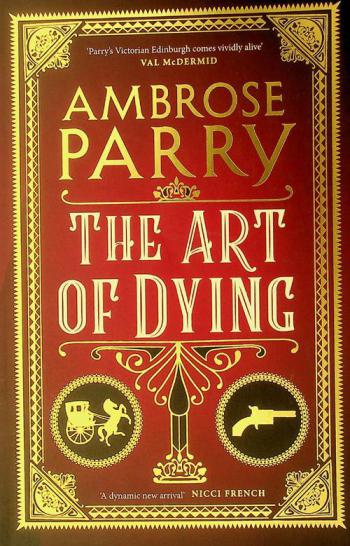
The art of dying
\"Edinburgh, 1850. Despite being at the forefront of modern medicine, hordes of patients are dying all across the city, with doctors finding their remedies powerless. But it is not just the deaths that dismay the esteemed Dr James Simpson - a whispering campaign seeks to blame him for the death of a patient in suspicious circumstances. Simpson's protégé Will Raven and former housemaid Sarah Fisher are determined to clear their patron's name. But with Raven battling against the dark side of his own nature, and Sarah endeavouring to expand her own medical knowledge beyond what society deems acceptable for a woman, the pair struggle to understand the cause of the deaths. Will and Sarah must unite and plunge into Edinburgh's deadliest streets to clear Simpson's name. But soon they discover that the true cause of these deaths has evaded suspicion purely because it is so unthinkable.\"--Provided by publisher.

Exploring Themes in English Language Teaching Publications in Iran’s Medical Education: A Content Analysis
The present study explored the trajectories of themes in the English for Medical Purposes (EMP) studies in the Iranian medical education context. Informed with the frameworks of language planning, it juxtaposed the extracted themes with the pillars of English for Specific Purposes (ESP)-needs analysis, learning objectives, materials and methods, and evaluation. It explored the EMP themes in a corpus of 41 documents extracted from Google Scholar, Scopus, ISI, and PubMed databases. Then, the researchers performed a content analysis of the corpus based on a matrix incorporating the title, abstract, introduction, and discussion, keywords, and the field of expertise of the author(s) of the documents. The analysis revealed the themes of learners’ need analysis, language skills, learning strategies, cognitive and affective variables, teaching methodology, teaching materials, material evaluation, use of technology, evaluation of learners and learning, program evaluation, and evaluation of instructors. The juxtaposition of the themes with the mainstream pillars showed that although there was a match between the themes and the pillars, the size of the themes falling under each pillar differed. While utilizing technology and affective variables were the most frequent themes, learning materials, language skills, and learner variables were the least frequent ones. Most of the themes matched with the learning objectives pillar; the needs analysis pillar, on the other hand, had the fewest number of the themes. Notable gaps, particularly in the areas of instructors' needs, administrative needs, learner variables, and instructor variables were discovered. The study also showed that EMP research predominantly focuses on English for medical academic purposes (EMAP) in the absence of studies on English for Medical Occupational purposes (EMOP). The findings have implications for EMP research, policy setting, teacher education, and materials development, providing guidance for future research endeavors and contributing to the enhancement of English language education in the field of medical sciences.
Journal Article

A Conspiracy of Bones
What is real and what isn't? It's sweltering in Charlotte, North Carolina and Temperance Brennan, still recovering from neurosurgery following an aneurysm, is battling nightmares, migraines, and what she thinks might be hallucinations when she receives four mysterious text messages: each containing a new picture of a corpse that is missing its face and hands. Immediately, she's anxious to know who the dead man was, what his connection was to a decade-old missing child case, and perhaps most of all, how he came to have her cellphone number. But to get the answers, she must go rogue, working mostly outside the system. That's because her new boss, Dr. Margot Heavner, holds a fierce grudge against her and is determined to keep her out of the case. With help from veteran death investigator Joe Hawkins and the always-ready-with-a-smart-quip ex-homicide investigator Skinny Slidell, and utilizing new cutting-edge forensic methods, Tempe steadily unearths ever-more-bizarre and darkly significant clues. And then the unthinkable happens. Another child goes missing. And, suddenly, Tempe must race against the clock-and her own head-to uncover the truth. Praise for Kathy Reichs: 'Kathy Reichs writes smart-no, make that brilliant-mysteries that are as realistic as non-fiction and as fast-paced as the best thrillers about Jack Reacher or Alex Cross' James Patterson 'Nobody does forensics thrillers like Kathy Reichs. She's the real deal' David Baldacci 'Kathy Reichs continues to be one of the most distinctive and talented writers in the genre. Her legions of readers worldwide will agree with me when I declare that the more books she writes, the more enthusiastic fans she'll garner' Sandra Brown 'Each book in Kathy Reichs's fantastic Temperance Brennan series is better than the last. They're filled with riveting twists andturns. No matter how many novels she writes, I just can't get enough!' Lisa Scottoline 'Reichs always delivers a pulse-pounding story' Publisher's Weekly 'Every minute in the morgue with Tempe is golden' The New York Times Book Review 'Bloody good beach reading!' USA Today 'Brennan is a winner, and so is Reichs' Daily News.

Learning the language of dentistry : disciplinary corpora in the teaching of English for specific academic purposes
This book explores the affordances of disciplinary corpora for the teaching and learning of the language of dentistry, within the field of English for Specific Academic Purposes (ESAP). We extract disciplinary register features and vocabulary from three key genres of the dentistry discipline (published experimental research articles, case reports, and novice/professional research reports within the Dental Public Health domain), before integrating these features into ESAP pedagogy in the form of corpus-based ESAP materials that promote student-led direct engagement with disciplinary corpora - an approach known as 'data-driven learning'. This book is a timely and relevant addition to the field of corpus linguistics and ESAP, and is especially targeted at ESAP professionals who are required to teach disciplinary discourses but who may struggle to know what to teach as non-experts of the target discipline.
eBook