
Catalogue Search | MBRL


Are you sure you want to remove the book from the shelf?

{{itemTitle}}
51,576
result(s) for
"Mice as laboratory animals."
Sort by:

Functional and Phenotypic Characterization of the Humanized BLT Mouse Model
T cells play a central role in the development of immune responses. Patients lacking T cells because of genetic defects such as DiGeorge or Nezelof syndromes and patients infected with the human immunodeficiency virus are highly susceptible to infections and cancers. The lack of adequate in vivo models of T cell neogenesis have hindered the development and clinical implementation of effective therapeutic modalities aimed at treating these and other clinically important maladies. Transplantation of severe combined immunodeficient (SCID) mice with human hematopoietic stem cells results in long-term engraftment and systemic reconstitution with human progenitor, B, and myeloid cells, but curiously, human T cells are rarely present in any tissue. While the implantation of SCID mice with human fetal thymus and liver (SCID-hu thy/liv mice) allows the development of abundant thymocytes that are localized in the human organoid implant, there is minimal systemic repopulation with human T cells. However, we have recently shown that transplantation of autologous human hematopoietic fetal liver CD34 + cells into the nonobese diabetic (NOD)/SCID mouse background previously implanted with fetal thymic and liver tissues results in long-term, systemic human T cell homeostasis. In addition to human T cells, these mice have systemic repopulation with human B cells, monocytes/macrophages, and dendritic cells (DC). Importantly, in these mice the T cells developed in the human thymic implant are capable of being activated by human antigen-presenting cells and mount potent human MHC-restricted T cell immune responses.
Book Chapter
Humanized SCID Mouse Models for Biomedical Research
There is a growing need for effective animal models to carry out experimental studies on human hematopoietic and immune systems without putting individuals at risk. Progress in development of small animal models for the in vivo investigation of human hematopoiesis and immunity has seen three major breakthroughs over the last three decades. First, CB17- Prkdc scid (abbreviated CB17- scid ) mice were discovered in 1983, and engraftment of these mice with human fetal tissues (SCID-Hu model) and peripheral blood mononuclear cells (Hu-PBL-SCID model) was reported in 1988. Second, NOD- scid mice were developed and their enhanced ability to engraft with human hematolymphoid tissues as compared with CB17- scid mice was reported in 1995. NOD- scid mice have been the “gold standard” for studies of human hematolymphoid engraftment in small animal models over the last 10 years. Third, immunodeficient mice bearing a targeted mutation in the IL-2 receptor common gamma chain ( IL2rγnull ) were developed independently by four groups between 2002 and 2005, and a major increase in the engraftment and function of human hematolymphoid cells as compared with NOD- scid mice has been reported. These new strains of immunodeficient IL2rg rγnull mice are now being used for studies in human hematopoiesis, innate and adaptive immunity, autoimmunity, infectious diseases, cancer biology, and regenerative medicine. In this chapter, we discuss the current state of development of these strains of mice, the remaining deficiencies, and how approaches used to increase the engraftment and function of human hematolymphoid cells in CB17- scid mice and in previous models based on NOD- scid mice may enhance human hematolymphoid engraftment and function in NOD- scid IL2r γnull mice.
Book Chapter

Handbook of in vivo chemistry in mice : from lab to living system
Provides timely, comprehensive coverage of in vivo chemical reactions within live animals This handbook summarizes the interdisciplinary expertise of both chemists and biologists performing in vivo chemical reactions within live animals.
eBook
Microbial Status and Genetic Evaluation of Mice and Rats
US/Japan meetings on laboratory animal science have been held virtually every year since 1980 under the US/Japan Cooperative Program on Science and Technology.Over the years these meetings have resulted in a number of important documents including the Manual of Microbiologic Monitoring of Laboratory Animals published in 1994 and the article.
eBook

Microbial and Phenotypic Definition of Rats and Mice
US-Japan meetings on laboratory animal science have been held virtually every year since 1980 under the US-Japan Cooperative Program on Science and Technology.Over the years these meetings have resulted in a number of important documents including the Manual of Microbiologic of Monitoring of Laboratory Animals published in 1994 and the article.
eBook

Translational venomics: Third-generation antivenomics of anti-siamese Russell's viper, 'Daboia siamensis', antivenom manufactured in Taiwan CDC's Vaccine Center
The venom proteome of Siamese Russell's viper from Taiwan, alongside complementary in vivo lethality neutralization assay and in vitro third-generation antivenomics assessment of the preclinical efficacy of the homologous antivenom manufactured in Taiwan CDC's Vaccine Center, are here reported. Taiwanese Russell's viper venom proteome comprised 25 distinct gene products, with the heterodimeric PLA2 viperotoxin-F representing the most abundant toxin (47.5% of total venom proteome). Coagulation FV-activating serine proteinase (RVV-V, 14%), the PIV-SVMP activator of FX (RVV-FX, 8.5%), and less abundant toxins from nine protein families, make up its venom proteome. Venom composition-pathology correlations of 'D. siamensis' envenomings in Taiwan are discussed. The lethal effect of Taiwanese 'D. siamensis' venom was 0.47 mg/g mouse. Antivenomics-guided assessment of the toxin recognition landscape of the Taiwanese Russell's viper antivenom, in conjunction with complementary in vivo neutralization analysis, informed the antivenom's maximal toxin immunorecognition ability (14 mg total venom proteins/vial), neutralization capacity (6.5 mg venom/vial), and relative content of lethality neutralizing antibodies (46.5% of the toxin-binding F(ab')2 antibodies). The antivenomics analysis also revealed suboptimal aspects of the CDC-Taiwan antivenom. Strategies to improve them are suggested.
Journal Article
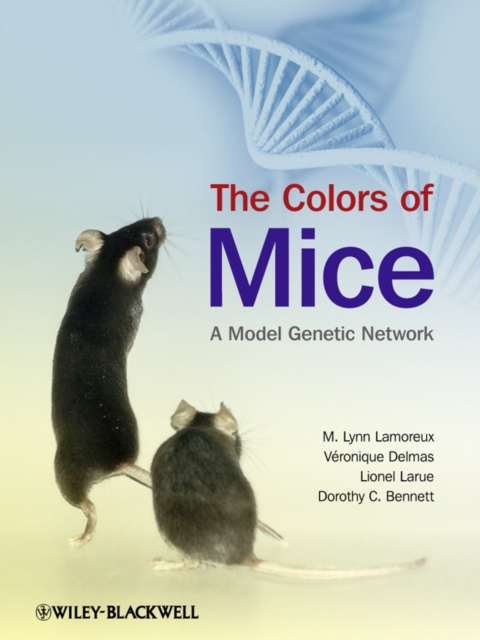
The colors of mice : a model genetic network
Serving the needs of pigment cell biologists, cellular physiologists, developmental geneticists, researchers interested in melanoma and more, this new book showcases a blend of new technologies and new insights in the field of pigmantary genetics of mice, with comparative information on other animals.
eBook

