
Catalogue Search | MBRL


Are you sure you want to remove the book from the shelf?

{{itemTitle}}
103
result(s) for
"Motion picture producers and directors United States Interviews"
Sort by:


Distribution revolution
Distribution Revolution is a collection of interviews with leading film and TV professionals concerning the many ways that digital delivery systems are transforming the entertainment business. These interviews provide lively insider accounts from studio executives, distribution professionals, and creative talent of the tumultuous transformation of film and TV in the digital era. The first section features interviews with top executives at major Hollywood studios, providing a window into the big-picture concerns of media conglomerates with respect to changing business models, revenue streams, and audience behaviors. The second focuses on innovative enterprises that are providing path-breaking models for new modes of content creation, curation, and distribution—creatively meshing the strategies and practices of Hollywood and Silicon Valley. And the final section offers insights from creative talent whose professional practices, compensation, and everyday working conditions have been transformed over the past ten years. Taken together, these interviews demonstrate that virtually every aspect of the film and television businesses is being affected by the digital distribution revolution, a revolution that has likely just begun. Interviewees include: • Gary Newman, Chairman, 20th Century Fox Television • Kelly Summers, Former Vice President, Global Business Development and New Media Strategy, Walt Disney Studios • Thomas Gewecke, Chief Digital Officer and Executive Vice President, Strategy and Business Development, Warner Bros. Entertainment • Ted Sarandos, Chief Content Officer, Netflix • Felicia D. Henderson, Writer-Producer, Soul Food, Gossip Girl • Dick Wolf, Executive Producer and Creator, Law & Order
eBook

Conversations at the American Film Institute with the great moviemakers : the next generation
A companion volume to George Stevens, Jr.'s, much admired book of American Film Institute seminars with the great pioneering moviemakers (\"Invaluable\"--Martin Scorsese). Those represented here--directors, producers, writers, actors, cameramen, composers, editors--are men and women working in pictures, beginning in 1950, when the studio system was collapsing and people could no longer depend on, or were bound by, the structure of studio life to make movies. Here also are those who began to work long after the studio days were over--Robert Altman, David Lynch, Steven Spielberg, among them--who talk about how they came to make movies on their own. Some--like Peter Bogdanovich, Nora Ephron, Sydney Pollack, François Truffaut--talk about how they were influenced by the iconic pictures of the great pioneer filmmakers. Others talk about how they set out to forge their own paths--John Sayles, Roger Corman, George Lucas, et al. In this series of conversations held at the American Film Institute, all aspects of their work are discussed. Here is Arthur Penn, who began in the early 1950s in New York with live TV, directing people like Kim Stanley and such live shows as Playhouse 90, and on Broadway, directing Two for the Seesaw and The Miracle Worker, before going on to Hollywood and directing Mickey One and Bonnie and Clyde, among other pictures, talking about working within the system. (\"When we finished Bonnie and Clyde,\" says Penn, \"the film was characterized rather elegantly by one of the leading Warner executives as a 'piece of shit' ... It wasn't until the picture had an identity and a life of its own that the studio acknowledged it was a legitimate child of the Warner Bros. operation.\") Here in conversation is Sidney Poitier, who grew up on an island without paved roads, stores, or telephones, and who was later taught English without a Caribbean accent by a Jewish waiter, talking about working as a janitor at the American Negro Theater in exchange for acting lessons and about Hollywood: It \"never really had much of a conscience ... This town never was infected by that kind of goodness.\" Here, too, is Meryl Streep, America's premier actress, who began her career in Julia in 1977, and thirty odd years later, at sixty, was staring in The Iron Lady, defying all the rules about \"term limits\" and a filmmaking climate tyrannized by the male adolescent demographic ... Streep on making her first picture, and how Jane Fonda took her under her wing (\"That little line on the floor,\" Fonda warned Streep, \"don't look at it, that's where your toes are supposed to be. And that's how you'll be in the movie. If they're not there, you won't be in the movie\"). Streep on the characters she chooses to play: \"I like to defend characters that would otherwise be misconstrued or misunderstood.\" The Next Generation is a fascinating revelation of the art of making pictures.
Book

Quentin Tarantino
Here, in his own colorful, slangy words, is the true American
Dream saga of a self-proclaimed \"film geek,\" with five intense
years working in a video store, who became one of the most popular,
recognizable, and imitated of all filmmakers. His dazzling,
movie-informed work makes Quentin Tarantino's reputation, from his
breakout film, Reservoir Dogs (1992), through Kill
Bill: Vol. 1 (2003) and Kill Bill: Vol. 2 (2004), his
enchanted homages to Asian action cinema, to his rousing tribute to
guys-on-a-mission World War II movie, Inglourious Basterds
(2009). For those who prefer a more mature, contemplative cinema,
Tarantino provided the tender, very touching Jackie Brown
(1997). A masterpiece--Pulp Fiction (1994). A delightful
mash of unabashed exploitation and felt social consciousness--his
latest opus, Django Unchained (2012).
From the beginning, Tarantino (b. 1963)--affable, open, and
enthusiastic about sharing his adoration of movies--has been a
journalist's dream. Quentin Tarantino: Interviews, revised
and updated with twelve new interviews, is a joy to read cover to
cover because its subject has so much interesting and provocative
to say about his own movies and about cinema in general, and also
about his unusual life. He is frank and revealing about growing up
in Los Angeles with a single, half-Cherokee mother, and dropping
out of ninth grade to take acting classes. Lost and confused, he
still managed a gutsy ambition: young Quentin decided he would be a
filmmaker.
Tarantino has conceded that Ordell (Samuel L. Jackson), the
homicidal African American con man in Jackie Brown, is an
autobiographical portrait. \"If I hadn't wanted to make movies, I
would have ended up as Ordell,\" Tarantino has explained. \"I
wouldn't have been a postman or worked at the phone company. . . .
I would have gone to jail.\"
eBook

Tyler Perry : interviews
A career-spanning collection of interviews with the multimedia phenomenon who has directed groundbreaking films like Diary of a Mad Black Woman that feature mostly African American actors and tell stories about adversity, faith, family, and redemption.
Book
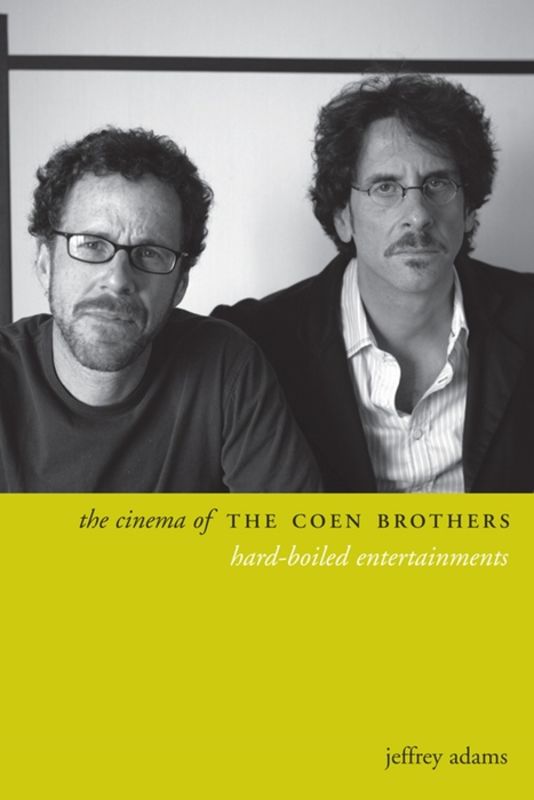
The cinema of the coen brothers
The films of the Coen brothers have become a contemporary cultural phenomenon. Highly acclaimed and commercially successful, over the years their movies have attracted increasingly larger audiences and spawned a subculture of dedicated fans. Shunning fame and celebrity, Ethan and Joel Coen remain maverick filmmakers, producing and directing independent films outside the Hollywood mainstream in a unique style combining classic genres like film noir with black comedy to tell off-beat stories about America and the American Dream. This study surveys Oscar-winning films, such asFargo(1996) andNo Country for Old Men(2007), as well as cult favorites, includingO Brother, Where Art Thou?(2000) andThe Big Lebowski(1998). Beginning withBlood Simple(1984), it examines major themes and generic constructs and offers diverse approaches to the Coens' enigmatic films. Pointing to the pulp fiction of Dashiell Hammett, James M. Cain, and Raymond Chandler, the study appreciates the postmodern aesthetics of the Coens' intertextual creativity.
eBook

Conversations with James Salter
James Salter (1925-2015) has been known throughout his career as a writer's writer, acclaimed by such literary greats as Susan Sontag, Richard Ford, John Banville, and Peter Matthiessen for his lyrical prose, his insightful and daring explorations of sex, and his examinations of the inner lives of women and men. Conversations with James Salter collects interviews published from 1972 to 2014 with the award-winning author of The Hunters, A Sport and a Pastime, Light Years, and All That Is. Gathered here are his earliest interviews following acclaimed but moderately selling novels, conversations covering his work as a screenwriter and award-winning director, and interviews charting his explosive popularity after publishing All That Is, his first novel after a gap of thirty-four years. These conversations chart Salter's progression as a writer, his love affair with France, his military past as a fighter pilot, and his lyrical explorations of gender relations.The collection contains interviews from Sweden, France, and Argentina appearing for the first time in English. Included as well are published conversations from the United States, Canada, and Australia, some of which are significantly extended versions, giving this collection an international scope of Salter's wide-ranging career and his place in world literature.
eBook

