
Catalogue Search | MBRL


Are you sure you want to remove the book from the shelf?

{{itemTitle}}
22
result(s) for
"Nationalism and literature Great Britain History 19th century."
Sort by:


Romantic cosmopolitanism
\"Romantic Cosmopolitanism shows how cosmopolitanism in the early nineteenth century offers a non-unified formulation of the nation that stands in contrast to more unified models such as Edmund Burke's which found nationality in, among other things, language, history, blood and geography\"--Provided by publisher.
Book

Authors of Their Lives
2008 United States Postal System's Rita Lloyd Moroney Award
In the era before airplanes and e-mail, how did immigrants keep in touch with loved ones in their homelands, as well as preserve links with pasts that were rooted in places from which they voluntarily left? Regardless of literacy level, they wrote letters, explains David A. Gerber in this path-breaking study of British immigrants to the U.S. and Canada who wrote and received letters during the nineteenth century.
Scholars have long used immigrant letters as a lens to examine the experiences of immigrant groups and the communities they build in their new homelands. Yet immigrants as individual letter writers have not received significant attention; rather, their letters are often used to add color to narratives informed by other types of sources.
Authors of Their Lives analyzes the cycle of correspondence between immigrants and their homelands, paying particular attention to the role played by letters in reformulating relationships made vulnerable by separation. Letters provided sources of continuity in lives disrupted by movement across vast spaces that disrupted personal identities, which depend on continuity between past and present. Gerber reveals how ordinary artisans, farmers, factory workers, and housewives engaged in correspondence that lasted for years and addressed subjects of the most profound emotional and practical significance.
eBook

Empire, the national, and the postcolonial, 1890-1920 : resistance in interaction
This book explores the political co-operations and textual connections which linked anti-colonial, nationalist, and modernist groups and individuals in the empire in the years 1890-1920. By developing the key motifs of lateral interaction and colonial interdiscursivity, this book builds a picture of the imperial world as an intricate network of surprising contacts and margin-to-margin interrelationships, and of modernism as a far more constellated cultural phenomenon than previously understood. Individual case studies consider Irish support for the Boers in 1899-1902, the path-breaking radical partnership of the Englishwoman Sister Nivedita and the Bengali extremist Aurobindo Ghose, Sol Plaatje's conflicted South African nationalism, and the cross-border, cosmopolitan involvements of W. B. Yeats, Rabindranath Tagore, and Leonard Woolf. Underlining Frantz Fanon's perception that ‘a colonized people is not alone’, the book significantly questions prevailing postcolonial paradigms of the self-defining nation, syncretism and mimicry, and dismantles still-dominant binary definitions of the colonial relationship.
eBook

English Modernism, National Identity and the Germans, 1890-1950
This is the first systematic study to trace the way representations of 'Germanness' in modernist British literature from 1890 to 1950 contributed to the development of English identity. Petra Rau examines the shift in attitudes towards Germany and Germans, from suspicious competitiveness in the late Victorian period to the aggressive hostility of the First World War and the curious inconsistencies of the 1930s and 1940s. These shifts were no simple response to political change but the result of an anxious negotiation of modernity in which specific aspects of Englishness were projected onto representations of Germans and Germany in English literature and culture. While this incisive argument clarifies and deepens our understanding of cultural and national politics in the first half of the twentieth century, it also complicates current debates surrounding race and 'otherness' in cultural studies. Authors discussed include major figures such as Conrad, Woolf, Lawrence, Ford, Forster and Bowen, as well as popular or less familiar writers such as Saki, Graham Greene, and Stevie Smith. Accessibly written and convincingly argued, Rau's study will not only be an important book for scholars but will serve as a valuable guide to undergraduates working in modernism, literary history, and European cultural relations.
eBook
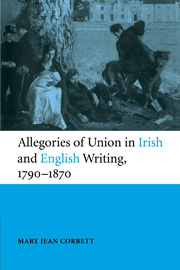
Allegories of Union in Irish and English Writing, 1790–1870
In this book, Mary Jean Corbett explores fictional and non-fictional representations of Ireland's relationship with England throughout the nineteenth century. Through postcolonial and feminist theory, she considers how cross-cultural contact is negotiated through tropes of marriage and family, and demonstrates how familial rhetoric sometimes works to sustain, sometimes to contest the structures of colonial inequality. Analyzing novels by Edgeworth, Owenson, Gaskell, Kingsley, and Trollope, as well as writings by Burke, Carlyle, Engels, Arnold, and Mill, Corbett argues that the colonizing imperative for 'reforming' the Irish in an age of imperial expansion constitutes a largely unrecognized but crucial element in the rhetorical project of English nation-formation. By situating her readings within the varying historical and rhetorical contexts that shape them, she revises the critical orthodoxies surrounding colonial discourse that currently prevail in Irish and English studies, and offers a fresh perspective on important aspects of Victorian culture.
eBook
British State Romanticism
British State Romanticism contends that changing definitions of state power in the late Romantic period propelled authors to revisit the work of literature as well as the profession of authorship. Traditionally, critics have seen the Romantics as imaginative geniuses and viewed the supposedly less imaginative character of their late work as evidence of declining abilities. Frey argues, in contrast, that late Romanticism offers an alternative aesthetic model that adjusts authorship to work within an expanding and bureaucratizing state. She examines how Wordsworth, Coleridge, Austen, Scott, and De Quincey portray specific state and imperial agencies to debate what constituted government power, through what means government penetrated individual lives, and how non-governmental figures could assume government authority. Defining their work as part of an expanding state, these writers also reworked Romantic structures such as the imagination, organic form, and the literary sublime to operate through state agencies and to convey membership in a nation.
eBook

Dark Victorians
Dark Victorians illuminates the cross-cultural influences between white Britons and black Americans during the Victorian age. In carefully analyzing literature and travel narratives by Ida B. Wells, Harriet Martineau, Charles Dickens, Frederick Douglass, Thomas Carlyle, W. E. B. Du Bois, and others, Vanessa D. Dickerson reveals the profound political, racial, and rhetorical exchanges between the groups. Evoking moral and political debates of the Victorian age, this study investigates how African Americans and Britons perceived each another. Black America's romance with Victorian Britain and Britons' knowledge of black Americans, Dickerson argues, was largely the result of travelers who crossed the Atlantic and then shared their experiences--often by publishing them in nonfictional or fictional forms--with their compatriots. _x000B__x000B_From nineteenth-century black nationalist David Walker, who urged emigrating African Americans to turn to England, to twentieth-century writer Maya Angelou, who recalls how those she knew in her childhood aspired to Victorian ideas of conduct, black Americans have consistently embraced Victorian England. In tracing the origins of this connection, Dark Victorians considers how philanthropic and abolitionist Victorian discourses influenced black identity and racism in America and how Britons negotiated their support of African Americans with the controlling policies they used to govern a growing empire of dark-skinned peoples. _x000B__x000B_
eBook
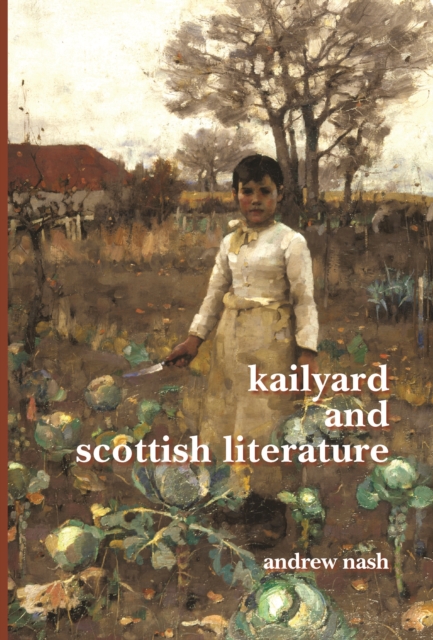
Kailyard and scottish literature
For more than a century, the word 'Kailyard' has been a focal point of Scottish literary and cultural debate. Originally a term of literary criticism, it has come to be used, often pejoratively, across a whole range of academic and popular discourse. Historians, politicians and critics of Scottish film and media have joined literary scholars in using the term to set out a diagnosis of Scottish culture. This is the first comprehensive study of the subject. Andrew Nash traces the origins of the Kailyard diagnosis in the nineteenth century and considers the critical concerns that gave rise to it. He then provides a full reassessment of the literature most commonly associated with the term - the fiction of J.M. Barrie, S.R. Crockett and Ian Maclaren. Placing this work in more appropriate contexts, he considers the literary, social and religious imperatives that underpinned it and discusses the impact of these writers in the publishing world. These chapters are succeeded by detailed analysis of the various ways in which the term has been used in wider discussions of Scottish literature and culture. Discussing literary criticism, film studies, and political and sociological analyses of Scotland, Nash shows how Kailyard, as a critical term, helps expose some of the key issues in Scottish cultural debate in the twentieth century, including discussions over national representation, popular culture and the parochialism of Scottish culture.
eBook