
Catalogue Search | MBRL


Are you sure you want to remove the book from the shelf?

{{itemTitle}}
952
result(s) for
"Neonatal Nursing - methods"
Sort by:
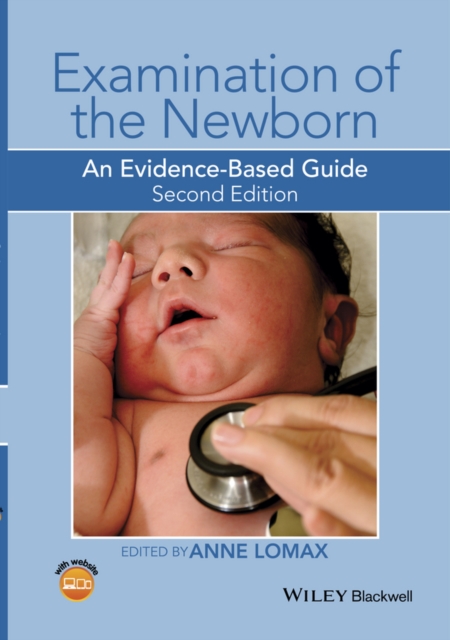
Examination of the newborn
A practical, evidence-based guide for students and practitioners to undertake safe and effective neonatal examination Revised and updated throughout in line with current national and Nursing and Midwifery Council guidelines Full colour photographs and illustrations, as well as clinical case studies at the end of each chapter to help guide and illustrate good practice A new companion website (available at: www.wiley.com/go/lomax/newborn) contains a wealth of information on all aspects of examining the newborn, including safeguarding, early warning systems, and tongue tie, as well as interactive multiple choice questions, and links to videos
eBook

Nonpharmacological Techniques to Reduce Pain in Preterm Infants Who Receive Heel-Lance Procedure: A Randomized Controlled Trial
Introduction: The heel-lance (HL) method for blood collection from the newborn is controversial for the pain it causes. This is the first randomized controlled trial on the management and reduction of pain using the music of Wolfgang Amadeus Mozart (\"Sonata K. 448\") in premature infants hospitalized in a neonatal intensive care unit (NICU). This study has compared nonpharmacological techniques with standard procedure for reducing pain during HL procedure. Methods: Thirty-five premature infants were enrolled, each for 3 HL procedures, of which each was randomized to 1 of the 3 study arms. Arms were then compared in terms of the Premature Infant Pain Profile (PIPP) changes by analysis of variance (ANOVA). Results: One hundred five HL procedures were available for analysis (35 standard procedure, 35 music, 35 glucose). Median baseline PIPP was 3, and median PIPP after the HL procedure was 5. PIPP scale change was +3 in the control arm, +1 in the glucose arm, +2 in the music arm (p = .008). Discussion: Both glucose and music were safe and effective in limiting pain increase when compared to standard procedure in HL procedures in preterm infants.
Journal Article
Transformative nursing in the NICU
This innovative text for Neonatal Nurses and NICU clinicians introduces new, evidence-based care protocols proven to mitigate or reduce the profound morbidities and subsequent developmental challenges that afflict newborns in the NICU.
eBook

The effect of music reinforcement for non-nutritive sucking on nipple feeding of premature infants
In this randomized, controlled multi-site study, the pacifier-activated-lullaby system (PAL) was used with 68 premature infants. Dependent variables were (a) total number of days prior to nipple feeding, (b) days of nipple feeding, (c) discharge weight, and (d) overall weight gain. Independent variables included contingent music reinforcement for non-nutritive sucking for PAL intervention at 32 vs. 34 vs. 36 weeks adjusted gestational age (AGA), with each age group subdivided into three trial conditions: control consisting of no PAL used vs. one 15-minute PAL trial vs. three 15-minute PAL trials. At 34 weeks, PAL trials significantly shortened gavage feeding length, and three trials were significantly better than one trial. At 32 weeks, PAL trials lengthened gavage feeding. Female infants learned to nipple feed significantly faster than male infants. It was noted that PAL babies went home sooner after beginning to nipple feed, a trend that was not statistically significant.
Journal Article
Fast facts for the neonatal nurse
This convenient and easy-to-use orientation reference and care guide provides new neonatal nurses and their preceptors with the core information they need to provide all aspects of safe, effective, holistic care to newborn infants and their families.
eBook

The Effect of Kangaroo Care on Behavioral Responses to Pain of an Intramuscular Injection in Neonates
PURPOSE. This study aims to assess the efficacy of Kangaroo Care (KC) on behavioral responses of term neonates to the pain of an intramuscular injection. DESIGN AND METHODS. One hundred healthy term neonates were enrolled and randomly assigned to intervention and control groups. In the intervention group, the neonate was held in KC for 10 min before the injection and remained in KC for the duration of the procedure. The primary outcome measure was the cumulative Neonatal Infant Pain Scale (NIPS) score immediately after injection. RESULTS. The cumulative NIPS score immediately after injection in the intervention group was significantly lower (p < .001) than in the control group. PRACTICE IMPLICATIONS. KC given before injection seems to effectively decrease pain and should be considered for minor invasive procedures in neonates.
Journal Article

The non-nutritive sucking of premature newborn as a nursing technology
This is an experimental study with a quantitative approach, whose goal was to demonstrate that non-nutritive sucking is effective in pain management during installation, by the nursing staff, of nasal CPAP in preterm infants; and to demonstrate that the use of non-nutritive sucking, concomitantly with the installation of nasal CPAP can be considered a nursing technology. The target population consisted of 20 preterm infants undergoing installation or reinstallation of this artifact, totaling 30 procedures. The newborns were divided randomly into two groups, control and experimental, in which non-nutritive sucking was offered, the same do not happening with the control group. The reactions of pain were measured by the scale of NIPS. In 100% of the procedures that occurred concomitant with non-nutritive sucking, newborns did not feel pain; and 100% of the newborns showed pain when such suction was not offered. We conclude that the procedure can be classified as a technology of nursing care.
Journal Article

Effect of education program regarding pathological jaundice on nurses’ performance and neonates’ bilirubin-induced neurological dysfunction
Both term and preterm infants are susceptible to pathological jaundice, a frequent condition that can cause long-lasting neurological damage. A novel treatment for indirect pathological hyperbilirubinemia is bilisphere phototherapy, which lowers total serum bilirubin just as well as exchange transfusions. A quasi-experimental research design was utilized in the current study. This study was conducted in Neonatal Intensive Care Unit at Benha Specialized Pediatric Hospital. A convenient sample of all available nurses (60) working in the previously mentioned setting. A purposive sample of neonates (90) with pathological jaundice which would be divided into control and study groups. Three tools were used: Tool I: A structured interview questionnaire sheet, Tool II: observational checklist for caring neonates with pathological jaundice, and Tool III: neonatal outcomes assessment sheet. There was a positive correlation between nurses’ total performance regarding pathological jaundice and bilisphere phototherapy at pre-/post-education program implementation. Additionally, there were a positive correlation between neonates’ outcomes in the study group and nurses’ total performance post-program implementation.
Conclusion the education program regarding pathological jaundice was effective in improving nurses’ performance and neonates’ bilirubin-induced neurological dysfunction post compared to pre-education program implementation.
What is Known:
•
Pathological jaundice had directly effect on neurological status in neonates as aresults of accumulated bilirubin in basal gangelia in brain and bilirubin induced neurological dysfunction score considered important tool to indicate acute bilirubin encephalopathy.
What is New:
•
Education programs and periodic training to medical team provide improvement their performance, nurse had significant role to provide neonates care in NICU. So, improve nurses performance lead to improve neonate outcomes.
•
Bilisphere phototherapy is an important device which had positive outcomes in pediatrics which improve neonates’ health status, but its effect depends on provided effective nursing practice during therapy.
•
Pathological jaundice management with bilisphere phototherapy and bilirubin induced neurological dysfunction score working together to provide optimal care for neonates, which bilisphere phototherapy decrease bilirubin level and BIND score assess neurological status and detect any abnormalites during therapy.
Journal Article

A pilot cohort analytic study of Family Integrated Care in a Canadian neonatal intensive care unit
Background
We have developed a Family Integrated Care (FIC) model for use in a neonatal intensive care unit (NICU) where parents provide most of the care for their infant, while nurses teach and counsel parents. The objective of this pilot prospective cohort analytic study was to explore the feasibility, safety, and potential outcomes of implementing this model in a Canadian NICU.
Methods
Infants born ≤35 weeks gestation, receiving continuous positive airway pressure or less respiratory support, with a primary caregiver willing and able to spend ≥8 hours a day with their infant were eligible. Families attended daily education sessions and were mentored at the bedside by nurses. The primary outcome was weight gain, as measured by change in z-score for weight 21 days after enrolment. For each enrolled infant, we identified two matched controls from the previous year’s clinical database. Differences in weight gain between the two groups were analyzed using a linear mixed effects multivariable regression model. We also measured parental stress levels using the Parental Stress Survey: NICU, and interviewed parents and nurses regarding their experiences with FIC.
Results
This study included 42 mothers and their infants. Of the enrolled infants, matched control data were available for 31 who completed the study. The rate of change in weight gain was significantly higher in FIC infants compared with control infants (p < 0.05). There was also a significant increase in the incidence of breastfeeding at discharge (82.1 vs. 45.5%, p < 0.05). The mean Parental Stress Survey: NICU score for FIC mothers was 3.06 ± 0.12 at enrolment, which decreased significantly to 2.30 ± 0.13 at discharge (p < 0.05). Feedback from the parents and nurses indicated that FIC was feasible and appropriately implemented.
Conclusions
This study suggests that the FIC model is feasible and safe in a Canadian healthcare setting and results in improved weight gain among preterm infants. In addition, this innovation has the potential to improve other short and long-term infant and family outcomes. A multi-centre randomized controlled trial is needed to further evaluate the efficacy of FIC in the Canadian context.
Journal Article

Evaluation of Helping Babies Breathe Quality Improvement Cycle (HBB-QIC) on retention of neonatal resuscitation skills six months after training in Nepal
Background
Each year 700,000 infants die due to intrapartum-related complications. Implementation of Helping Babies Breathe (HBB)-a simplified neonatal resuscitation protocol in low-resource clinical settings has shown to reduce intrapartum stillbirths and first-day neonatal mortality. However, there is a lack of evidence on the effect of different HBB implementation strategies to improve and sustain the clinical competency of health workers on bag-and-mask ventilation. This study was conducted to evaluate the impact of multi-faceted implementation strategy for HBB, as a quality improvement cycle (HBB-QIC), on the retention of neonatal resuscitation skills in a tertiary hospital of Nepal.
Methods
A time-series design was applied. The multi-faceted intervention for HBB-QIC included training, daily bag-and-mask skill checks, preparation for resuscitation before every birth, self-evaluation and peer review on neonatal resuscitation skills, and weekly review meetings. Knowledge and skills were assessed through questionnaires, skill checklists, and Objective Structured Clinical Examinations (OSCE) before implementation of the HBB-QIC, immediately after HBB training, and again at 6 months. Means were compared using paired t-tests, and associations between skill retention and HBB-QIC components were analyzed using logistic regression analysis.
Results
One hundred thirty seven health workers were enrolled in the study. Knowledge scores were higher immediately following the HBB training, 16.4 ± 1.4 compared to 12.8 ± 1.6 before (out of 17), and the knowledge was retained 6 months after the training (16.5 ± 1.1). Bag-and-mask skills improved immediately after the training and were retained 6 months after the training. The retention of bag-and-mask skills was associated with daily bag-and-mask skill checks, preparation for resuscitation before every birth, use of a self-evaluation checklist, and attendance at weekly review meetings. The implementation strategies with the highest association to skill retention were daily bag-and-mask skill checks (RR-5.1, 95% CI 1.9–13.5) and use of self-evaluation checklists after every delivery (RR-3.8, 95% CI 1.4–9.7).
Conclusions
Health workers who practiced bag-and-mask skills, prepared for resuscitation before every birth, used self-evaluation checklists, and attended weekly review meetings were more likely to retain their neonatal resuscitation skills. Further studies are required to evaluate HBB-QIC in primary care settings, where the number of deliveries is gradually increasing.
Trial registration
ISRCTN97846009
. Date of Registration- 15 August 2012.
Journal Article