
Catalogue Search | MBRL


Are you sure you want to remove the book from the shelf?

{{itemTitle}}
803
result(s) for
"Netherlands - ethnology"
Sort by:

Bali in the Early Nineteenth Century : the Ethnographic Accounts of Pierre Dubois
\"In Bali in the Early Nineteenth Century, Helen Creese examines the nature of the earliest sustained cross-cultural encounter between the Balinese and the Dutch through the eyewitness accounts of Pierre Dubois, the first colonial official to live in Bali. From 1828 to 1831, Dubois served as Civil Administrator to the Badung court in southern Bali. He later recorded his Balinese experiences for the Batavian Society of Arts and Sciences in a series of personal letters to an anonymous correspondent. This first ethnography of Bali provides rich, perceptive descriptions of early nineteenth-century Balinese politics, society, religion and culture. The book includes a complete edition and translation of Dubois' Lâegلere idâee de Bali en 1830/Sketch of Bali in 1830\"-- Provided by publisher.
Book

The Association of Handgrip Strength and Type 2 Diabetes Mellitus in Six Ethnic Groups: An Analysis of the HELIUS Study
We investigated whether ethnic differences in handgrip strength, a marker of poor muscle strength and quality, is a potential cause of ethnic disparities in type 2 diabetes mellitus. We included 2086 Dutch, 2216 South Asian Surinamese, 2084 African Surinamese, 1786 Ghanaian, 2223 Turkish and 2199 Moroccan origin participants from the HELIUS study. We analyzed ethnic differences in handgrip strength, and its association with type 2 diabetes mellitus using logistic regression analyses adjusted for socio-demographic factors, body composition and lifestyle factors. Additionally, we investigated whether handgrip strength explained the ethnic differences in type 2 diabetes mellitus. We found that handgrip strength differed significantly across ethnic groups. After full adjustment, we found an inverse association with type 2 diabetes mellitus (OR 0.95; 95% CI 0.92-0.97) that did not differ substantially between ethnic groups, men and among women, and lean and overweight individuals. The association was not affected by the measure used to define type 2 diabetes mellitus, but was attenuated by exclusion of people with known diabetes. The ethnic differences in type 2 diabetes mellitus were not explained by handgrip strength (e.g. the OR for the South Asian Surinamese vs. Dutch changed from 5.03; 3.69-6.68 to 4.87; 3.57-6.65). In conclusion, we found large ethnic differences in handgrip strength and a consistent association of low handgrip strength with prevalent type 2 diabetes mellitus. This suggests that handgrip strength may be investigated as a target for intervention or a marker to identify people at risk of type 2 diabetes mellitus.
Journal Article
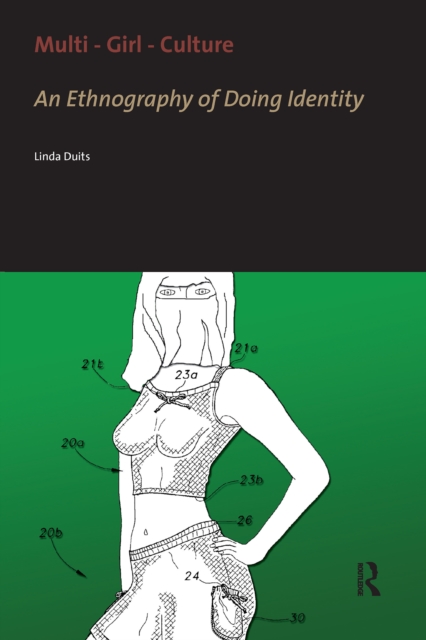
Multi-girl-culture
In this highly readable book, Linda Duits investigates girl culture in the Dutch multicultural society. Her ethnographic account provides a thick description of life at school, still the most prominent setting foor todays youth. She followed young girls of diverse ethnic backgrounds in their transition from primary to secondary school, focusing on the ways they use the body, clothing and media in their performance of identity. Countering several media hypes, including the internet generation, the headscarf debate and the sexualisation of society, Duits shows how contemporary girl culture is a mundane culture that is reflexively negotiated in an everyday setting.
eBook

Postcolonial Netherlands
The Netherlands is home to one million citizens with roots in the former colonies Indonesia, Suriname and the Antilles. Entitlement to Dutch citizenship, pre-migration acculturation in Dutch language and culture as well as a strong rhetorical argument (‘We are here because you were there’) were strong assets of the first generation. This ‘postcolonial bonus’ indeed facilitated their integration. In the process, the initial distance to mainstream Dutch culture diminished. Postwar Dutch society went through serious transformations. Its once lilywhite population now includes two million non-Western migrants and the past decade witnessed heated debates about multiculturalism. The most important debates about the postcolonial migrant communities centered on acknowledgement and the inclusion of colonialism and its legacies in the national memorial culture. This resulted in state-sponsored gestures, ranging from financial compensation to monuments. The ensemble of such gestures reflect a guilt-ridden and inconsistent attempt to ‘do justice’ to the colonial past and to Dutch citizens with colonial roots. Postcolonial Netherlands is the first scholarly monograph to address these themes in an internationally comparative framework. Upon its publication in the Netherlands (2010) the book elicited much praise, but also serious objections to some of the author’s theses, such as his prediction about the diminishing relevance of postcolonial roots.
Nederland telt ruim een miljoen burgers met wortels in de voormalige koloniën, Indonesië, Suriname en de Antillen. Juridisch staatsburgerschap, voorgaande bekendheid met de Nederlandse taal en cultuur en een sterk retorisch argument (‘Wij zijn hier omdat jullie daar waren’) gaven deze migranten een vergelijkenderwijs sterke uitgangspositie. Deze ‘postkoloniale bonus’ bevorderde de integratie, waarbij gaandeweg de verschillen tussen deze gemeenschappen en de bredere samenleving afnamen. Gelijktijdig veranderde die samenleving sterk. In 1945 had Nederland een roomblanke bevolking, vandaag telt twee miljoen niet-westerse migranten en worden heftige debatten gevoerd over multiculturalisme. De belangrijkste ideologische debatten van de afgelopen decennia rond de postkoloniale gemeenschap draaiden om erkenning en het opnemen in de nationale herdenkingscultuur van het kolonialisme en zijn erfenissen. Dit leidde tot een reeks officiële gebaren, variërend van financiële compensatie tot monumenten, waarin op schuldbewuste en vaak weinig consistente wijze ‘recht wordt gedaan’ aan het koloniale verleden en aan de afstammelingen van de koloniale onderdanen. Postcolonial Netherlands is het eerste boek dat deze thematiek systematisch behandeld en in vergelijkend perspectief plaatst. Het boek werd bij publicatie in Nederland (2010) overwegend positief ontvangen, al riepen de uitgesproken stellingen van de auteur over ‘het einde van de postkoloniale geschiedenis’ heftige tegenspraak op.
eBook

Sociocultural Settings Influence the Emergence of Prelinguistic Deictic Gestures
Daily activities of forty-eight 8- to 15-month-olds and their interlocutors were observed to test for the presence and frequency of triadic joint actions and deictic gestures across three different cultures: Yucatec-Mayans (Mexico), Dutch (Netherlands), and Shanghai-Chinese (China). The amount of joint action and deictic gestures to which infants were exposed differed systematically across settings, allowing testing for the role of social—interactional input in the ontogeny of prelinguistic gestures. Infants gestured more and at an earlier age depending on the amount of joint action and gestures infants were exposed to, revealing early prelinguistic sociocultural differences. The study shows that the emergence of basic prelinguistic gestures is socially mediated, suggesting that others' actions structure the ontogeny of human communication from early on.
Journal Article
Trends in Menarcheal Age between 1955 and 2009 in the Netherlands
To assess and compare the secular trend in age at menarche in Dutch girls (1955-2009) and girls from Turkish and Moroccan descent living in the Netherlands (1997-2009).
Data on growth and maturation were collected in 20,867 children of Dutch, Turkish and Moroccan descent in 2009 by trained health care professionals. Girls, 9 years and older, of Dutch (n = 2138), Turkish (n = 282), and Moroccan (n = 295) descent were asked whether they had experienced their first period. We compared median menarcheal age in 2009 with data from the previous Dutch Nationwide Growth Studies in 1955, 1965, 1980 and 1997. Age specific body mass index (BMI) z-scores were calculated to assess differences in BMI between pre- and postmenarcheal girls in different age groups.
Median age at menarche in Dutch girls, decreased significantly from 13.66 years in 1955 to 13.15 years in 1997 and 13.05 years in 2009. Compared to Dutch girls there is a larger decrease in median age of menarche in girls of Turkish and Moroccan descent between 1997 and 2009. In Turkish girls age at menarche decreased from 12.80 to 12.50 years and in Moroccan girls from 12.90 to 12.60 years. Thirty-three percent of Turkish girls younger than 12 years start menstruating in primary school. BMI-SDS is significantly higher in postmenarcheal girls than in premenarcheal girls irrespective of age.
There is a continuing secular trend in earlier age at menarche in Dutch girls. An even faster decrease in age at menarche is observed in girls of Turkish and Moroccan descent in the Netherlands.
Journal Article

Interpersonal symptoms in adolescence depression across Asian and European regions: a network approach
Background
Major Depressive Disorder (MDD) poses a significant global health challenge, with symptom presentation potentially varying between adolescents and adults. Adolescence is a critical period marked by heightened vulnerability to interpersonal stresses, yet the impact of these stresses on the structure of depressive symptoms is not well understood. Recognizing the cultural nuances in how depression manifests among adolescents is crucial. To this end, this paper employs a network analysis approach, utilizing a comprehensive symptom checklist from the Multidimensional Depression Assessment Scale (MDAS). Our study investigates the role of interpersonal symptoms within the broader cluster of emotional, cognitive, and somatic symptoms and explores variations in adolescent groups in four Asian and European regions.
Methods
We recruited a diverse sample of 6,348 adolescents aged 12 to 18 from Hong Kong, Taiwan, the UK, China, and the Netherlands using the Qualtrics platform. Employing the Gaussian Graphical Model, we established a network model of depressive symptoms as measured by the MDAS, segregating the sample into Asian and European regions to examine the interconnections between them. The study focused on identifying central symptom nodes and comparing the network structures between the two groups.
Results
The analysis identified
feeling worthless
,
low energy
,
being a burden to others
, and
low mood
as central symptoms of depression. Notably, there were significant differences in the connections between depressive symptoms among Asian (Hong Kong, China and Taiwan) and European (UK and the Netherlands) adolescents, highlighting cultural variations in how interpersonal symptoms interact with emotional, cognitive, and somatic symptoms.
Conclusion
This study is pioneering in applying network analysis to include interpersonal symptoms in examining depression among a diverse adolescent population. It demonstrates that interpersonal symptoms are integral to the central features of depressive symptoms. Furthermore, our findings suggest that, compared to their UK and Dutch peers, interpersonal symptoms in Asian adolescents are uniquely connected to other symptom clusters, reflecting distinct cultural patterns. Limitations: The study engaged a broad community sample; however, future research could benefit from including a larger sample size to allow for a more detailed analysis of a greater number of symptom nodes.
Journal Article

The relation between obesity and depressed mood in a multi-ethnic population. The HELIUS study
PurposeTo examine the association between obesity and depressed mood in a large multi-ethnic population and check for consistency in this association across six ethnic groups.MethodsData of 21,030 persons (18–70 years) were sourced from the HELIUS study. Cross-sectional relationships between obesity measures [body mass index (kg/m2) and waist circumference (cm)] and depressed mood (PHQ-9 score ≥ 10) were analysed. Consistency of associations was investigated across ethnic groups by interaction terms (ethnicity*obesity measures) in basic (age, sex, education) and fully (health behaviours and somatic health) adjusted models.ResultsObesity was prevalent in all ethnic groups, but varied substantially. After sociodemographic adjustment, obesity measures were associated with increased odds of depressed mood but this was inconsistent across ethnic groups. Obesity (BMI ≥ 30 or highest waist circumference quartile) was strongly and significantly associated with depressed mood in the Dutch [Odds Ratio (OR) = 1.72; 95% Confidence intervals (CI) 1.24–2.40, and OR = 1.86; 95% CI 1.38–2.50], respectively, and African Surinamese (OR = 1.60; 95% CI 1.29–1.98 and OR = 1.59; 95% CI 1.27–2.00, respectively) but had a weaker, non-significant association in other ethnic groups (South-Asian Surinamese, Ghanaian, Moroccan, Turkish groups). Adjustment for health behaviours and somatic health had limited effect on this pattern.ConclusionObesity was associated with a higher risk of depressed mood. However, ethnic differences were found: the obesity-depressed mood association was strong in the Dutch and African Surinamese populations, but not in other ethnic groups. Future studies should explore whether differential normative values or pathophysiology across ethnic groups explain why the obesity-depression association is inconsistent across ethnic groups.
Journal Article

Productivity of Older Workers: Perceptions of Employers and Employees
What determines the perceived productivity of the older worker and how does this perception compare to the perception of the productivity of the younger worker? In this study we present evidence based on data from Dutch employers and employees. Productivity perceptions are affected by one's age and one's position in the hierarchy. The young favor the young, the old favor the old, and employers value the productivity of workers less than employees do. However, there are also remarkable similarities across employers and employees. By distinguishing the various dimensions that underlie the productivity of younger and older workers, we tested whether soft qualities and abilities—e.g., reliability and commitment—are just as important as hard qualities—cognitive and physically based skills—in the eyes of both employers and employees. It appears that both employers and employees, young and old, view hard skills as far more important than soft skills.
Journal Article
Prenatal Maternal Stress and Child IQ
The evidence for negative influences of maternal stress during pregnancy on child cognition remains inconclusive. This study tested the association between maternal prenatal stress and child intelligence in 4,251 mother-child dyads from a multiethnic population-based cohort in the Netherlands. A latent factor of prenatal stress was constructed, and child IQ was tested at age 6 years. In Ehitch and Caribbean participants, prenatal stress was not associated with child IQ after adjustment for maternal IQ and socioeconomic status. In other ethnicities no association was found; only in the Moroccan/Turkish group a small negative association between prenatal stress and child IQ was observed. These results suggest that prenatal stress does not predict child IQ, except in children from less acculturated minority groups.
Journal Article