
Catalogue Search | MBRL


Are you sure you want to remove the book from the shelf?

{{itemTitle}}
164
result(s) for
"Nobelpreis"
Sort by:

Moscow has ears everywhere : new investigations on Pasternak and Ivinskaya
The conflict between Soviet Communists and Boris Pasternak over the publication of Doctor Zhivago did not end when he won the Nobel Prize, or even when the author died. Paolo Mancosu tells how Pasternak's expulsion from the Soviet Writers' Union left him in financial difficulty. Milan publisher Giangiacomo Feltrinelli and Sergio d'Angelo, who had brought the typescript of Doctor Zhivago to Feltrinelli, were among those who arranged a smuggling operation to help him.After Pasternak's death, Olga Ivinskaya, his companion, literary assistant, and the inspiration for Zhivago's Lara, also received some of the Zhivago royalties. After the KGB intercepted Pasternak's will on her behalf, the Soviets arrested and sentenced her and her daughter, Irina Emelianova, to eight years and three years of labor camp, respectively. The ensuing international outrage inspired a secret campaign in the West to win their freedom.Mancosu's new book-the first to explore the post-Nobel history of Pasternak and Ivinskaya-provides extraordinary detail on these events, in a thrilling account that involves KGB interceptions, fabricated documents, smugglers, and much more. While a general reader will respond to the dramatic human story, specialists will be rewarded with a rich assemblage of new archival material, especially letters of Pasternak, Ivinskaya, Feltrinelli, and d'Angelo from the Hoover Institution Library and Archives and the Feltrinelli Archives in Milan.
Book

Natürliche Experimente im Arbeitsmarkt und darüber hinaus
Der Nobelpreis für Wirtschaftswissenschaften geht 2021 an David Card für seine empirischen Beiträge zur Arbeitsökonomik sowie an Joshua Angrist und Guido Imbens für ihre methodischen Beiträge zur Analyse kausaler Zusammenhänge. Die Analyse kausaler Zusammenhänge in der empirischen Ökonomik wurde durch die von den Preisträgern maßgeblich vorangetriebene Methodik der natürlichen Experimente revolutioniert. Anhand der Wirkung von Mindestlöhnen, Mitbestimmung und der Arbeitslosenversicherung lässt sich illustrieren, wie durch natürliche Experimente neue wissenschaftliche Einsichten erlangt werden, die eine empirische Grundlage für eine evidenzbasierte Politikberatung bilden können.
This year's Nobel Prize in Economics honoured David Card of the University of California, Berkeley \"for his empirical contributions to labour economics\", and Joshua Angrist of MIT and Guido Imbens of Stanford University \"for their methodological contributions to the analysis of causal relationships\". We explain how the laureates revolutionised the analysis of causal relationships in empirical economics through the methodology of natural experiments. Three examples from the German labour market on the effects of minimum wages, code-termination and unemployment insurance illustrate how natural experiments yield new insights, which can form the foundation for evidence-based policy advice.
Journal Article
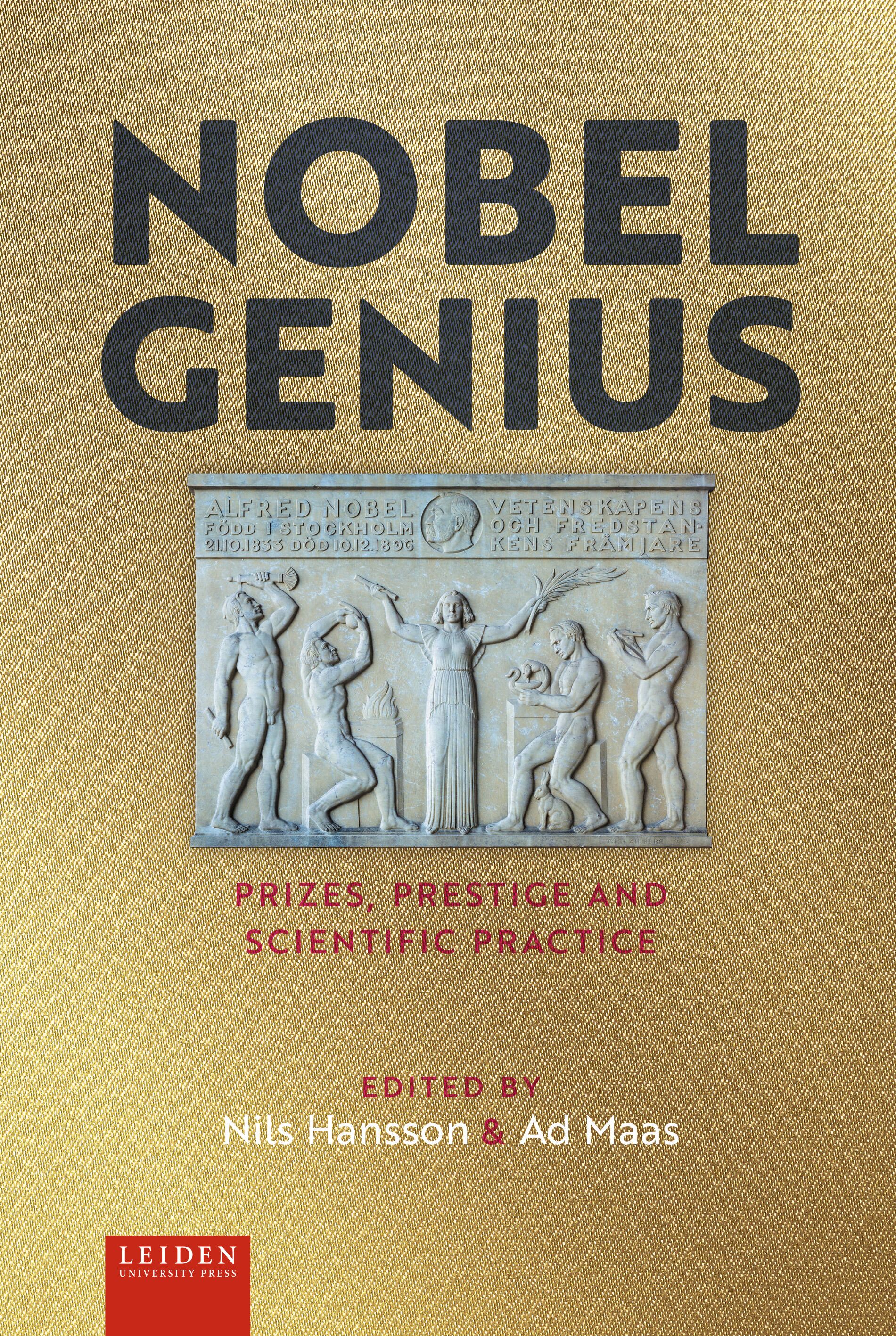
Nobel Genius
Awards shape careers, make research visible, and create role models. They provide evidence of prestige and credit and play a key role in evaluating individual scientists. Nevertheless, the understanding of prize cultures in science has remained surprisingly superficial. This book explores the prize cultures of the most famous scientific award worldwide: the Nobel Prize. It contributes to modern approaches in history and sociology of science that focus on the social context of scientific practices and gives new insights into the role of status and impact in academia.
eBook

Signaling in Retrospect and the Informational Structure of Markets
A model that illustrates in reasonably general form the definitions and properties of signaling equilibria is discussed. The signal is allowed to contribute directly to the productivity of the individual as well as functioning as a signal. A market in which there is signaling and both separating and pooling in the equilibrium is examined. A fairly general partial-equilibrium model of signaling is examined. Competitive equilibria and certain kinds of optimal responses to signals are discussed. A discussion is presented of the ubiquitous use of time and the allocation of time as a signal and as a screening device. The potentially rather large information parameter shifts that the Internet may have caused are discussed.
Journal Article


Creative Careers: The Life Cycles of Nobel Laureates in Economics
We identify two polar life cycles of scholarly creativity among Nobel laureate economists with Tinbergen falling broadly in the middle. Experimental innovators work inductively, accumulating knowledge from experience. Conceptual innovators work deductively, applying abstract principles. Innovators whose work is more conceptual do their most important work earlier in their careers than those whose work is more experimental. Our estimates imply that the probability that the most conceptual laureate publishes his single best work peaks at age 25 compared to the mid-50 s for the most experimental laureate. Thus, while experience benefits experimental innovators, newness to a field benefits conceptual innovators.
Journal Article

Reflections on the 2020 Nobel Memorial Prize Awarded to Paul Milgrom and Robert Wilson
The 2020 Nobel Memorial Prize in Economic Sciences has been awarded to Paul Milgrom and Robert Wilson, both at Stanford University, for improvements to auction theory and inventions of new auction formats. As with any award of the Nobel Prize, this year's prize may raise some questions. For example, what is there to learn about auctions that isn't already intuitively known by most economists or practitioners? Or, shouldn't the Prize instead be awarded to research dealing with big and important questions, such as those related to wealth, poverty, inequality, or the environment? Is the importance of auctions on a par with these topics? What important aspects of economic life do we better understand because of the work of the Nobel Prize laureates? The aim of this essay is to try to answer these questions. A first part of the answer to this question (and the questions raised above) is that what goes unnoticed in this example is that the auction mechanism is created.
Journal Article
