
Catalogue Search | MBRL


Are you sure you want to remove the book from the shelf?

{{itemTitle}}
50
result(s) for
"Occupational training European Union countries."
Sort by:

Researching and transforming adult learning and communities : the local/global context
Can adult education and learning be understood without reference to community and peoples daily lives? The response to be found in the chapters of this volume say emphatically no, they cannot. Adult learning can be best understood if we look at the social life of people in communities, and this book is an attempt to recover this view. 0The chapters of this volume reflect ongoing research in the field of adult education and learning in and with communities. At the same time the work of the authors presented here offers a very vital reflection of the work of the ESREA research network Between Local and Global Adult Learning and Communities. The chapters showcase the broad range of professional practice, the variety in both methodology and theoretical background, as well as the impressive scope of field research experience the authors bring to bear in their papers. The first section provides the broad view of research into adult learning and community development emphasising how social movements are at the heart of local and global change and that they are critically important sources of power. The second section focuses in on the practice of educators/mediators working in local and regional contexts in which the tensions of the wider policy and discourse environment impact on adult learners. The third section privileges the view at the close level of research inside local communities in the field.
Book

Mainstreaming Equality in the European Union
Mainstreaming Equality in the European Union provides a critical overview and evaluation of the potential role of the EU in perpetuating or breaking down gender segregation in the EU labour force. Teresa Rees draws upon feminist theoretical frameworks in assessing Equal Opportunitues policies and the role of training in the labour market. The same economic imperatives which put women's training on the agenda have heightened interest in designing training which attracts women into mainstream provision. Mainstreaming Equality in the European Union addresses the urgent need for academics, education and training providers, as well as policy makers to be aware of current thinking at EU level on training policy.
eBook

Working and Learning in Times of Uncertainty
This book analyses the challenges of globalisation and uncertainty impacting on working and learning at individual, organisational and societal levels. Each of the contributions addresses two overall questions: How is working and learning affected by uncertainty and globalisation? And, in what ways do individuals, organisations, political actors and education systems respond to these challenges? Part 1 focuses on the micro level of working and learning for understanding the learning processes from an individual point of view by reflecting on learners' needs and situations at work and in school-work transitions. Part 2 addresses the meso level by discussing sector-specific and organisational approaches to working and learning in times of uncertainty. The chapters represent a broad range of branches including public services (police work), the automotive sector and the health sector (elderly care). Finally, Part 3 addresses the macro level of working and learning by analysing how to govern, structure and organise vocational, professional and adult education at the boundaries of work, education and policy making. (Verlag).
eBook
Mainstreaming Equality in the European Union
Mainstreaming Equality in the European Union provides a critical overview and evaluation of the potential role of the EU in perpetuating or breaking down gender segregation in the EU labour force. Teresa Rees draws upon feminist theoretical frameworks in assessing Equal Opportunitues policies and the role of training in the labour market. The same economic imperatives which put women's training on the agenda have heightened interest in designing training which attracts women into mainstream provision. Mainstreaming Equality in the European Union addresses the urgent need for academics, education and training providers, as well as policy makers to be aware of current thinking at EU level on training policy.
1. Introduction 2. The context 3. Conceptualising equal opportunities 4. The European Union and equal opportunities 5. Key issues in women's education and training in the UK 6. Skill shortages, women, and training for the new information technologies 7. EC community action programmes on education and training 8. The European Social Fund and LEONARDO DA VINCI 9. Competitiveness, social exclusion and the learning society: EO and the White Papers 10. Mainstreaming equality
Teresa Rees is Professor of Labour Market Studies, School for Policy Studies, University of Bristol.
eBook
Mainstreaming Equality in the European Union
Mainstreaming Equality in the European Union provides a critical overview and evaluates the potential role of the EC in perpetuating and breaking down gender segregation in the EC labour force.
eBook
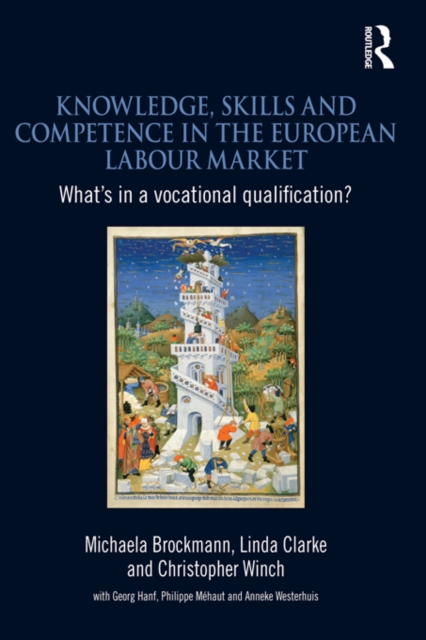
Knowledge, skills and competence in the European labour market
\"For the free movement of labour across the European Union, establishing transparency and comparability of qualifications across member states is vital. This book examines how qualifications, knowledge, skills and competences are understood in different national contexts and trans-nationally and reveals a complex picture of differences and similarities both within and between countries. Against the background of EU policy initiatives, and in particular the European Qualifications Framework, an important focus is on the prospects and difficulties of establishing cross-national recognition of qualifications. Drawing on case studies of particular sectors and occupations in England, France, Germany and the Netherlands, the book, written by leading academics in the field, will be a vital resource for students and researchers involved with vocational education and training, continuing professional development, human resource management and European Union policy.\" (Author's abstract, IAB-Doku); Contents: Foreword (Tim Oates) Michaela Brockmann, Linda Clark, Christopher Winch, Georg Hanf, Philippe Mehaut, Anneke Westerhuis: Introduction - Cross-National Equivalence of Skills and Qualifications across Europe? (1-21); Philippe Méhaut and Christopher Winch: EU Initiatives in Cross-National Recognition of Skills and Qualifications (22-35); Philippe Méhaut: Savoir - The Organizing Principle of French VET (36-49); Georg Hanf: The Changing Relevance of the Beruf (50-67); Anneke Westerhuis: The Meaning of Competence (68-84); Christopher Winch: Skill - A Concept Manufactured in England? (85-101); Linda Clarke: Trade? Job? Or Occupation?: The Development of Occupational Labour Markets for Bricklaying and Lorry Driving (102-119); Michaela Brockmann: Higher Education Qualifications: Convergence and Divergence in Software Engineering and Nursing (120-135); Linda Clarke, Anneke Westerhuis: Establishing Equivalence through Zones of Mutual Trust (136-148); Michaela Brockmann, Linda Clarke, Christopher Winch, Georg Hanf, Philippe Méhaut, Anneke Westerhuis: Interpretive Dictionary Competences, qualification, education, knowledge (149-184). Forschungsmethode: empirisch; Querschnitt; deskriptive Studie.
eBook

Soviet higher education
Historically, the university was an alien establishment for Russia, reflecting the political ambition of its leadership, not the organic impetus of Russian society. In Soviet academia, the notion of university education was replaced by the concept of vocational–technical training. As a creation of the Soviet government, Soviet higher education represented a very unusual organizational construction with an umbilical connection to the communist party ideology and Soviet autocracy. In its organization and social purpose, Soviet higher education was quite different from the European notion of a university and remote from the international academic community. Soviet higher education opposed the western university model on a fundamental level: The pragmatism of practical training contradicted the ideology of academic liberal knowledge and institutional self-governance. An analysis of Soviet HE administrative structure reveals three defining characteristics: uniformity, top-down administration and one-man management. The purpose of Soviet higher education was to be a nationwide conveyor of a professional workforce that would supply the state with qualified specialists in each field of industry or social services. It intentionally promoted communal values. This review and analysis of Soviet HE administrative organization indicate that in both form and function, it seems to be an alternative to the traditional western notion of university education, rather than a variation of higher education in its traditional sense.
Journal Article

Good practice characteristics of diet and physical activity interventions and policies: an umbrella review
Background
This umbrella review aimed at eliciting good practice characteristics of interventions and policies aiming at healthy diet, increasing physical activity, and lowering sedentary behaviors. Applying the World Health Organization’s framework, we sought for 3 types of characteristics, reflecting: (1) main intervention/policy characteristics, referring to the design, targets, and participants, (2) monitoring and evaluation processes, and (3) implementation issues. This investigation was undertaken by the DEDPIAC Knowledge Hub (the Knowledge Hub on the DEterminants of DIet and Physical ACtivity), which is an action of the European Union’s joint programming initiative.
Methods
A systematic review of reviews and stakeholder documents was conducted. Data from 7 databases was analyzed (99 documents met inclusion criteria). Additionally, resources of 7 major stakeholders (e.g., World Health Organization) were systematically searched (10 documents met inclusion criteria). Overall, the review yielded 74 systematic reviews, 16 position review papers, and 19 stakeholders’ documents. Across characteristics, 25% were supported by ≥ 4 systematic reviews. Further, 25% characteristics were supported by ≥ 3 stakeholders’ documents. If identified characteristics were included in at least 4 systematic reviews or at least 3 stakeholders’ documents, these good practice characteristics were classified as relevant.
Results
We derived a list of 149 potential good practice characteristics, of which 53 were classified as relevant. The main characteristics of intervention/policy (
n
= 18) fell into 6 categories: the use of theory, participants, target behavior, content development/management, multidimensionality, practitioners/settings. Monitoring and evaluation characteristics (
n
= 18) were grouped into 6 categories: costs/funding, outcomes, evaluation of effects, time/effect size, reach, the evaluation of participation and generalizability, active components/underlying processes. Implementation characteristics (
n
= 17) were grouped into eight categories: participation processes, training for practitioners, the use/integration of existing resources, feasibility, maintenance/sustainability, implementation partnerships, implementation consistency/adaptation processes, transferability.
Conclusions
The use of the proposed list of 53 good practice characteristics may foster further development of health promotion sciences, as it would allow for identification of success vectors in the domains of main characteristics of interventions/policies, their implementation, evaluation and monitoring processes.
Journal Article

Measuring the Contribution of the “Knowledge Economy” to the Economic Growth Rate: Comparative Analysis
The formation and development of the “knowledge economy” is an important characterization of the modern global world, and this process depends a lot from the development of education and science, which ensure the production and transfer of knowledge. In this regard, the dimension of the influence of this aggregated sector on the dynamics of the development of the economy as a whole is of importance. The purpose of the research is to determine the size of the sector “knowledge economy” in the European Union and some countries for comparison, as well as assess the contribution of this sector, measured by different methods in the rate of economic growth. The methodology of the study is a structural analysis, on the basis of which it becomes possible to single out the content of the “knowledge economy” sector and obtain a “structural formula” for assessing the contribution of this sector to the economic growth rate. The result of the application of this methodology was that it was possible to identify an overestimated estimate of the “knowledge economy” according to the Eurostat methodology, which takes into account the types of activities by the number of employees with a certain level of education, and the scale of the “knowledge economy” sector was comparable with the location of countries in terms of per capita income. Having considered the discussion regarding the experience of carrying out institutional reforms of education in the European Union, we come to the conclusion that the competence-based approach to basic education is limited in solving the problem of training personnel with higher education. The unreasonableness of institutional reforms that adjust education to the current tasks of the business, replacing the teacher with a computer, has a number of significant limitations that will not affect the measurement key, but can lead to a quality that will subsequently affect the rate of economic growth not upward.
Journal Article

Working and Learning in Times of Uncertainty: Challenges to Adult, Professional and Vocational Education
This book analyses the challenges of globalisation and uncertainty impacting on working and learning at individual, organisational and societal levels.
eBook