
Catalogue Search | MBRL


Are you sure you want to remove the book from the shelf?

{{itemTitle}}
356
result(s) for
"Occupations Cross-cultural studies."
Sort by:


A World of Work
Ever wondered what it would be like to be a street magician in Paris? A fish farmer in Norway? A costume designer in Bollywood? This playful and accessible look at different types of work around the world delivers a wealth of information and advice about a wide array of jobs and professions. The value of this book is twofold: For young people or middle-aged people who are undecided about their career paths and feel constrained in their choices,A World of Workoffers an expansive vision. For ethnographers, this book offers an excellent example of using the practical details of everyday life to shed light on larger structural issues.Each chapter in this collection of ethnographic fiction could be considered a job manual. Yet not any typical job manual-to do justice to the ways details about jobs are conveyed in culturally specific ways, the authors adopt a range of voices and perspectives. One chapter is written as though it was a letter from an older sister counseling her brother on how to be a doctor in Malawi. Another is framed as a eulogy for a well-loved village magistrate in Papua New Guinea who may have been killed by sorcery.Beneath the novelty of the examples are some serious messages that Ilana Gershon highlights in her introduction. These ethnographies reveal the connection between work and culture, the impact of societal values on the conditions of employment. Readers will be surprised at how much they can learn about an entire culture by being given the chance to understand just one occupation.Contributors:Lovleen Bains, Mumbai; Chiwoza Bandawe, University of Malawi; Joshua A. Bell, Smithsonian Institution; Michelle Bigenho, Colgate University; Warren Chamberlain, Vita Needle Company, Massachusetts; Melissa Demian, Australian National University; Ilana Gershon, Indiana University; Kathryn Graber, Indiana University; Graham M. Jones, MIT; Amanda Kemble, University of Michigan; Briel Kobak, University of Chicago; Corinna Kruse, Linköping University, Sweden; Joel Kuipers, The George Washington University; Carrie Lane, California State University, Fullerton; Jean Lave, University of California, Berkeley; John Law, Open University; Heather Levi, Temple University; Marianne Elisabeth Lien, University of Oslo; Caitrin Lynch, Olin College; Loïc Marquet, Paris; Winnifred Fallers Sullivan, Indiana University; Chris Swift, Leeds Teaching Hospitals; Claire Wendland, University of Wisconsin-Madison; Clare Wilkinson-Weber, Washington State University Vancouver; Helena Wulff, Stockholm University
Ever wondered what it would be like to be a street magician in Paris? A fish farmer in Norway? A costume designer in Bollywood? This playful and accessible look at different types of work around the world delivers a wealth of information and advice about a wide array of jobs and professions. The value of this book is twofold: For young people or middle-aged people who are undecided about their career paths and feel constrained in their choices,A World of Workoffers an expansive vision. For ethnographers, this book offers an excellent example of using the practical details of everyday life to shed light on larger structural issues.
Each chapter in this collection of ethnographic fiction could be considered a job manual. Yet not any typical job manual-to do justice to the ways details about jobs are conveyed in culturally specific ways, the authors adopt a range of voices and perspectives. One chapter is written as though it was a letter from an older sister counseling her brother on how to be a doctor in Malawi. Another is framed as a eulogy for a well-loved village magistrate in Papua New Guinea who may have been killed by sorcery.
Beneath the novelty of the examples are some serious messages that Ilana Gershon highlights in her introduction. These ethnographies reveal the connection between work and culture, the impact of societal values on the conditions of employment. Readers will be surprised at how much they can learn about an entire culture by being given the chance to understand just one occupation.
eBook
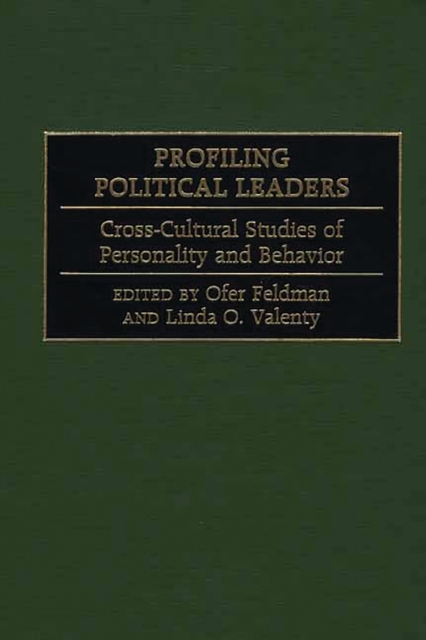
Profiling political leaders : cross-cultural studies of personality and behavior
Feldman, Valenty, and their contributors present state-of-the-art evaluations of linkages between personality, motivation, decision making, leadership style, and behavior among political leaders across divergent cultures.
eBook

The Evolution of Sex Segregation Regimes
Addresses the cross-national convergence in patterns of occupational sex segregation in the context of a new typology that distinguishes between substantive-egalitarian, formal-egalitarian, traditional family-centered, and economy-centered systems, using census and labor force survey data from 1960 to 1990 for 14 industrialized countries. Each of these systems can be characterized by distinct underlying gender logics and by the context of state response to gender equality in the labor market. Log-linear models are employed to evaluate how levels and patterns of occupational sex segregation have evolved over the period. Analyses reveal that cross-national variation in both the levels and patterns of segregation is declining over time; but at the same time, the remaining diversity among countries is increasingly patterned according to one of four segregation regimes. It appears that wholly idiosyncratic cross-national differences in the contours of occupational sex segregation are withering away as countries come to settle on, with ever fewer exceptions, one of four possible segregation regimes. 6 Tables, 8 Figures, 1 Appendix, 77 References. (Original abstract - amended)
Journal Article

Does Country Equate with Culture? Beyond Geography in the Search for Cultural Boundaries
Traditionally, cultures have been treated as though they reside exclusively within, or perfectly overlap with countries. Indeed, the terms \"country\" and \"culture\" are often used interchangeably. As evidence mounts for substantial within-country cultural variation, and often between-country similarities, the problem with equating country and culture becomes more apparent. To help resolve the country-culture conundrum, we evaluate the extent to which political boundaries are suitable for clustering cultures based on a meta-analysis of 558 studies that used Hofstede's (Culture's consequences: international differences in work-related values. Sage Publications, Beverly Hills, 1980) cultural values framework. The results reveal that approximately 80 % of variation in cultural values resides within countries, confirming that country is often a poor proxy for culture. We also evaluate the relative suitability of other demographic and environmental characteristics, such as occupation, socio-economic status, wealth, freedom, globalization, and instability. Our results suggest that it may be more appropriate to talk about cultures of professions, socio-economic classes, and free versus oppressed societies, than about cultures of countries.
Journal Article

Cross-Cultural Differences in Children's Beliefs About the Objectivity of Social Categories
The present study compared 5- and 10-year-old North American and Israeli children's beliefs about the objectivity of different categories (n = 109). Children saw picture triads composed of two exemplars of the same category (e.g., two women) and an exemplar of a contrasting category (e.g., a man). Children were asked whether it would be acceptable or wrong for people in a different country to consider contrasting exemplars to be the same kind. It was found that children from both countries viewed gender as objectively correct and occupation as flexible. The findings regarding race and ethnicity differed in the two countries, revealing how an essentialist bias interacts with cultural input in directing children's conceptualization of social groups.
Journal Article

Origin and Evolution of Religious Prosociality
We examine empirical evidence for religious prosociality, the hypothesis that religions facilitate costly behaviors that benefit other people. Although sociological surveys reveal an association between self-reports of religiosity and prosociality, experiments measuring religiosity and actual prosocial behavior suggest that this association emerges primarily in contexts where reputational concerns are heightened. Experimentally induced religious thoughts reduce rates of cheating and increase altruistic behavior among anonymous strangers. Experiments demonstrate an association between apparent profession of religious devotion and greater trust. Cross-cultural evidence suggests an association between the cultural presence of morally concerned deities and large group size in humans. We synthesize converging evidence from various fields for religious prosociality, address its specific boundary conditions, and point to unresolved questions and novel predictions.
Journal Article

Socio-economic variations in the mental health treatment gap for people with anxiety, mood, and substance use disorders: results from the WHO World Mental Health (WMH) surveys
The treatment gap between the number of people with mental disorders and the number treated represents a major public health challenge. We examine this gap by socio-economic status (SES; indicated by family income and respondent education) and service sector in a cross-national analysis of community epidemiological survey data.
Data come from 16 753 respondents with 12-month DSM-IV disorders from community surveys in 25 countries in the WHO World Mental Health Survey Initiative. DSM-IV anxiety, mood, or substance disorders and treatment of these disorders were assessed with the WHO Composite International Diagnostic Interview (CIDI).
Only 13.7% of 12-month DSM-IV/CIDI cases in lower-middle-income countries, 22.0% in upper-middle-income countries, and 36.8% in high-income countries received treatment. Highest-SES respondents were somewhat more likely to receive treatment, but this was true mostly for specialty mental health treatment, where the association was positive with education (highest treatment among respondents with the highest education and a weak association of education with treatment among other respondents) but non-monotonic with income (somewhat lower treatment rates among middle-income respondents and equivalent among those with high and low incomes).
The modest, but nonetheless stronger, an association of education than income with treatment raises questions about a financial barriers interpretation of the inverse association of SES with treatment, although future within-country analyses that consider contextual factors might document other important specifications. While beyond the scope of this report, such an expanded analysis could have important implications for designing interventions aimed at increasing mental disorder treatment among socio-economically disadvantaged people.
Journal Article

Psychometric properties of the Feedback Orientation Scale in the clinical workplace of health professions students
To cross-culturally validate the Feedback Orientation Scale in the clinical workplace, focusing on the Spanish adaptation of the instrument in the Chilean context.
A cross-cultural validation of the Feedback Orientation Scale was conducted across six Chilean universities and nine health professions education programs. The target population were students in their clinical clerkship. The scale was translated through a rigorous process and was applied online. Validity and reliability of the constructs were evaluated through confirmatory factor analysis. A descriptive statistical analysis was conducted.
A total of 510 students participated (70% female, average age 24.1 years, 30% response rate). Students' responses were from Medicine (n=128), Physiotherapy (n=128), Nursing (n=63), Dentistry (n=49), and five other disciplines. Confirmatory factor analysis showed a sufficient fit of the original factor structure CFI = 0.96, SRMR = 0.045, RMSEA = 0.051, 90% CI [0.044, 0.057]. Item loadings were above 0.50. Factor reliability ranged from 0.77 to 0.91. Overall, students' perception of receptivity to feedback was positive, and the Feedback Self-efficacy subscale had the most \"disagree\" and \"strongly disagree\" responses.
Our findings provide evidence regarding the validity and reliability of the Feedback Orientation Scale for assessing the feedback orientation of health profession education students in the clinical workplace. Students scored lowest on two items related to feedback self-efficacy, indicating low confidence in handling feedback. This Feedback Orientation Scale can reveal valuable insights into how students may differ in their receptivity and use of feedback in the clinical workplace, informing teaching practices and interventions, and redesigning existing feedback practices.
Journal Article

Boundary work: An interpretive ethnographic perspective on negotiating and leveraging cross-cultural identity
The complexity of global organizations highlights the importance of members' ability to span diverse boundaries that may be defined by organization structures, national borders, and/or a variety of cultures associated with organization, nation-based societal and work cultures, industries, and/or professions. Based on ethnographic research in a Japan—US binational firm, the paper describes and analyzes the boundary role performance of the firm's Japanese members. It contributes toward theory on boundary spanning by introducing a \"cultural identity negotiation\" conceptual framework. We show boundary spanning as a process shaped through the interplay of the contextual issues that make a boundary problematic; an individual's multiple repertoires of cultural knowledge; and the individual boundary spanner's \"negotiation\", through interaction with others, of his/her cultural identities — the sense of \"who I am\" as a cultural being that is fundamental to an individual's self-concept. At the same time, we make transparent the epistemological and methodological foundations of an interpretive ethnographic approach, demonstrating its value for understanding complex organizational processes. Research findings have practical implications for the selection and training of an organization's employees, particularly of persons who may be considered \"bicultural\".
Journal Article