
Catalogue Search | MBRL


Are you sure you want to remove the book from the shelf?

{{itemTitle}}
154,092
result(s) for
"Oliver, T"
Sort by:

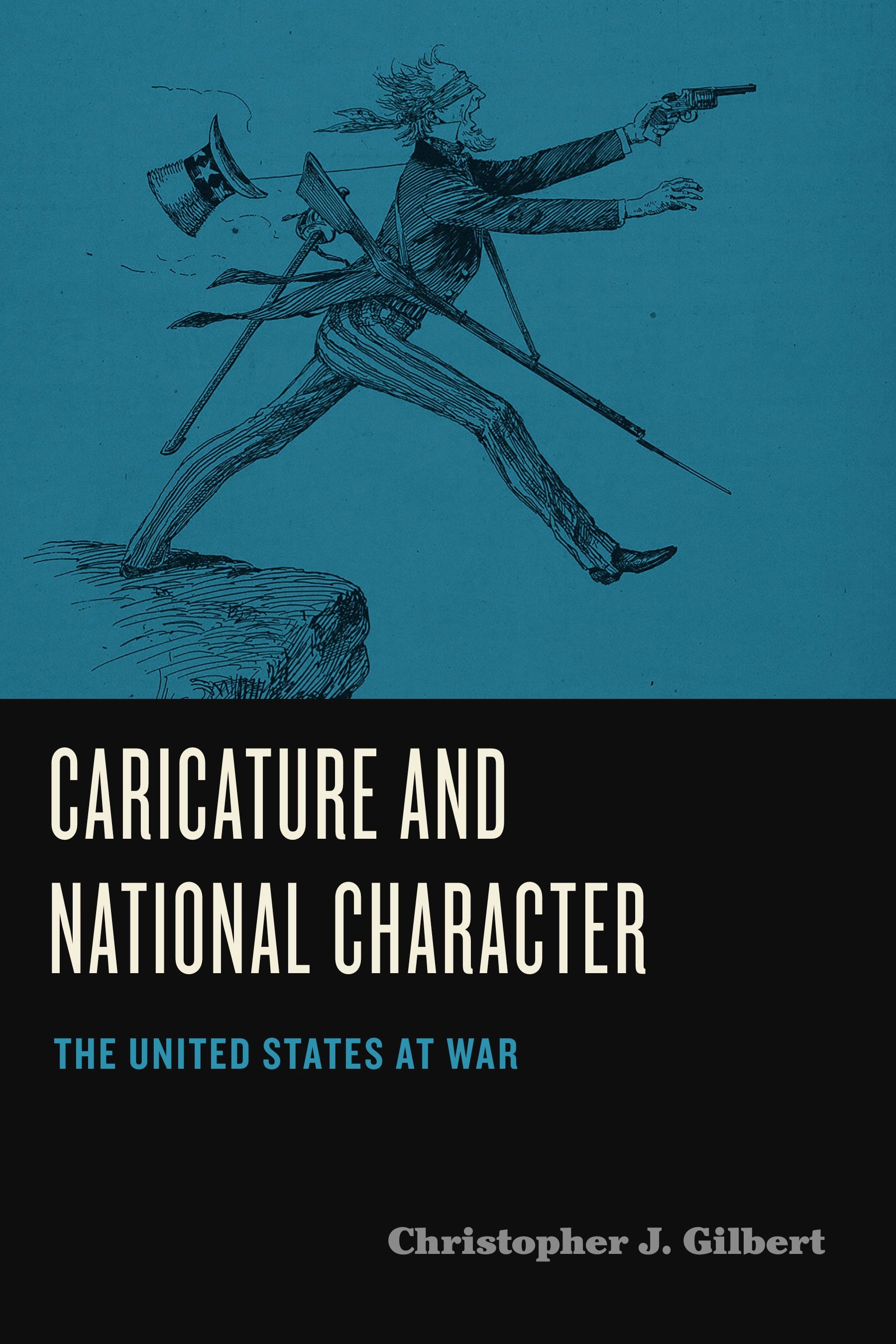
Caricature and National Character
According to the popular maxim, a nation at war reveals its true character. In this incisive work, Chris Gilbert examines the long history of US war politics through the lens of political cartoons to provide new, unique insights into American cultural identity.
Tracing the comic representation of American values from the First World War to the War on Terror, Gilbert explores the power of humor in caricature to expose both the folly in jingoistic virtues and the sometimes-strange fortune in nationalistic vices. He examines the artwork of four exemplary American cartoonists—James Montgomery Flagg, Dr. Seuss, Ollie Harrington, and Ann Telnaes—to craft a trenchant image of Americanism. These examinations animate the rhetorical, and indeed comic, force of icons like Uncle Sam, national symbols like the American Eagle, political stooges like President Donald J. Trump, and more, as well as the power of political cartoons to comment on issues of race, class, and gender on the home front. Throughout, Gilbert portrays a US culture rooted in and riven by ideas of manifest destiny, patriotism, and democracy for all, yet plagued by ugly forms of nationalism, misogyny, racism, and violence.
Rich with examples of hilarious and masterfully drawn caricatures from a diverse range of creators, this unflinching look at the evolution of our conflicted national character illustrates how American cartoonists use farce, mockery, and wit to put national character in the comic looking glass.
eBook

PHOTOGRAPHY, MATERIALITY AND METAFICTION: AN ANALYSIS OF THE BOOK THERE'S A GHOST IN THIS HOUSE/FOTOGRAFIA, MATERIALIDADE E METAFICCAO: UMA ANALISE DA OBRA HA UM FANTASMA NESTA CASA
The illustrated children's literature book involves the interaction between written text and image, configuring it as a powerful tool for promoting visual literacy and training readers. Photography as an illustration, added to the materiality of the printed book, can contribute to the development of the literary reader's skills, expanding the possibilities of rapprochement between the reader and the work, based on handling and interaction with the tangible object. This article features a segment from an ongoing doctoral study, its methodology is a qualitative bibliographic analysis and its goal is to discuss photographic illustration, the materiality of the printed book and the metafictional proposal of the narrative as devices that contribute to the approximation between the reader and the work. As a result, it is considered that the choice of photography, associated with the materiality of the book, is capable of expanding dialogues and interpretations, enhancing the training readers. KEYWORDS: Children's literature, Illustration, Photography, Materiality, Metafiction O livro de literatura infantil ilustrado envolve a interacao texto escrito e imagem, configurando-o como uma poderosa ferramenta para a promocao da literacia visual e para a formacao de leitores. A fotografia como ilustracao, somada a materialidade do livro impresso, pode contribuir para o desenvolvimento das competencias do leitor literario, ampliando as possibilidades de aproximacao entre o leitor e a obra, a partir do manuseio e da interacao com o objeto palpavel. Este artigo apresenta um recorte de um estudo de doutoramento em curso, tem como metodologia uma analise bibliografica de cunho qualitativo e como objetivo discutir a ilustracao fotografica, a materialidade do livro impresso e a proposta metaficcional da narrativa como artificios que contribuem para a aproximacao entre o leitor e a obra. Como resultados, considera-se que a escolha pela fotografia, associada a materialidade do livro, se mostra capaz de ampliar dialogos e interpretacoes, favorecendo a formacao de leitores. PALAVRAS-CHAVE: Literatura infantil, Ilustracao, Fotografia, Materialidade, Metaficcao
Journal Article

Oliver P. Morton and the Politics of the Civil War and Reconstruction
Remembered as the \"Great War Governor\" who led the state of Indiana during the Civil War, Oliver P. Morton has always been a controversial figure. His supporters praised him as a statesman who helped Abraham Lincoln save the Union, while his critics blasted him as a ruthless tyrant who abused the power of his office. Many of his contemporaries and some historians saw him as a partisan politician and an opportunist who shifted his positions to maintain power. Later generations treated Governor Morton as either a hero or a villain and generally forgot about his postwar career as a Radical Republican leader in the U.S. Senate.
In this first full biography of Morton to be published in over a century, A. James Fuller offers a groundbreaking new interpretation of Indiana's most significant political leader in the nineteenth century. Overturning traditional views, Fuller argues that Morton's nationalist ideology motivated him throughout his career and that the Hoosier leader held consistently to the ideas of freedom, Union, power, and party. Those core principles drove Morton's politics and actions, including his support for Indiana soldiers, his fight against the Democrats in the state legislature, and his twenty-two months of one-man rule, a period in which his opponents accused him of being a virtual dictator. His principles also framed his struggle against the disloyal Copperheads who tried to assassinate him and whose leaders he helped bring to justice in the Indianapolis Treason Trials.
Fuller also restores the historical significance of Morton's long neglected career as a Reconstruction senator. Seeing Reconstruction as a continuation of the Civil War, Morton became a leading Radical Republican who championed racial equality. He continually waved the bloody shirt, reminding voters that the Democrats had caused the rebellion. Morton supported the civil rights of African Americans and fought against the Democrats and the Ku Klux Klan. He enjoyed widespread support for the presidency in 1876, but when his bid for the Republican nomination came up short, he helped decide the disputed election for Rutherford B. Hayes. When Morton died in 1877, Reconstruction died with him, symbolically marking the end of an era. In the decades after his death, Hoosiers built monuments to Morton, remembering him in ways that reflected their own times, keeping his controversial legacy alive in historical memory.
eBook


The Brown decision, Jim Crow, and Southern identity
The 1954 Brown v. Board of Education ruling was a watershed event in the fight against racial segregation in the United States. The recent fiftieth anniversary of Brown prompted a surge of tributes: books, television and radio specials, conferences, and speeches. At the same time, says James C. Cobb, it revealed a growing trend of dismissiveness and negativity toward Brown and other accomplishments of the civil rights movement. Writing as both a lauded historian and a white southerner from the last generation to grow up under southern apartheid, Cobb responds to what he sees as distortions of Brown's legacy and their implied disservice to those whom it inspired and empowered. Cobb begins by looking at how our historical understanding of segregation has evolved since the Brown decision. In particular, he targets the tenacious misconception that racial discrimination was at odds with economic modernization--and so would have faded out, on its own, under market pressures. He then looks at the argument that Brown energized white resistance more than it fomented civil rights progress. This position overstates the pace and extent of racial change in the South prior to Brown, Cobb says, while it understates Brown's role in catalyzing and legitimizing subsequent black protest. Finally, Cobb suggests that the Brown decree and the civil rights movement accomplished not only more than certain critics have acknowledged but also more than the hard statistics of black progress can reveal. The destruction of Jim Crow, with its \"denial of belonging,\" allowed African Americans to embrace their identity as southerners in ways that freed them to explore links between their southernness and their blackness. This is an important and timely reminder of \"what the Brown court and the activists who took the spirit of its ruling into the streets were up against, both historically and contemporaneously.\"
eBook


The Southern Manifesto
On March 13, 1956, ninety-nine members of the United States Congress promulgated the Declaration of Constitutional Principles, popularly known as the Southern Manifesto. Reprinted here, the Southern Manifesto formally stated opposition to the landmark United State Supreme Court decisionBrown v. Board of Education, and the emergent civil rights movement. This statement allowed the white South to preventBrown'simmediate full-scale implementation and, for nearly two decades, set the slothful timetable and glacial pace of public school desegregation. The Southern Manifesto also provided the Southern Congressional Delegation with the means to stymie federal voting rights legislation, so that the dismantling of Jim Crow could be managed largely on white southern terms.
In the wake of theBrowndecision that declared public school segregation unconstitutional, seminal events in the early stages of the civil rights movement--like the Emmett Till lynching, the Montgomery bus boycott, and the Autherine Lucy riots at the University of Alabama brought the struggle for black freedom to national attention. Orchestrated by United States Senator Richard Brevard Russell Jr. of Georgia, the Southern Congressional Delegation in general, and the United States Senate's Southern Caucus in particular, fought vigorously and successfully to counter the initial successes of civil rights workers and maintain Jim Crow. The South's defense of white supremacy culminated with this most notorious statement of opposition to desegregation.The Southern Manifesto: Massive Resistance and the Fight to Preserve Segregationnarrates this single worst episode of racial demagoguery in modern American political history and considers the statement's impact upon both the struggle for black freedom and the larger racial dynamics of postwar America.
eBook

The Oliver Stone Experience
Oliver Stone is one of the grand masters of American cinema. A multiple Academy Award-winning screenwriter and director (Midnight Express, Scarface, Platoon, JFK, Natural Born Killers, Snowden), he is as well known for his outspoken, controversial political beliefs as he is for his innovative films.Over the course of five years, Stone and author Matt Zoller Seitz discussed the arc of Stone's life and work with extraordinary candor. The cinematic mastermind shares anecdotes about Vietnam, his childhood, his struggles with posttraumatic stress disorder, and his continual struggle to reinvent himself as an artist. Seitz was given unprecedented access to Stone's personal archive, and these interviews are accompanied by never-before-seen material that dates back to Stone's childhood in the 1950s, including personal snapshots, private correspondence, annotated script pages and storyboards, and behind-the-scenes photography. At once a complex analysis of a master director's vision and a painfully honest autobiography, The Oliver Stone Experience promises to be as daring, intense, and provocative as Stone's films.
eBook