
Catalogue Search | MBRL


Are you sure you want to remove the book from the shelf?

{{itemTitle}}
160
result(s) for
"Olympics Fiction."
Sort by:

2021 Space Olympics: Towards a Science Fiction Dramaturgy
In August 2021, the International Space Station (ISS) hosted its first Space Olympics. Seven astronauts and cosmonauts from various spacefaring nations competed in four events: weightless sharpshooting, synchronized space swimming or space floating, no-handball and lack-of-floor routine. In this essay, I observe Space Olympics through the lens of science fiction performance to explore how science fiction can provide a dramaturgical model for configuring and understanding performative events that seek to (re)present scientific and technological discoveries hovering between the imaginative and real. To examine how science fiction can inform performance, I focus on two approaches included within a developing science fiction dramaturgical toolkit: neology and future history.
Journal Article

Gold
Kate and Zoe are friends but also ardent rivals - athletes at the top of their game, fighting to compete in the world's greatest sporting contest. Each scarred by tragedy, and each with a great deal to lose, they must choose between family and glory and ask themselves: what will I sacrifice?
Book


Geronimo Stilton saves the Olympics
Geronimo and his friends travel back in time to the first modern Olympic Games in 1896 to keep the pirate cats from ruining the Games.
BOOK


Gold medal winter
Esperanza Flores's place on the United States Olympic figure skating team has come at the expense of an injured skater, so in addition to the pressure of sudden fame and outsized expectations Espi has to deal with the resentment of her teammates--and their efforts to sabotage her routine.
Book

Fish-out-of-water: Mainstreaming settler-colonial myths of origin in Matthew Condon's 'The Trout Opera'
In 'The Use and Abuse of Australian History' (2000) Graeme Davison traces the history of genealogy as a cultural technology for self-representation. Davison describes a transition from early and mid-twentieth-century Australian histories and memoirs of white patrilinear descent to inclusive and 'more complex renderings of family history' in the late twentieth century (109). This progressive movement culminates in what Ashley Barnwell and Joseph Cummins describe as a collection of 'family historiographies': self-reflexive life writing and fiction that explores 'competing forces of authorship and retelling history within the family' and works to 'uncover, confront, and revise national mythologies' (1). Davison, Barnwell and Cummins describe increasingly sophisticated filial allegories of nation as part of a process of national self- reconciliation and representation. In this paper I examine the aesthetic and ideological dimensions of the trope of genealogy in Matthew Condon's novel, 'The Trout Opera' (2007). In Condon's novel, genealogy constructs new inclusive images of national identity and belonging by reworking settler-colonial myths. However, it also exhibits hegemonic effects that trouble the teleological trajectory of Davison's model. There is currently no scholarly work on The Trout Opera beyond Ken Gelder and Paul Salzman's literary survey, 'After the Celebration: Australian Fiction 1989-2007' (2009). This deficit reflects a lack of critical attention to Condon's oeuvre and its sustained engagement with issues of family history, regional history, commercial, criminal and political enterprise, and mythologies of place.
Journal Article

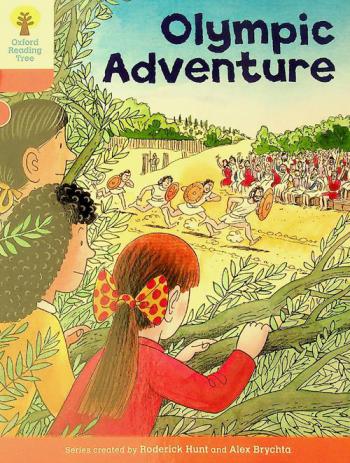
Hour of the Olympics
Their magic tree house takes Jack and Annie back to retrieve a lost story in ancient Greece, where they witness the original Olympic games and are surprised to find what girls of the time were not allowed to do.
Book

La Plaza era una trampa
1968 was a year of worldwide turmoil and Mexico was no exception. In preparation for the Olympic Games, the country found itself amidst student protests and strikes by teachers, university professors, doctors and railroad workers. Student protests were particularly detrimental to the PRI’s plan to present the country as a haven of democracy. On 2 October, 10 days before the Olympic Games opened in Mexico City, CNH (Consejo Nacional de Huelga) organised a demonstration in La Plaza de las Tres Culturas, in the residential district of Tlatelolco. There is no popular consensus on how many died that night. Estimates range from 50 dead and 1,000 wounded to at least 500 dead and several thousand wounded. The Mexican government’s unwillingness to engage in a dialogue with the public about the reasons for and consequences of the massacre resulted in a virtual ban of the subject in the state discourse. However, the public discourse has repeatedly challenged thisstance. La Plaza by Luis Spota was first published in 1971, but following many vocal protests from those whose works were cited in the novel (in particular, Elena Poniatowska, whose La noche de Tlatelolco was the text that the novel relied most heavily upon), Spota re-wrote it to exclude a number of quotations. It has been argued that the Tlatelolco literature consoles the public by offering a finite version of “what happened” on 2 October 1968, while allowing the public toexperience anger, grief and shame. We will see if La Plaza follows the same route. The present study will consider if Domingo’s behaviour and the interaction between him and the hostage are coloured by the three components of posthegemonic order—affect, habit and multitude. We will then consider how the posthegemonic nature of the text relates to the “consoling” role of fiction, as defined by Paul Ricoeur.
Journal Article