
Catalogue Search | MBRL


Are you sure you want to remove the book from the shelf?

{{itemTitle}}
16,427
result(s) for
"Parent Student Relationship"
Sort by:

Linking college students' interpersonal relationships to their psychological well-being: The role of academic self-efficacy
The collegiate environment represents a pivotal developmental phase for students, wherein their cognition, emotions, and behaviors are influenced by interactions with educators and peers. In this study, we examined the associations between college students' interpersonal relationships
and their psychological well-being, as well as the mediating role of academic selfefficacy in these relationships. Utilizing structural equation modeling to analyze data obtained from 309 students at a Chinese university, the results revealed that the students' relationships with parents,
peers, and teachers were positively related to the psychological well-being of the students, with academic selfefficacy serving as a mediator in these relationships. This research underscores the importance of interpersonal relationships and academic self-efficacy in shaping students' psychological
well-being. In light of these results, recommendations are proposed for the implementation of interventions at educational institutions aimed at enhancing the psychological well-being of students.
Journal Article
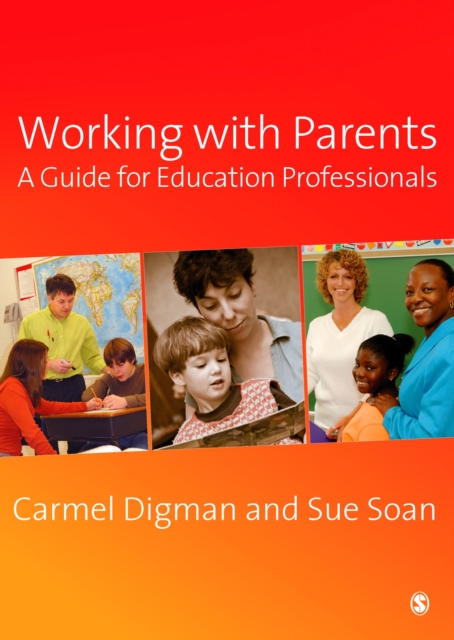
Working with parents : a guide for education professionals
With the opening of Children′s Centres and the implementation of the Every Child Matters agenda, multi-agency working is now a reality. This book will provide advice and guidance on successful strategies to employ when working with parents and interdisciplinary staff.
eBook

Providing a \Leg Up\: Parental Involvement and Opportunity Hoarding in College
Although higher education scholars are increasingly exploring disparities within institutions, they have yet to examine how parental involvement contributes to social-class variation in students' experiences. We ask, what role do parents play in producing divergent college experiences for students from different class backgrounds? Relying on interviews with 41 families, including mothers, fathers, and their daughters, we find that affluent parents serve as a \"college concierge,\" using class resources to provide youth with academic, social, and career support and access to exclusive university infrastructure. Less affluent parents, instead, describe themselves as \"outsiders\" who are unable to help their offspring and find the university unresponsive to their needs. Our findings suggest that affluent parents distinguish their children's college experiences from those of peers, extending \"effectively maintained inequality\" beyond the K-12 education. Universities may be receptive of these efforts due to funding shifts that make recruiting affluent, out-of-state families desirable.
Journal Article

Parental Involvement during Pandemic Times: Challenges and Opportunities
Due to COVID-19, many countries implemented emergency plans, such as lockdown and school closures. This new situation has significantly affected families, namely, the involvement required to support children’s learning at home. The current study aimed to analyze Portuguese parents’ perceptions of their home-based parental involvement in their children’s learning during the lockdown and school closures in 2020 due to COVID-19. An online survey, using a closed-ended questionnaire, was employed. Variables included parents’ sociodemographic and COVID-19 related characteristics; students’ sociodemographic characteristics; distance learning context; parental involvement; and students’ autonomy. Data were collected from a sample of 21,333 parents with children from elementary school to secondary education, and statistical data analysis was performed using IBM SPSS Statistics 26. Findings revealed that Portuguese parents supported their children during the pandemic mainly through the monitoring of attention in classes and task realization. However, several variables appear to significantly determine parental involvement time, which is higher when students attend public schools, when they are less autonomous and younger, when parents’ level of education is lower, when the child is a boy (except in secondary education where gender is not relevant), and when the online school time is higher. Findings highlight the need for a significant investment of time from parents, particularly of primary school children, making it difficult to cohere work or telework with school activities. Implications for policies, schools, families are discussed in order to promote children’s learning and success.
Journal Article

Students with Autism Spectrum Disorder and Their Parents in the Transition into Higher Education: Impact on Dynamics in the Parent–Child Relationship
This study examined how 34 senior students and first-year college students with autism spectrum disorder, their mothers (n = 34) and fathers (n = 26) navigate the higher education transition, and how this context impacts on dynamics in the parent–child relationships. Semi-structured interviews were analyzed based on grounded theory and dyadic analysis principles. Both parties were confronted with an abundance of challenges and experienced strong feelings of ambivalence, stress and anxiety. Differences in perspectives occurred regarding the construction of adulthood, the acquisition of autonomy, disclosure and subscribing to support services. These differences caused tensions in the parent–child relationship, hindering the transformation of the relationship into an adult-like mutual relationship. Clinical implications are extrapolated on the basis of these findings.
Journal Article

“Letting Go and Staying Connected”: Substance Use Outcomes from a Developmentally Targeted Intervention for Parents of College Students
We present results of a randomized, controlled, efficacy trial of a handbook intervention for parents of first-year college students. The aim of the interactive intervention was to decrease risk behaviors by increasing family protective factors. The handbook, based in self-determination theory and the social development model, provided evidence-based and developmentally targeted suggestions for parents to engage with their students in activities designed to support successful adjustment to college. We recruited 919 parent-student dyads from incoming students enrolled at a university in the U.S. Pacific Northwest and randomly assigned them to control and intervention conditions. We sent handbooks to intervention parents in June before students’ August matriculation. Research assistants trained in motivational interviewing contacted parents to encourage use of the handbook. Control parents and students received treatment as usual. Participants completed baseline surveys during their final semester in high school (time 1) and their first semester at college (time 2). Self-reported frequency of alcohol, cannabis, and simultaneous use increased across both handbook and control students. In intent-to-treat analyses, odds of increased use were consistently lower and of similar magnitude for students in the intervention condition than in the control condition, and odds of first-time use were also lower in the intervention condition. Contact from research assistants predicted parents’ engagement, and parent and student report of active engagement with handbook predicted lower substance use among intervention than control students across the transition to college. We developed a low-cost, theory-based handbook to help parents support their young adult children as they transition to independent college life. Students whose parents used the handbook were less likely to initiate or increase substance use than students in the control condition during their first semester in college.ClinicalTrials.gov Identifier: NCT03227809
Journal Article

The role of family characteristics for students' academic outcomes
Using data from 1,571 ninth-grade students (Mage = 14.62) from 82 academic track schools in Germany and their predominantly Caucasian middle-class parents, configurations of different family characteristics reported by parents were investigated. Latent profile analyses considering academic involvement, family interest, parents' self-concept, child's need for support, and parents' time and energy identified average, indifferent, motivated and engaged, motivated and disengaged, and involved families. Cross-sectional and longitudinal associations with students' motivational (self-concept, effort, and interest) and achievement outcomes (achievement test and grades) in math were analyzed. Students from families classified as motivated and disengaged showed higher initial levels motivation and achievement. Over 5 months, these students also showed an increase in self-concept and higher achievement than students from other family types. (DIPF/Orig.).
Journal Article

Relationships Between Positive Parenting, Overparenting, Grit, and Academic Success
Grit is a trait that describes the drive to succeed above and beyond natural intelligence. While grit has been associated with positive academic outcomes, few researchers have investigated the predictors of grit, such as parenting. We examined the influence of parenting on grit and academic success in 226 college students. Results indicated that overparenting and parental acceptance and involvement were significantly related to grit and grit was found to have a significant predictive relationship with academic success. Further, grit mediated the relationship between overparenting and academic success.
Journal Article

FACTORES INDIVIDUALES Y FAMILIARES ASOCIADOS AL BAJO RENDIMIENTO ACADÉMICO EN ESTUDIANTES UNIVERSITARIOS
El objetivo de esta investigación es conocer algunos factores familiares e individuales asociados al bajo rendimiento académico en estudiantes universitarios de una institución privada del norte de México. Se realizó una comparación de los resultados con alumnos de alto rendimiento académico para conocer las diferencias. Participaron 96 estudiantes, 48 con puntuación menor a 7.5, y 48 con puntuación de 9.0 o más. Se utilizaron cinco escalas autoaplicables tipo Likert. Entre los resultados destacan diferencias significativas en las variables: autonomía paterna, imposición paterna, maestría, trabajo, estrategias de estudio, actitud hacia el estudio, autoconcepto académico y creencias espirituales.
Journal Article

Testing the social-ecological factors of school belonging in native-born, first-generation, and second-generation Australian students : A comparison study
The Programme for International Student Assessment (PISA) has identified that one in three Australian students do not feel a sense of belonging to school, yet little research has investigated how the socio-ecological factors are
differentially associated with school belonging for immigrant and native-born students. This study investigated the link between school belonging and Individual-Level (Gender, Economic, Social, and Cultural Status, Test Anxiety,
Achieving Motivation, Collaboration and Teamwork Dispositions), Microsystem (Parents' Emotional Support and Teacher Fairness), and Mesosystem factors (Disciplinary Climate) among an Australian stratified sample of 14,530 fifteen-year-old
native-born, second- and first-generation students guided by socio-ecological theory of human development. All socio-ecological factors examined were significantly associated with school belonging. Significant differences were found in
the association between socio-ecological factors and school belonging across immigration status. It was concluded that test anxiety, teacher fairness and parents' emotional support were strongly associated with school belonging and there
were significant differences across immigration status. [Author abstract]
Journal Article