
Catalogue Search | MBRL


Are you sure you want to remove the book from the shelf?

{{itemTitle}}
955
result(s) for
"Pathological gambling"
Sort by:

At Odds
Using a rich variety of historical sources, Suzanne Morton traces the history of gambling regulation in five Canadian provinces ? Nova Scotia, Quebec, Ontario, Manitoba, and B.C. ? from the First World War to the federal legalization in 1969.
eBook
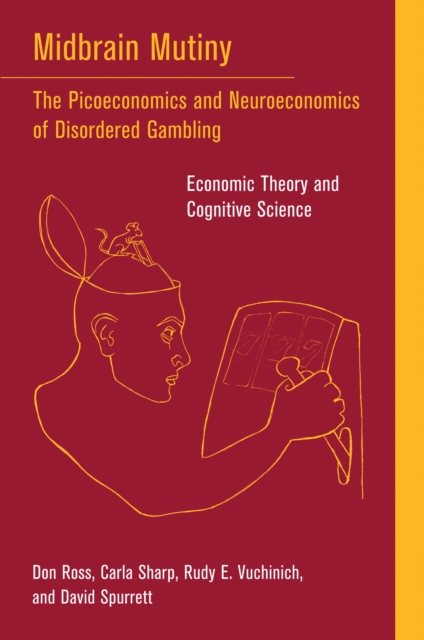
Midbrain mutiny
An analysis of how economic theories can be used to understand disordered and pathological gambling that calls on empirical evidence about behavior and the brain and argues that addictive gambling is the basic form of all addiction.
eBook


Dimensions over categories: a meta-analysis of taxometric research
Taxometric procedures have been used extensively to investigate whether individual differences in personality and psychopathology are latently dimensional or categorical (‘taxonic’). We report the first meta-analysis of taxometric research, examining 317 findings drawn from 183 articles that employed an index of the comparative fit of observed data to dimensional and taxonic data simulations. Findings supporting dimensional models outnumbered those supporting taxonic models five to one. There were systematic differences among 17 construct domains in support for the two models, but psychopathology was no more likely to generate taxonic findings than normal variation (i.e. individual differences in personality, response styles, gender, and sexuality). No content domain showed aggregate support for the taxonic model. Six variables – alcohol use disorder, intermittent explosive disorder, problem gambling, autism, suicide risk, and pedophilia – emerged as the most plausible taxon candidates based on a preponderance of independently replicated findings. We also compared the 317 meta-analyzed findings to 185 additional taxometric findings from 96 articles that did not employ the comparative fit index. Studies that used the index were 4.88 times more likely to generate dimensional findings than those that did not after controlling for construct domain, implying that many taxonic findings obtained before the popularization of simulation-based techniques are spurious. The meta-analytic findings support the conclusion that the great majority of psychological differences between people are latently continuous, and that psychopathology is no exception.
Journal Article

Parental Bonding in Subjects with Pathological Gambling Disorder Compared with Healthy Controls
The new Diagnostic and Statistical Manual of Mental Disorders Fifth Edition (DSM-V) includes pathological gambling disorder (PGD) in the subgroup of “Addiction and Related Disorders” due to the similarities between PGD and substance-based addictions in neurobiological, psychological, and social risk factors. Family factors as parental rearing attitudes play a crucial role in the development of substance use disorders and PGD. The aim of the present study was to assess the parental bonding during childhood perceived for adults with PGD compared with healthy controls. Twenty males with PGD and 20 control subjects answered the parental bonding instrument, which measures subjects’ recollections of parenting on dimensions of care and protection. Subjects with PGD showed significantly lower maternal and paternal care (p = 0.016 and p = 0.031, respectively) than controls, and higher paternal protection (p = 0.003). The most common parental pattern for PGD subjects was the affectionless control (50 % for the father and 60 % for the mother). Preliminary results suggest that, as previously reported for substance use disorders, an affectionless control parenting style is associated with PGD.
Journal Article

Is there a health inequality in gambling related harms? A systematic review
Background
Here we present a systematic review of the existing research into gambling harms, in order to determine whether there are differences in the presentation of these across demographic groups such as age, gender, culture, and socioeconomic status, or gambling behaviour categories such as risk severity and participation frequency.
Primary and secondary outcome measures
Inclusion criteria were: 1) focus on gambling harms; 2) focus on harms to the gambler rather than affected others; 3) discussion of specific listed harms and not just harms in general terms. Exclusion criteria were: 1) research of non-human subjects; 2) not written in English; 3) not an empirical study; 4) not available as a full article.
Methods
We conducted a systematic search using the Web of Science and Scopus databases in August 2020. Assessment of quality took place using Standard Quality Assessment Criteria.
Results
A total of 59 studies published between 1994 and 2020 met the inclusion criteria. These were categorised into thematic groups for comparison and discussion. There were replicated differences found in groups defined by age, socioeconomic status, education level, ethnicity and culture, risk severity, and gambling behaviours.
Conclusion
Harms appear to be dependent on specific social, demographic and environmental conditions that suggests there is a health inequality in gambling related harms. Further investigation is required to develop standardised measurement tools and to understand confounding variables and co-morbidities. With a robust understanding of harms distribution in the population, Primary Care Workers will be better equipped to identify those who are at risk, or who are showing signs of Gambling Disorder, and to target prevention and intervention programmes appropriately.
Journal Article
The societal costs of problem gambling in Sweden
Background
Problem gambling is a public health issue affecting both the gamblers, their families, their employers, and society as a whole. Recent law changes in Sweden oblige local and regional health authorities to invest more in prevention and treatment of problem gambling. The economic consequences of gambling, and thereby the potential economic consequences of policy changes in the area, are unknown, as the cost of problem gambling to society has remained largely unexplored in Sweden and similar settings.
Methods
A prevalence-based cost-of-illness study for Sweden for the year 2018 was conducted. A societal approach was chosen in order to include direct costs (such as health care and legal costs), indirect costs (such as lost productivity due to unemployment), and intangible costs (such as reduced quality of life due to emotional distress). Costs were estimated by combining epidemiological and unit cost data.
Results
The societal costs of problem gambling amounted to 1.42 billion euros in 2018, corresponding to 0.30% of the gross domestic product. Direct costs accounted only for 13% of the total costs. Indirect costs accounted for more than half (59%) of the total costs, while intangible costs accounted for 28%. The societal costs were more than twice as high as the tax revenue from gambling in 2018. Direct and indirect costs of problem gambling combined amounted to one third of the equivalent costs of smoking and one sixth of the costs of alcohol consumption in Sweden.
Conclusions
Problem gambling is increasingly recognized as a public health issue. The societal costs of it are not negligible, also in relation to major public health issues of an addictive nature such as smoking and alcohol consumption. Direct costs for prevention and treatment are very low. A stronger focus on prevention and treatment might help to reduce many of the very high indirect and intangible costs in the future.
Journal Article
Impulsivity and cognitive distortions in pathological gamblers attending the UK National Problem Gambling Clinic: a preliminary report
Pathological gambling (PG) is a form of behavioural addiction that has been associated with elevated impulsivity and also cognitive distortions in the processing of chance, probability and skill. We sought to assess the relationship between the level of cognitive distortions and state and trait measures of impulsivity in treatment-seeking pathological gamblers.
Thirty pathological gamblers attending the National Problem Gambling Clinic, the first National Health Service clinic for gambling problems in the UK, were compared with 30 healthy controls in a case-control design. Cognitive distortions were assessed using the Gambling-Related Cognitions Scale (GRCS). Trait impulsivity was assessed using the UPPS-P, which includes scales of urgency, the tendency to be impulsive in positive or negative mood states. Delay discounting rates were taken as a state measure of impulsive choice.
Pathological gamblers had elevated impulsivity on several UPPS-P subscales but effect sizes were largest (Cohen's d>1.4) for positive and negative urgency. The pathological gamblers also displayed higher levels of gambling distortions, and elevated preference for immediate rewards, compared to controls. Within the pathological gamblers, there was a strong relationship between the preference for immediate rewards and the level of cognitive distortions (R2=0.41).
Impulsive choice in the gamblers was correlated with the level of gambling distortions, and we hypothesize that an impulsive decision-making style may increase the acceptance of erroneous beliefs during gambling play.
Journal Article

Gambling disorders
Gambling disorders, including pathological gambling and problem gambling, have received increased attention from clinicians and researchers over the past three decades since gambling opportunities have expanded around the world. This Seminar reviews prevalence, causes and associated features, screening and diagnosis, and treatment approaches. Gambling disorders affect 0·2–5·3% of adults worldwide, although measurement and prevalence varies according to the screening instruments and methods used, and availability and accessibility of gambling opportunities. Several distinct treatment approaches have been favourably evaluated, such as cognitive behavioural and brief treatment models and pharmacological interventions. Although promising, family therapy and support from Gamblers Anonymous are less well empirically supported. Gambling disorders are highly comorbid with other mental health and substance use disorders, and a further understanding is needed of both the causes and treatment implications of this disorder.
Journal Article

Predictors of gambling and problem gambling in Canada
Objectives
The purpose of this study is to provide an updated profile of gamblers and problem gamblers in Canada and to identify characteristics most strongly associated with problem gambling.
Methods
An assessment of gambling participation and problem gambling was included in the 2018 Canadian Community Health Survey and administered to 23,952 individuals 18 years and older. Descriptive statistics provided a demographic profile for each type of gambling involvement as well as category of gambler (non-gambler, non-problem gambler, at-risk gambler, problem gambler). A logistic regression identified characteristics that best distinguished problem from non-problem gamblers.
Results
Gambling participation and problem gambling both varied as a function of gender, income, educational attainment, and race/ethnicity. However, multivariate analysis identified electronic gambling machine (EGM) participation to be the primary predictor of problem gambling status, with race/ethnicity, presence of a mood disorder, male gender, casino table game participation, older age, a greater level of smoking, participation in speculative financial activity, instant lottery participation, lower household income, and lottery or raffle ticket participation providing additional predictive power. Provincial EGM density and EGM participation rates are also very strong predictors of provincial rates of at-risk and problem gambling.
Conclusion
Problem gambling has a biopsychosocial etiology, determined by personal vulnerability factors combined with the presence of riskier types of gambling such as EGMs. Effective prevention requires a multifaceted approach, but constraints on the availability and operation of EGMs would likely have the greatest single public health benefit.
Journal Article