
Catalogue Search | MBRL


Are you sure you want to remove the book from the shelf?

{{itemTitle}}
42,912
result(s) for
"Population genomics"
Sort by:
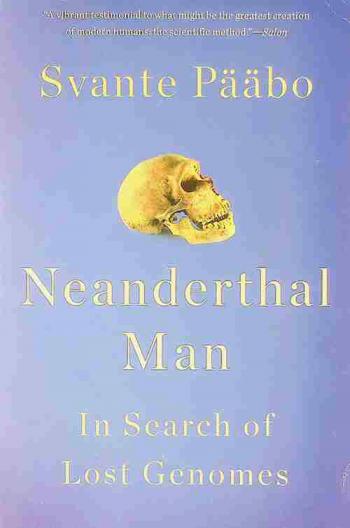
Neanderthal man : in search of lost genomes
\"What can we learn from the genes of our closest evolutionary relatives? Neanderthal Man tells the story of geneticist Svante P�a�abo's mission to answer that question, beginning with the study of DNA in Egyptian mummies in the early 1980s and culminating in his sequencing of the Neanderthal genome in 2009. From P�a�abo, we learn how Neanderthal genes offer a unique window into the lives of our hominin relatives and may hold the key to unlocking the mystery of why humans survived while Neanderthals went extinct. Drawing on genetic and fossil clues, P�a�abo explores what is known about the origin of modern humans and their relationship to the Neanderthals and describes the fierce debate surrounding the nature of the two species' interactions. A riveting story about a visionary researcher and the nature of scientific inquiry, Neanderthal Man offers rich insight into the fundamental question of who we are\"-- Provided by publisher.
Book

Population genomics perspectives on convergent adaptation
Convergent adaptation is the independent evolution of similar traits conferring a fitness advantage in two or more lineages. Cases of convergent adaptation inform our ideas about the ecological and molecular basis of adaptation. In judging the degree to which putative cases of convergent adaptation provide an independent replication of the process of adaptation, it is necessary to establish the degree to which the evolutionary change is unexpected under null models and to show that selection has repeatedly, independently driven these changes. Here, we discuss the issues that arise from these questions particularly for closely related populations, where gene flow and standing variation add additional layers of complexity. We outline a conceptual framework to guide intuition as to the extent to which evolutionary change represents the independent gain of information owing to selection and show that this is a measure of how surprised we should be by convergence. Additionally, we summarize the ways population and quantitative genetics and genomics may help us address questions related to convergent adaptation, as well as open new questions and avenues of research. This article is part of the theme issue ‘Convergent evolution in the genomics era: new insights and directions’.
Journal Article

Troublesome science : the misuse of genetics and genomics in understanding race
It is well established that all human beings today, wherever they live, belong to one single species. Yet even many people who claim to abhor racism take for granted that human \"races\" have a biological reality. From pharmacological researchers to the U.S. government, the dubious tradition of classifying people by race lives on. In Troublesome Science, Rob DeSalle and Ian Tattersall provide a lucid and compelling presentation of how the tools of modern biological science have been misused to sustain the belief in the biological basis of racial classification. Troublesome Science argues that taxonomy, the scientific classification of organisms, provides a cure for such misbegotten mischaracterizations. DeSalle and Tattersall explain how taxonomists do their job, in particular the genomic and morphological techniques they use to identify a species and to understand and organize the relationships among different species and the variants within them. They detail the use of genetic data to trace human origins and look at how scientists have attempted to recognize discrete populations within Homo sapiens. DeSalle and Tattersall demonstrate conclusively that these techniques, when applied correctly to the study of human variety, fail to find genuine differences, striking a blow against pseudoscientific chicanery. While the diversity that exists within our species is a real phenomenon, it nevertheless defeats any systematic attempt to recognize discrete units within it. The stark lines that humans insist on drawing between their own groups and others are nothing but a mixture of imagination and ideology.
Book
Ecological factors and morphological traits are associated with repeated genomic differentiation between lake and stream stickleback
The repeated evolution of similar phenotypes in independent populations (i.e. parallel or convergent evolution) provides an opportunity to identify genetic and ecological factors that influence the process of adaptation. Threespine stickleback fish ( Gasterosteus aculeatus ) are an excellent model for such studies, as they have repeatedly adapted to divergent habitats across the Northern hemisphere. Here, we use genomic, ecological and morphological data from 16 independent pairs of stickleback populations adapted to divergent lake and stream habitats. We combine a population genomic approach to identify regions of the genome that are likely under selection in these divergent habitats with an association mapping approach to identify regions of the genome that underlie variation in ecological factors and morphological traits. Over 37% of genomic windows are repeatedly differentiated across lake–stream pairs. Similarly, many genomic windows are associated with variation in abiotic factors, diet items and morphological phenotypes. Both the highly differentiated windows and candidate trait windows are non-randomly distributed across the genome and show some overlap. However, the overlap is not significant on a genome-wide scale. Together, our data suggest that adaptation to divergent food resources and predation regimes are drivers of differentiation in lake–stream stickleback, but that additional ecological factors are also important. This article is part of the theme issue ‘Convergent evolution in the genomics era: new insights and directions’.
Journal Article

Who we are and how we got here : the ancient DNA revolution and the new science of the human past
\"Technological innovations now allow scientists to extract and analyze ancient DNA as never before, and it has become clear--in part from David Reich's own contributions to the field--that genomics is as important a means of understanding the human past as archeology, linguistics, and the written word. Now, in [this book], Reich describes ... just how the human genome provides not only all the information that a fertilized human egg needs to develop but also contains within it the history of our species\"-- Provided by publisher.
Book

Multiple introductions and overwintering shape the progressive invasion of Aedes albopictus beyond the Alps
Aedes albopictus originates from Southeast Asia and is considered one of the most invasive species globally. This mosquito is a nuisance and a disease vector of significant public health relevance. In Europe, Ae. albopictus is firmly established and widespread south of the Alps, a mountain range that forms a formidable biogeographic barrier to many organisms. Recent reports of Ae. albopictus north of the Alps raise questions of (1) the origins of its recent invasion, and (2) if this mosquito has established overwintering populations north of the Alps. To answer these questions, we analyzed population genomic data from >4000 genome‐wide SNPs obtained through double‐digest restriction site‐associated DNA sequencing. We collected SNP data from specimens from six sites in Switzerland, north and south of the Alps, and analyzed them together with specimens from other 33 European sites, five from the Americas, and five from its Asian native range. At a global level, we detected four genetic clusters with specimens from Indonesia, Brazil, and Japan as the most differentiated, whereas specimens from Europe, Hong Kong, and USA largely overlapped. Across the Alps, we detected a weak genetic structure and high levels of genetic admixture, supporting a scenario of rapid and human‐aided dispersal along transportation routes. While the genetic pattern suggests frequent re‐introductions into Switzerland from Italian sources, the recovery of a pair of full siblings in two consecutive years in Strasbourg, France, suggests the presence of an overwintering population north of the Alps. The suggestion of overwintering populations of Ae. albopictus north of the Alps and the expansion patterns identified points to an increased risk of further northward expansion and the need for increased surveillance of mosquito populations in Northern Europe. Population genomics study to investigate the recent invasion of Aedes albopictus in Europe across the Alps. While we detected a weak genetic structure and high levels of genetic admixture, the recovery of a pair of full sibling consecutive years in Strasbourg, France, suggests the presence of an overwintering population north of the Alps. The expansion patterns points to an increased risk of further spread and the need for increased surveillance of mosquito population in Europe.
Journal Article

Neanderthal man : in search of lost genomes
\"What can we learn from the genes of our closest evolutionary relatives? Neanderthal Man tells the story of geneticist Svante Pääbo's mission to answer that question, beginning with the study of DNA in Egyptian mummies in the early 1980s and culminating in his sequencing of the Neanderthal genome in 2009. From Pääbo, we learn how Neanderthal genes offer a unique window into the lives of our hominin relatives and may hold the key to unlocking the mystery of why humans survived while Neanderthals went extinct. Drawing on genetic and fossil clues, Pääbo explores what is known about the origin of modern humans and their relationship to the Neanderthals and describes the fierce debate surrounding the nature of the two species' interactions. A riveting story about a visionary researcher and the nature of scientific inquiry, Neanderthal Man offers rich insight into the fundamental question of who we are\"-- Provided by publisher.
Book
Whole-Genome Analysis of Introgression Between the Spotted Owl and Barred Owl (Strix occidentalis and Strix varia, Respectively; Aves: Strigidae) in Western North America
As the barred owl (Strix varia; Aves: Strigiformes: Strigidae) expands throughout western North America, hybridization between barred and spotted owls (Strix varia and S. occidentalis, respectively), if abundant, may lead to genetic swamping of the endangered spotted owl. We analyzed low-coverage, whole-genome sequence data from fifty-one barred and spotted owls to investigate recent introgression between these two species. Although we obtained genomic confirmation that these species can and do hybridize and backcross, we found no evidence of widespread introgression. Plumage characteristics of western S. varia that suggested admixture with S. occidentalis appear unrelated to S. occidentalis ancestry and may instead reflect local selection.
Journal Article

Genomic stability through time despite decades of exploitation in cod on both sides of the Atlantic
The mode and extent of rapid evolution and genomic change in response to human harvesting are key conservation issues. Although experiments and models have shown a high potential for both genetic and phenotypic change in response to fishing, empirical examples of genetic responses in wild populations are rare. Here, we compare whole-genome sequence data of Atlantic cod (Gadus morhua) that were collected before (early 20th century) and after (early 21st century) periods of intensive exploitation and rapid decline in the age of maturation from two geographically distinct populations in Newfoundland, Canada, and the northeast Arctic, Norway. Our temporal, genome-wide analyses of 346,290 loci show no substantial loss of genetic diversity and high effective population sizes. Moreover, we do not find distinct signals of strong selective sweeps anywhere in the genome, although we cannot rule out the possibility of highly polygenic evolution. Our observations suggest that phenotypic change in these populations is not constrained by irreversible loss of genomic variation and thus imply that former traits could be reestablished with demographic recovery.
Journal Article

Estimating genomic diversity and population differentiation – an empirical comparison of microsatellite and SNP variation in Arabidopsis halleri
Background
Microsatellite markers are widely used for estimating genetic diversity within and differentiation among populations. However, it has rarely been tested whether such estimates are useful proxies for genome-wide patterns of variation and differentiation. Here, we compared microsatellite variation with genome-wide single nucleotide polymorphisms (SNPs) to assess and quantify potential marker-specific biases and derive recommendations for future studies. Overall, we genotyped 180
Arabidopsis halleri
individuals from nine populations using 20 microsatellite markers. Twelve of these markers were originally developed for
Arabidopsis thaliana
(cross-species markers) and eight for
A. halleri
(species-specific markers). We further characterized 2 million SNPs across the genome with a pooled whole-genome re-sequencing approach (Pool-Seq).
Results
Our analyses revealed that estimates of genetic diversity and differentiation derived from cross-species and species-specific microsatellites differed substantially and that expected microsatellite heterozygosity (SSR-
H
e
) was not significantly correlated with genome-wide SNP diversity estimates (SNP-
H
e
and
θ
Watterson
) in
A. halleri
. Instead, microsatellite allelic richness (
A
r
) was a better proxy for genome-wide SNP diversity. Estimates of genetic differentiation among populations (
F
ST
) based on both marker types were correlated, but microsatellite-based estimates were significantly larger than those from SNPs. Possible causes include the limited number of microsatellite markers used, marker ascertainment bias, as well as the high variance in microsatellite-derived estimates. In contrast, genome-wide SNP data provided unbiased estimates of genetic diversity independent of whether genome- or only exome-wide SNPs were used. Further, we inferred that a few thousand random SNPs are sufficient to reliably estimate genome-wide diversity and to distinguish among populations differing in genetic variation.
Conclusions
We recommend that future analyses of genetic diversity within and differentiation among populations use randomly selected high-throughput sequencing-based SNP data to draw conclusions on genome-wide diversity patterns. In species comparable to
A. halleri
, a few thousand SNPs are sufficient to achieve this goal.
Journal Article