
Catalogue Search | MBRL


Are you sure you want to remove the book from the shelf?

{{itemTitle}}
5
result(s) for
"Preteen girls in popular culture."
Sort by:

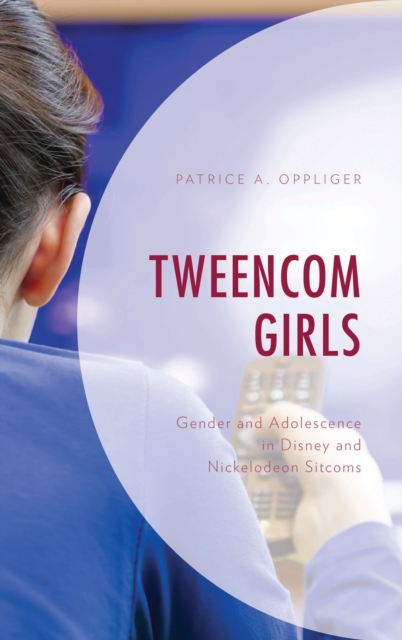
Tweencom Girls
Tweencom Girls analyzes the different ways character tropes are portrayed in media targeted at eight- to twelve-year-olds, particularly female characters, over the last twenty-five years.The book focuses particularly on sitcoms produced by the cable giants Disney Channel and Nickelodeon because of their popularity and ubiquity.
eBook

Playing to win
Playing to Win: Raising Children in a Competitive Culture follows the path of elementary school-age children involved in competitive dance, youth travel soccer, and scholastic chess. Why do American children participate in so many adult-run activities outside of the home, especially when family time is so scarce? By analyzing the roots of these competitive afterschool activities and their contemporary effects, Playing to Win contextualizes elementary school-age children's activities, and suggests they have become proving grounds for success in the tournament of life—especially when it comes to coveted admission to elite universities, and beyond. In offering a behind-the-scenes look at how \"Tiger Moms\" evolve, Playing to Win introduces concepts like competitive kid capital, the carving up of honor, and pink warrior girls. Perfect for those interested in childhood and family, education, gender, and inequality, Playing to Win details the structures shaping American children's lives as they learn how to play to win.
eBook

From Selfies to Sexting: Tween Girls, Intimacy, and Subjectivities
In this article I attempt to contribute to the debates on sexualization, and on tweens' sexual agency and choice by reporting on a qualitative study of how 53 tween girls self-presented in discourse in the context of sexting (sending sexually explicit text messages and pictures to others). More specifically, the study aims to interrogate tweens' sexual agency and the complexity of girls' choices by analyzing their evaluative beliefs about, and motivations for, sexting. I argue that the contradictory discursive constructions of multiple femininities not only illustrate issues of regulation and resistance, but also highlight the blurred boundaries between dominant culture and agency. My findings suggest that the sexual agency implied in sexting shows the tension between the reproduction of dominant culture and hegemony and the presence of a feminine discourse of empowerment.
Journal Article

Authenticity and Aspiration
AbstractIn this article, I argue that while the tween is understood as having transnational relevance and mobility, this is often emphasized in ways that overlook the national and cultural specificities of tween culture. I argue that the distinctive context of British television history augments the connections between national and transnational paradigms of tween culture in important ways. While authenticity, friendships, and honesty remain foregrounded in a number of Children’s British Broadcasting Corporation (CBBC) shows, these are constructed through a national discourse that connects to transnational models of the tween girl but also mobilizes a cultural specificity that is inextricable from the broadcasting context in which it is produced.
Journal Article