
Catalogue Search | MBRL


Are you sure you want to remove the book from the shelf?

{{itemTitle}}
429
result(s) for
"Protestant work ethic."
Sort by:

Weber, passion and profits : 'the Protestant ethic and the spirit of capitalism' in context
Max Weber's 'The Protestant Ethic and the Spirit of Capitalism' is one of the best known and most enduring texts of classical sociology. In this insightful and original interpretation, Jack Barbalet discloses that Weber's work is not simply about the cultural origins of capitalism but an allegory of his Germany.
BOOK

What Work Means
What Work Means goes beyond
the stereotypes and captures the diverse ways Americans view work
as a part of a good life. Dispelling the notion of
Americans as mere workaholics, Claudia Strauss presents a more
nuanced perspective. While some live to work, others prefer a
diligent 9-to-5 work ethic that is conscientious but preserves time
for other interests. Her participants often enjoyed their jobs
without making work the focus of their life. These findings
challenge laborist views of waged work as central to a good life as
well as post-work theories that treat work solely as exploitative
and soul-crushing.
Drawing upon the evocative stories of unemployed Americans from
a wide range of occupations, from day laborers to corporate
managers, both immigrant and native-born, Strauss explores how
diverse Americans think about the place of work in a good life,
gendered meanings of breadwinning, accepting financial support from
family, friends, and the state, and what the ever-elusive American
dream means to them. By considering how post-Fordist unemployment
experiences diverge from joblessness earlier, What Work
Means paves the way for a historically and culturally informed
discussion of work meanings in a future of teleworking, greater
automation, and increasing nonstandard employment.
eBook


Redeeming Time
During the struggle for the eight-hour workday and a shorter workweek, Chicago emerged as an important battleground for workers in \"the entire civilized world\" to redeem time from the workplace in order to devote it to education, civic duty, health, family, and leisure. William A. Mirola explores how the city's eight-hour movement intersected with a Protestant religious culture that supported long hours to keep workers from idleness, intemperance, and secular leisure activities. Analyzing how both workers and clergy rewove working-class religious cultures and ideologies into strategic and rhetorical frames, Mirola shows how every faith-based appeal contested whose religious meanings would define labor conditions and conflicts. As he notes, the ongoing worker-employer tension transformed both how clergy spoke about the eight-hour movement and what they were willing to do, until intensified worker protest and employer intransigence spurred Protestant clergy to support the eight-hour movement even as political and economic arguments eclipsed religious framing. A revealing study of an era and a movement, Redeeming Time illustrates the potential--and the limitations--of religious culture and religious leaders as forces in industrial reform.
eBook

Booker T. Washington in American Memory
\"This project examines the response to Booker T. Washington's death, analyzing the many ways in which both black and white Americans involved in the Yankee Protestant Ethic Movement honored or memorialized the great visionary. The northern-based Movement originally saw southerners as a people who embraced a profane ethic, one that undermined the glory of the nation. In order to shift southerners away from their lazy, inefficient, and uneducated ways, the Movement engaged them in a culture war that employed multiple educational and evangelical agencies. When white southerners resisted such interference, the Movement began concentrating more exclusively on black southerners. Washington became an advocate for the Movement, and in turn the Movement became a cornerstone of Washington's ideology. After Washington's death, leading supporters of the Movement wanted to perpetuate his vision. They used obituaries, burial rites, memorials, and eulogies as weapons of choice in their efforts to continue a culture war between a supposedly democratic North and a seemingly aristocratic South. Hamilton reexamines Washington's influences, thereby producing a new understanding of his life. Integrating an analysis of letters of solace, obituaries, and other archival documents, Hamilton examines the ways that the memory of Washington and his works were cultivated and utilized by his contemporaries to promote racial consciousness. By closely working with the documents that reflect the memory and admiration of Washington at the time of his death, Hamilton is also able to show how recollections of Washington have shifted or become obscured by more recent historical assumptions or interpretations.\"--Provided by publisher.
BOOK
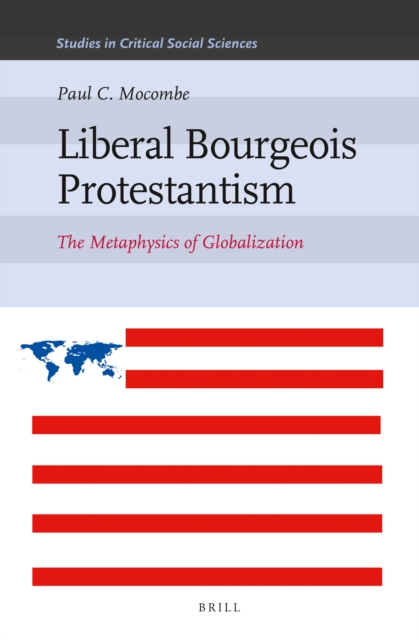
Liberal Bourgeois Protestantism
This work analyzes the Protestant metaphysical origins and basis underlying the sociological process of globalization. Specifically, it outlines the different conceptions of globalization in the sociological literature, and then examines the nature of identity and identity politics in the age of globalization. The work concludes by drawing a connection between the nature of identity politics and the globalizing process.
eBook

The Protestant Ethic and the Spirit of Capitalism
Max Weber's best-known and most controversial work, The Protestant Ethic and the Spirit of Capitalism, first published in 1904, remains to this day a powerful and fascinating read. Weber's highly accessible style is just one of many reasons for his continuing popularity. The book contends that the Protestant ethic made possible and encouraged the development of capitalism in the West. Widely considered as the most informed work ever written on the social effects of advanced capitalism, The Protestant Ethic and the Spirit of Capitalism holds its own as one of the most significant books of the twentieth century. The book is one of those rare works of scholarship which no informed citizen can afford to ignore.
eBook

Understanding Protestant and Islamic Work Ethic Studies: A Content Analysis of Articles
This study focuses on two main arguments about the secularization of Protestant work ethic (PWE) and the uniqueness of Islamic work ethic (IWE). By adopting a linguistic point of view, this study aims to grasp a common understanding of PWE and IWE in the field of work ethic research. For this purpose, 109 articles using the keywords PWE and IWE in their titles were analyzed using content analysis. The findings support the argument that emphasizes universally shared values of PWE. In addition, the findings reveal that IWE provides a unique perspective on how to improve organizational performance, but at the same time differs in work orientation and commitment across cultures.
Journal Article
Hardworking as a Heuristic for Moral Character: Why We Attribute Moral Values to Those Who Work Hard and Its Implications
The Protestant Work Ethic (PWE) is a powerful force in Western culture with far reaching effects on our values and judgments. While research on PWE as a cultural value is abundant in diverse disciplines, little research has explored how this cultural value facilitates the use of heuristics when evaluating the morality of others. Using both PWE and illusory correlation as foundations, this paper explores whether people attribute positive moral characteristics to others merely based upon a description as hardworking. Three experiments suggest merely being described as hardworking leads to perceptions of greater honesty, a more careful and detailed approach to one's work, accompanied by a lesser likelihood of engaging in cheating behavior and a greater likelihood of accountability. These results have implications regarding the detection of deviant/fraudulent behavior.
Journal Article
Do Victims of Supervisor Bullying Suffer from Poor Creativity? Social Cognitive and Social Comparison Perspectives
This study explores the dark side of leadership, treats creative self-efficacy as a mediator, and frames supervisor bullying and employee creativity in the context of social cognition and social comparison. We theorize that with a high social comparison orientation, the combination of high supervisory abuse toward themselves (own abusive supervision) and low supervisory abuse toward other team members (peer abusive supervision) leads to a double whammy effect: When employees are \"singled out\" for abuse, these victims suffer from not only low creative self-efficacy due to supervisory abuse but also low supervisory creativity ratings. Results based on our two-wave data collected from multiple sources—253 employees and their 77 immediate supervisors—support our theory. The significant three-way interaction effect reveals that when social comparison orientation is high and peer abusive supervision is low (Time 1), own abusive supervision (Time 1) creates the strongest negative impact on creative self-efficacy (Time 2), which is significantly related to supervisory low creativity rating (Time 2). Our discoveries of egregious bullying offer provocative theoretical, empirical, and practical implications to the fields of leadership, abusive supervision, creativity, and business ethics.
Journal Article